Thomas Buberl
The Unflinching Moderniser Recasting Europe's Insurance Empire for a Perilous New Age
By Nida Kanwal
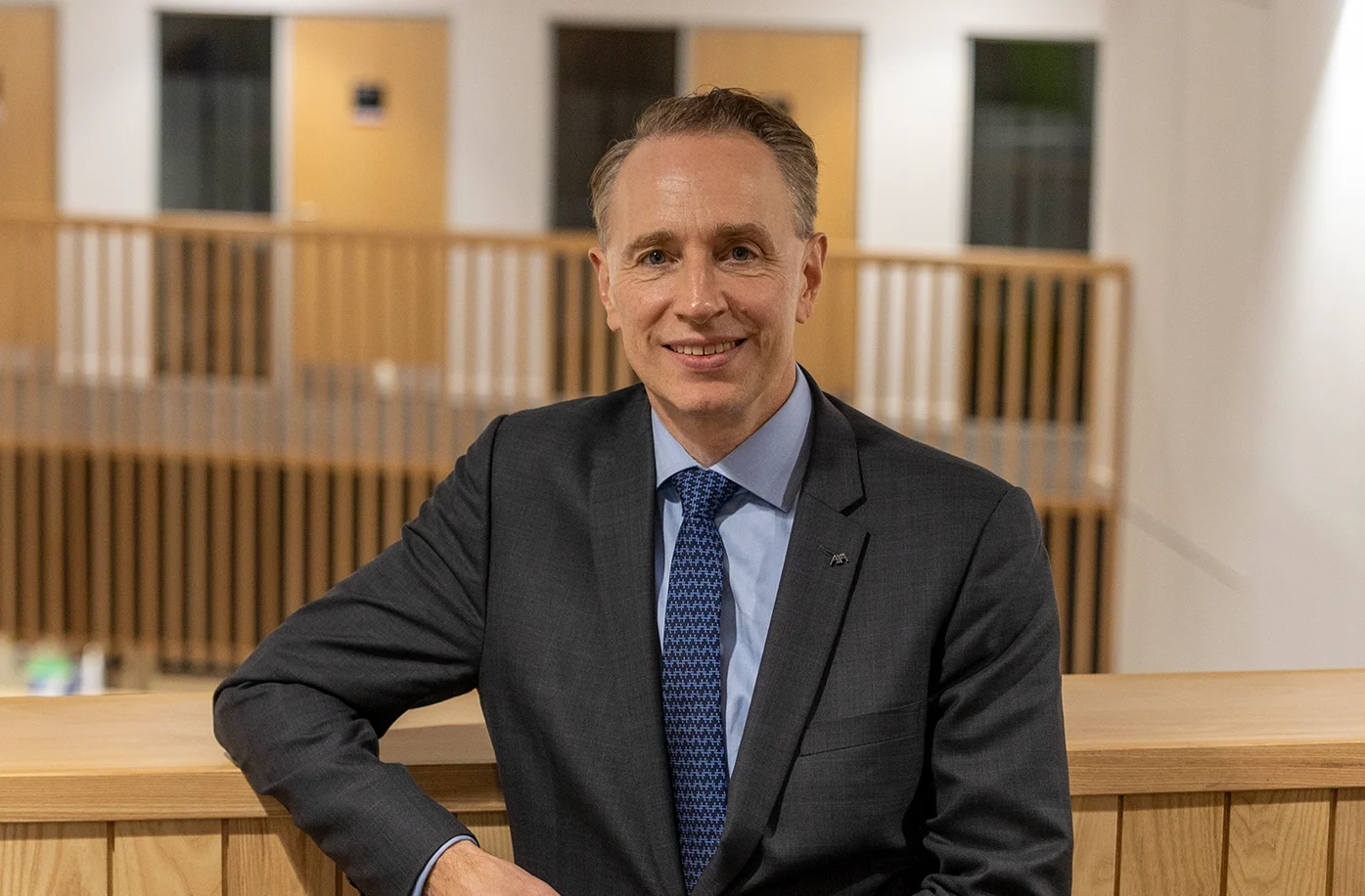
Cimmerian uncertainties have become the prevailing condition of contemporary finance, where geopolitical fractures, economic instability and technological upheaval now shadow nearly every corporate calculation. Within this restless environment, Thomas Buberl has emerged as one of the most strategically disciplined leaders in European business. Cerebral yet forceful, pragmatic yet quietly ambitious, Buberl transformed himself into a defining architect of modern insurance leadership through a combination of analytical precision, operational resilience and a relentless appetite for reinvention. His stewardship of AXA reflects far more than conventional executive management. It represents a broader effort to reshape one of Europe’s great financial institutions for an era increasingly defined by uncertainty and systemic risk.
Unlike the theatrical corporate personalities who frequently dominate headlines, Buberl cultivated authority through composure and strategic clarity rather than spectacle. There is an unmistakably continental quality to his leadership style, one shaped by intellectual discipline and institutional patience. He seldom indulges in grandiose declarations or populist executive theatrics. Instead, he projects the demeanour of a strategist acutely aware that modern financial institutions survive not through noise but through adaptability and structural endurance.
Born in Germany and educated across several distinguished European institutions, including WHU Otto Beisheim School of Management and Lancaster University, Buberl developed an unusually international perspective early in life. His academic background in economics and management equipped him with a rigorous understanding of both financial systems and organisational behaviour. Yet what distinguishes him most clearly is not merely technical expertise but an evident capacity to interpret long term structural change before it becomes obvious to competitors.
Before ascending to the leadership of AXA, Buberl built an impressive career within the insurance and healthcare sectors, including senior roles at Zurich Insurance and later within AXA itself. His rapid rise reflected a reputation for intellectual sharpness, operational efficiency and strategic fearlessness. Colleagues frequently described him as exceptionally driven yet remarkably composed under pressure, a combination that later became central to his leadership identity.
When Buberl became chief executive of AXA in 2016, the insurance industry was confronting profound disruption. Persistently low interest rates across Europe had weakened traditional investment models while digital transformation threatened long established business structures. Simultaneously, public expectations surrounding insurers were evolving rapidly as climate risk, cyber threats and demographic pressures reshaped the global risk landscape. Buberl recognised immediately that incremental adjustment would not suffice. Insurance companies, in his view, required fundamental transformation to remain relevant within the twenty first century economy.
Under his leadership, AXA embarked upon an ambitious process of strategic modernisation. Buberl pushed aggressively towards digital integration, operational simplification and expansion into higher value areas such as health insurance and commercial risk management.
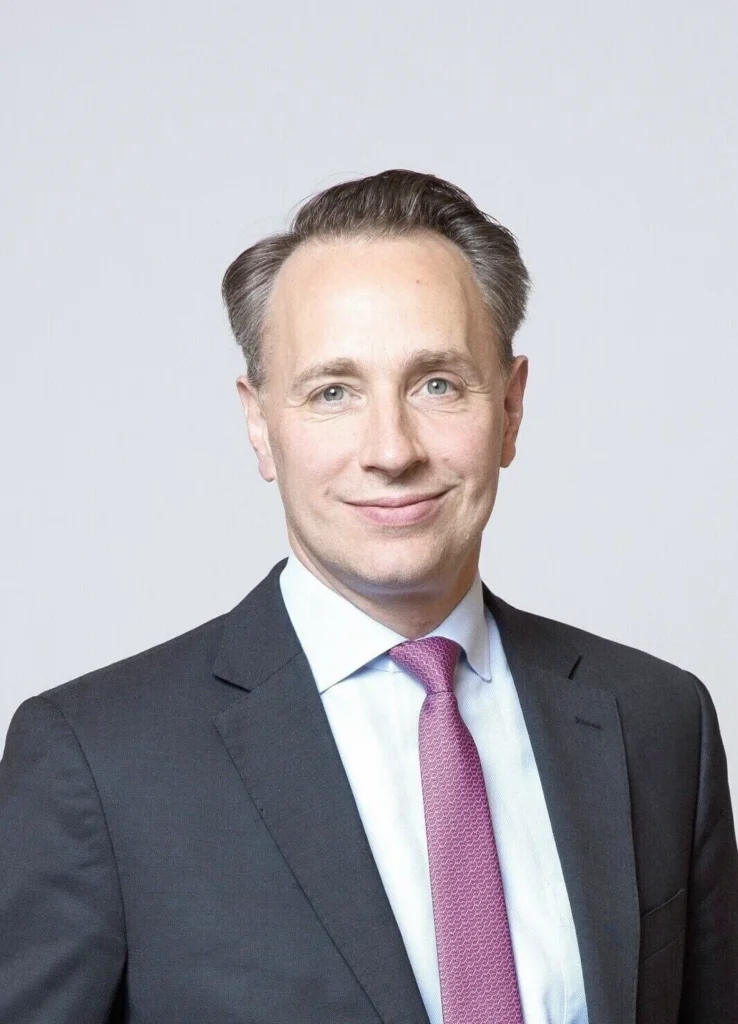

He understood that the future of insurance would depend increasingly upon data, predictive analytics and customer centric technological infrastructure rather than merely traditional underwriting alone.
Yet unlike certain executives intoxicated by fashionable technological rhetoric, Buberl approached innovation with disciplined pragmatism. Technology was never presented as an abstract ideology or corporate ornament. Instead, he treated it as an instrument for resilience, efficiency and strategic positioning. This measured approach granted AXA a reputation for serious transformation rather than superficial reinvention.
One of the defining moments of his tenure came through AXA’s acquisition of XL Group, a major move that significantly strengthened the company’s position within global commercial insurance markets. The transaction reflected Buberl’s broader strategic philosophy. He sought not merely growth for its own sake but greater exposure to sectors capable of generating durable long term value amid changing economic conditions. Commercial insurance and specialised risk management offered precisely such opportunities.
The acquisition also revealed his willingness to embrace substantial strategic risk when necessary. Large scale corporate transformations often generate investor anxiety and operational strain.
Buberl nevertheless pursued the deal with notable determination, convinced that AXA needed stronger positioning within global commercial lines to secure future resilience. In hindsight, the move significantly reinforced AXA’s international standing.
There is an unmistakable seriousness to Buberl’s understanding of risk itself. Insurance at its essence concerns the management of uncertainty, and few modern executives appear more intellectually engaged with that challenge. Under his stewardship, AXA increasingly focused upon emerging global threats including climate change, cybersecurity and geopolitical instability. Buberl repeatedly argued that insurers must evolve from passive financial backstops into proactive partners helping societies adapt to increasingly volatile conditions.
Climate policy became particularly significant during his leadership. AXA strengthened commitments concerning sustainable investment and restrictions on coal related exposure, positioning itself among the more environmentally conscious major insurers. Buberl recognised earlier than many peers that climate instability represented not merely an environmental debate but a profound economic and actuarial challenge capable of reshaping insurance markets globally.
Critics occasionally questioned whether such commitments could coexist fully with the commercial imperatives of a multinational financial corporation. Yet Buberl consistently framed sustainability as inseparable from long term financial prudence. In his view, insurers ignoring environmental risk would eventually undermine their own economic foundations.
The coronavirus pandemic further illuminated his leadership qualities. As markets convulsed and businesses worldwide faced extraordinary disruption, insurers encountered immense pressure concerning claims, operational continuity and financial exposure. Buberl responded with composed institutional focus, emphasising resilience and disciplined adaptation. While certain corporate leaders appeared overwhelmed by uncertainty, he projected steadiness and strategic control.
His communication style throughout crises remained notably restrained. Buberl rarely indulges in exaggerated optimism or emotional rhetoric. Instead, he speaks with measured precision, often emphasising preparation, flexibility and long term structural thinking. This calm authority has proven particularly valuable within financial industries where investor confidence depends heavily upon perceptions of stability and competence.
There is also a distinctly European sensibility underpinning his broader corporate philosophy. Buberl appears acutely conscious that modern corporations operate within wider social frameworks and cannot survive indefinitely through narrow financial extraction alone. Under his direction, AXA increasingly emphasised health services, social protection and customer wellbeing alongside conventional insurance operations. Such positioning reflected a recognition that public trust has become an essential strategic asset within contemporary finance.
Yet beneath this socially conscious rhetoric lies considerable competitive intensity. Global insurance remains fiercely contested, shaped by consolidation, technological disruption and regulatory complexity. Buberl demonstrated repeatedly that he possesses the strategic toughness necessary to navigate such conditions. AXA under his command did not retreat defensively into caution. It pursued transformation assertively while preserving institutional discipline.
Financial markets generally responded favourably to his leadership. Investors frequently praised AXA’s operational consistency, strategic clarity and disciplined execution under Buberl’s stewardship. Particularly during periods of heightened global instability, his calm and methodical approach reassured stakeholders seeking continuity amid turbulence.
There is something distinctly modern about his leadership model. Buberl combines technological fluency with institutional patience, strategic ambition with disciplined restraint. Unlike executives obsessed with personal mythology or media spectacle, he appears fundamentally focused upon organisational resilience and systemic adaptation. His authority derives not from flamboyant charisma but from sustained strategic competence.
As global finance confronts mounting pressures from climate instability, technological transformation and geopolitical fragmentation, Buberl’s influence will likely remain considerable. Admirers will regard him as a modernising strategist who repositioned AXA successfully for a far more volatile world. Critics may continue questioning whether large financial institutions can ever reconcile shareholder imperatives fully with broader societal responsibilities. Both perspectives illuminate the immense complexity surrounding contemporary corporate leadership.
What remains undeniable is the scale of his impact. Thomas Buberl helped redefine the role of a modern insurer during one of the most uncertain periods in recent economic history. Through calculated transformation, operational discipline and relentless strategic focus, he strengthened AXA’s position as one of the world’s most influential financial institutions.
Beneath his composed demeanour resides a leader acutely aware that modern finance no longer revolves solely around capital accumulation. It concerns resilience, adaptation and the management of systemic fragility across societies increasingly exposed to unpredictable risk. Thomas Buberl stands as one of the defining stewards of that new financial reality, a figure whose influence extends far beyond insurance into the broader architecture of global economic stability itself.