Sunil Bharti Mittal
The Ambition That Turned Airtel Into a Global Digital Powerhouse
By Michelle Clark
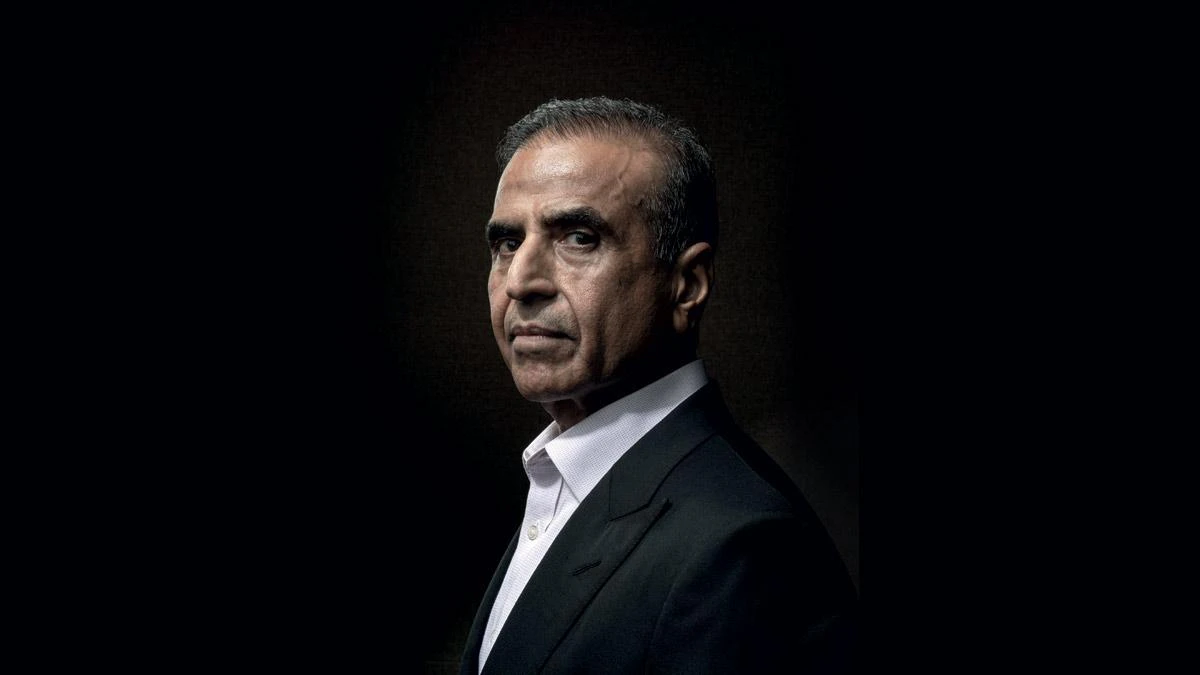
Few entrepreneurial journeys in modern telecommunications carry the scale and persistence of Sunil Bharti Mittal. From starting a modest manufacturing business as a young entrepreneur to building Bharti Enterprises into one of India’s most prominent business groups, Mittal has spent five decades pursuing opportunities in industries that were often still developing when he entered them. His most influential achievement remains Bharti Airtel, which grew from an ambitious cellular venture in the 1990s into one of the world’s major telecommunications companies, serving hundreds of millions of customers across India and Africa. Today, as Founder and Chairman of Bharti Enterprises, Mittal continues to influence the direction of Airtel and the wider group while expanding his interests across telecommunications, digital infrastructure, space communications, financial services and other technology driven businesses.
The origins of Mittal’s business career were far removed from the sophisticated digital economy that Airtel represents today. In 1976, at the age of eighteen, he began his first business making bicycle crankshafts. He later moved into trading and manufacturing, eventually recognising that telecommunications offered an opportunity much larger than the businesses he had previously pursued. In the 1980s, he began producing push button telephones in India through Bharti Telecom and expanded into fax machines and cordless phones. These early experiences taught him an important lesson that would become central to his career: markets can change dramatically when technology becomes more accessible and affordable.
The decisive moment came in the early 1990s when India began opening its telecommunications sector to private participation. Mittal recognised that mobile communications could become a transformational consumer service rather than an expensive luxury. In 1992, he successfully bid for a cellular network licence in Delhi, and after securing the necessary approvals, Bharti launched cellular services in the market. The Airtel brand subsequently became one of the defining names in Indian telecommunications. What made Mittal’s approach distinctive was his willingness to challenge conventional assumptions about how telecommunications services should be priced and delivered.
The Indian mobile market was once characterised by high costs and limited accessibility. Mittal believed that telecommunications could become a mass market if prices were reduced and the business was designed around scale. Airtel therefore pursued an operating model that placed considerable emphasis on efficiency, outsourcing and partnerships. Instead of attempting to own every element of the telecommunications infrastructure, Bharti developed relationships with specialised technology and infrastructure providers. This approach allowed Airtel to expand rapidly while keeping its organisational structure comparatively focused. His philosophy of using partnerships and modularity became one of the important features of the company’s growth.
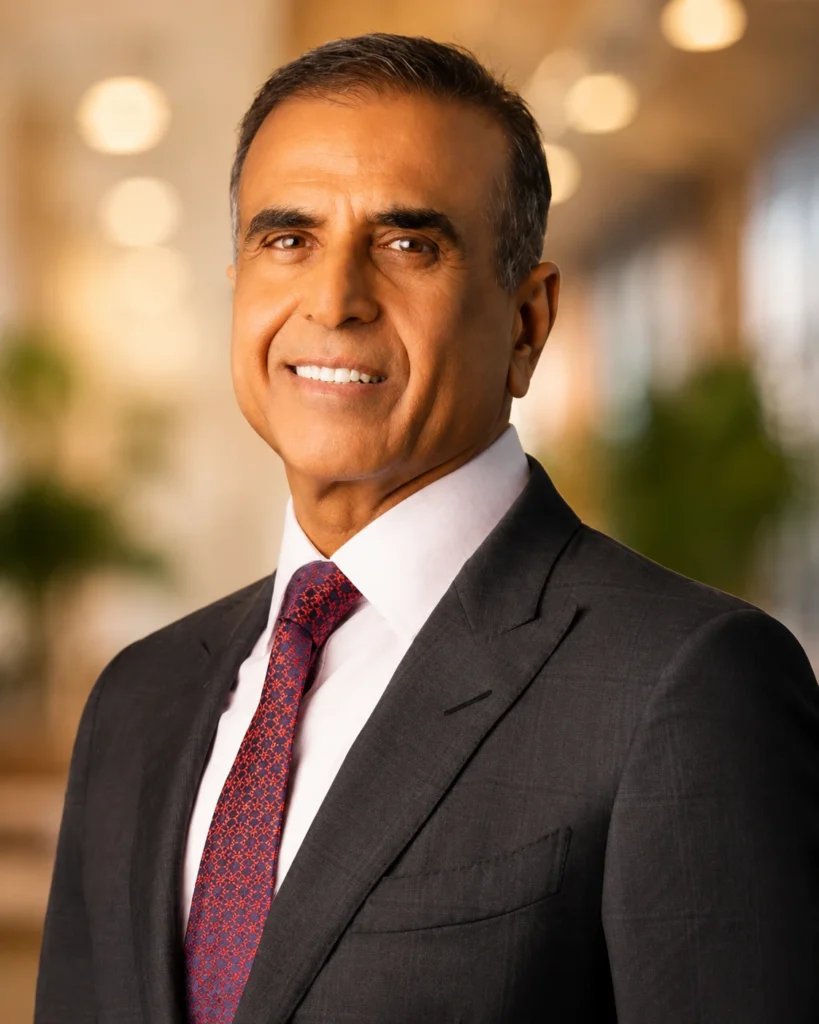
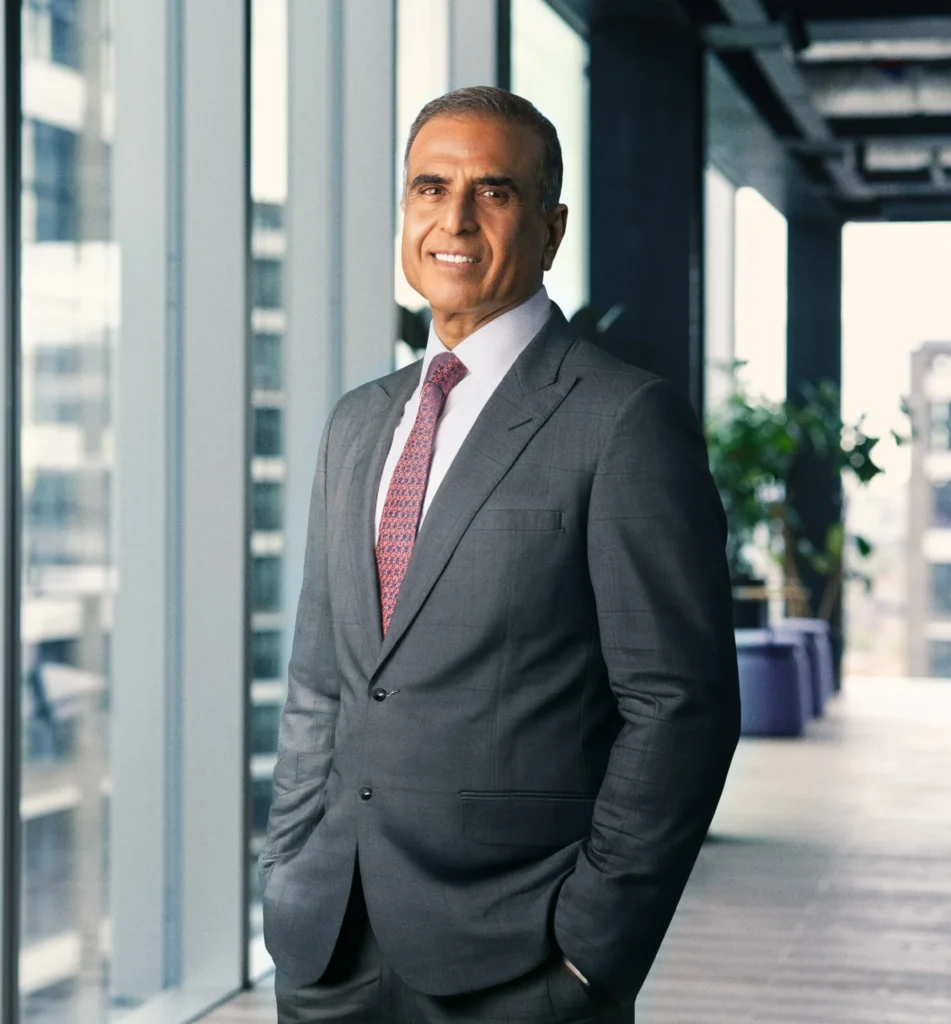
Airtel eventually became one of the strongest telecommunications brands in India, reaching a scale that would have been difficult to imagine when Mittal entered the industry. Its growth was driven not only by increasing mobile adoption but also by the company’s ability to adapt to successive technological changes. From basic voice services to mobile data, 4G and 5G, Airtel has repeatedly had to reinvent its network and commercial strategy. Mittal’s long term influence has been visible throughout these transitions, particularly in his determination to maintain Airtel’s position as a technologically capable operator.
Competition has always been intense in Indian telecommunications, and the arrival of Reliance Jio created one of the most disruptive periods the industry had experienced. Jio’s aggressive pricing and rapid 4G expansion placed enormous pressure on established operators. Airtel responded by investing heavily in network quality, spectrum, customer experience and digital services. Rather than competing solely on price, Mittal and Airtel increasingly emphasised network performance, reliability and the value of a broader digital ecosystem.
That approach has helped Airtel remain one of India’s leading telecommunications businesses. The company has expanded well beyond traditional mobile services into broadband, enterprise connectivity, digital television, financial services and other consumer and business platforms. The transformation reflects a wider change in telecommunications itself. A mobile network is no longer simply a means of making calls. It has become an infrastructure layer for entertainment, commerce, payments, cloud services, artificial intelligence and everyday digital activity.
Africa became another defining element of Mittal’s international strategy. Bharti Airtel expanded across several African markets, creating a business that today forms a major part of the group’s global telecommunications presence. The African operation has also demonstrated how mobile connectivity can become a foundation for financial services. Airtel Money has developed into a significant digital financial services platform, particularly in markets where traditional banking infrastructure is less extensive. The growth of mobile money illustrates Mittal’s long standing belief that telecommunications networks can become platforms for entirely new forms of economic participation.
The evolution of Airtel Money has become particularly important in the group’s future strategy. The business has developed into an important digital financial services operation across several African markets, with substantial activity in countries including Kenya, Nigeria and Tanzania. Its development demonstrates how telecommunications companies can use existing customer relationships and mobile infrastructure to provide financial services to people who may have limited access to conventional banking.
Mittal’s interests have also expanded beyond traditional telecommunications. Bharti Enterprises has developed businesses and investments spanning space communications, digital infrastructure, financial services, real estate and hospitality. The group’s expansion demonstrates how Mittal has continued to search for opportunities where technology, infrastructure and long term demographic trends intersect.
Space communications has been one of the more distinctive areas of this expansion. Mittal became an investor in OneWeb, a satellite communications company developing low Earth orbit satellite networks designed to provide broadband connectivity. His involvement reflected a belief that the future of communications would not depend exclusively on terrestrial mobile networks. Satellites could complement conventional infrastructure by extending connectivity to remote areas and creating additional options for businesses and governments.
This interest in satellite technology also connects naturally with Airtel’s traditional strengths. The future of global connectivity is likely to involve multiple technologies operating together. Fiber networks, mobile networks, satellite systems and cloud infrastructure can increasingly function as parts of one interconnected digital ecosystem. Mittal’s investments demonstrate an awareness that telecommunications leadership may depend on controlling or accessing several layers of this ecosystem rather than focusing exclusively on conventional mobile services.
Artificial intelligence is now adding another dimension to this transformation. AI requires enormous computing power and increasingly sophisticated networks, creating new opportunities for telecommunications companies with large infrastructure footprints. Airtel has been investing in AI driven customer services, network management and digital platforms while exploring how artificial intelligence can improve operational efficiency. For Mittal, the AI era represents another major technological transition in which communications infrastructure will become even more important.
The growth of data consumption also reinforces this opportunity. Consumers increasingly use mobile networks for video, gaming, cloud applications, financial transactions and AI enabled services. Businesses depend on reliable connectivity for cloud computing, remote operations and digital transformation. As these demands grow, network quality and capacity become increasingly valuable. Airtel’s strategy has therefore centred on maintaining strong infrastructure while expanding into higher value digital services.
Enterprise connectivity is another important part of the company’s evolution. Airtel Business serves companies with connectivity, cloud, cybersecurity, data centre and communications solutions. This creates a second major customer base beyond consumers and gives Airtel exposure to the digital transformation taking place across Indian businesses. The opportunity is especially significant as companies increasingly move their operations into cloud environments and require secure, reliable networks capable of supporting distributed workforces and connected systems.
Mittal’s leadership philosophy has also been shaped by partnerships. His career provides numerous examples of working with international companies rather than attempting to build every capability internally. Bharti has developed relationships with major global technology, financial and telecommunications companies, allowing it to combine its knowledge of local markets with international expertise. This approach has been particularly valuable in telecommunications, where technology changes quickly and capital requirements can be enormous.
His international influence extends beyond Bharti. Mittal has held prominent roles in global business organisations and has participated in international discussions around trade and investment. His position reflects the increasingly global nature of Indian business, with Bharti becoming an example of an Indian company capable of operating at substantial scale across multiple continents.
The company’s evolution has also created a different leadership challenge for Mittal. As founder, he is no longer responsible for the day to day management of every part of the organisation. Instead, his role is increasingly focused on strategic direction, capital allocation, major partnerships and long term opportunities. This requires a different form of leadership, one that involves maintaining the entrepreneurial culture of the original business while allowing professional management teams to operate at scale.
Mittal’s continuing influence over Airtel remains significant as the company navigates major developments in artificial intelligence, 5G, digital finance, satellite connectivity and international expansion. His presence provides continuity at a time when telecommunications is changing faster than at almost any previous point in its history.
His role is particularly significant because Airtel is entering an era in which telecommunications companies must compete not only with traditional operators but also with technology platforms, cloud providers and alternative connectivity businesses. The boundaries between communications, computing and financial technology are becoming increasingly blurred. Airtel’s challenge will be to maintain the strength of its core network business while capturing opportunities created by these converging industries.
Mittal’s long career suggests that he is comfortable with this kind of technological disruption. His business journey has repeatedly involved entering markets before they reached maturity and then building scale as demand increased. He did this with mobile communications in India, expanded internationally through Africa and invested in satellite communications before the current renewed interest in space based connectivity. His strategy has consistently involved identifying structural changes rather than simply responding to short term market movements.
The scale of Bharti Airtel today reflects the effectiveness of that approach. The company has become one of India’s most important communications businesses and a major telecommunications operator across Africa. It has developed capabilities across mobile services, broadband, enterprise solutions and financial technology, while its wider group interests extend into infrastructure and space communications.
Yet Mittal’s story is not simply about building a large company. It is also about changing the relationship between technology and accessibility. When he entered telecommunications, mobile communication was expensive and limited. His strategy helped turn it into a mass market service in India. That transformation had consequences beyond the telecommunications industry because affordable connectivity enabled new businesses, services and forms of social and economic participation.
The next phase could be equally consequential. Artificial intelligence, cloud computing, satellite connectivity and digital finance are creating a new generation of opportunities. Airtel already possesses many of the assets required to participate in this transformation, including a huge customer base, extensive networks, enterprise relationships and established digital platforms. The question will be how effectively these assets can be combined into new services that create value while maintaining the quality and financial discipline of the core telecommunications operation.
Sunil Bharti Mittal’s legacy can therefore be understood through the continuous expansion of what a telecommunications company can become. He started with telephones, moved into mobile communications, expanded across continents and then pursued opportunities in financial technology, digital infrastructure and space. Each stage has been connected by the same underlying belief that communications infrastructure can serve as a foundation for broader economic transformation.
His influence on Airtel extends beyond its market position. He helped establish an entrepreneurial model in which scale, partnerships, technology and customer accessibility could work together. That model allowed Bharti to compete against much larger international companies while creating one of the world’s significant telecommunications businesses.
As Airtel moves deeper into the age of 5G, artificial intelligence, digital finance and satellite connectivity, Mittal remains an important strategic figure behind its evolution. His continuing role as Chairman ensures that the founder’s perspective remains closely connected with the company’s long term direction. At the same time, the scale of Airtel means that its future increasingly depends on professional management, technological investment and the ability to execute across multiple markets.
Sunil Bharti Mittal’s journey ultimately represents one of the most striking examples of Indian entrepreneurship transforming a national business into an international technology enterprise. What began with a young entrepreneur manufacturing bicycle components eventually became a telecommunications group connecting hundreds of millions of people. The next chapter is no longer simply about connecting more customers. It is about building the digital infrastructure through which people, businesses, financial systems, machines and intelligent technologies will interact.
That evolution captures the essence of Mittal’s career. He has repeatedly looked beyond the market that existed and focused instead on the market that could emerge. From affordable mobile communications to African digital finance and satellite connectivity, his greatest strength has been recognising that communications technology is never static. As Airtel enters another period of technological change, that instinct for reinvention may remain one of the company’s most valuable assets.