José María Álvarez-Pallete
From Connectivity to Digital Transformation, The Leadership Journey of a Telecom Visionary
By Michelle Clark
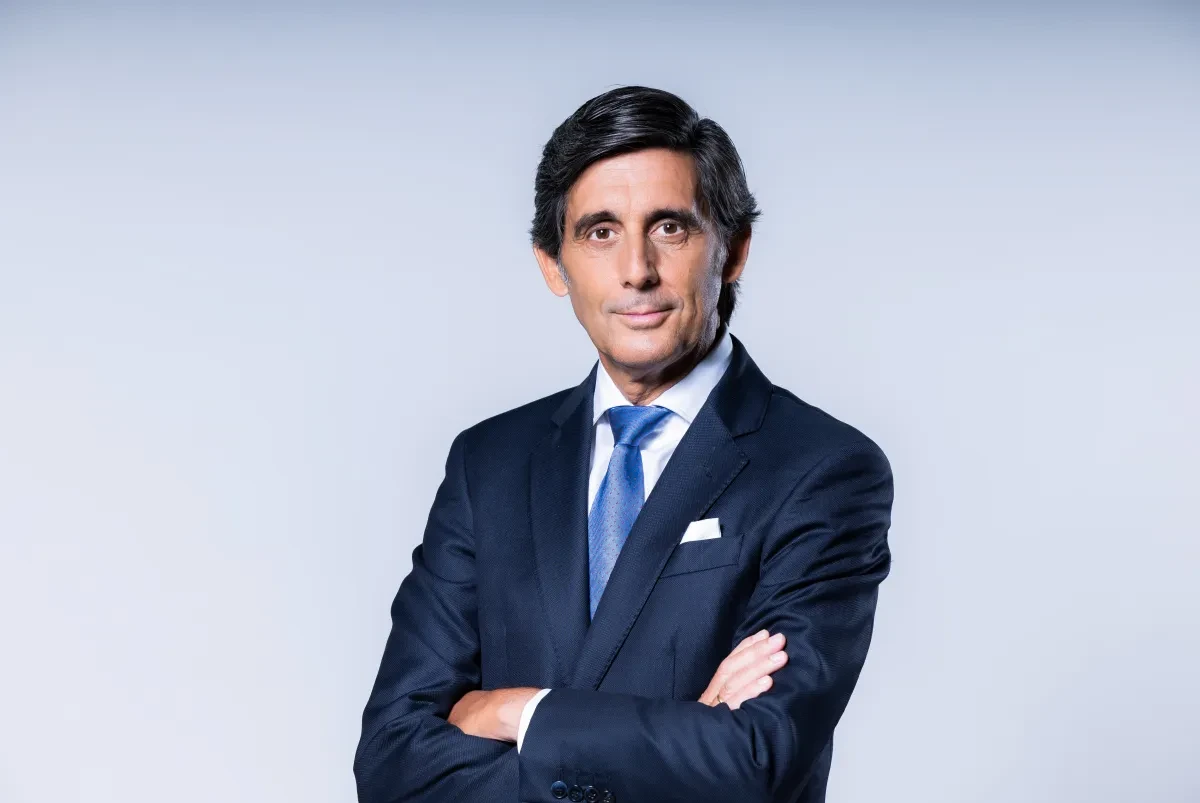
There are moments in business when leadership is measured not by the size of an organisation, but by its ability to understand where the world is heading before the destination becomes obvious. José María Álvarez Pallete built much of his reputation around that kind of foresight. His career at Telefónica became closely connected with one of the most significant transformations in the telecommunications industry, as a traditional communications company evolved into a broader digital technology and connectivity business. Although his tenure as Executive Chairman of Telefónica concluded in January 2025, the strategic direction and transformation associated with his years at the company remain an important part of its modern history.
Born in Madrid in 1963, Álvarez Pallete developed an academic and professional foundation strongly rooted in economics, finance and international management. He studied Economics at the Complutense University of Madrid and also pursued Economics at the Free University of Brussels. His education was complemented by an International Management Programme at IPADE and advanced research studies at the Complutense University of Madrid. This combination of financial expertise and international exposure would become a defining feature of his leadership style, particularly as his responsibilities expanded across multiple markets and increasingly complex telecommunications environments.
His professional career began in auditing with Arthur Young before he moved into investment and corporate finance. In the 1990s, he joined CEMEX, where he progressed through positions involving investor relations, financial management and international operations. His experience in Spain and Indonesia gave him exposure to the demands of managing businesses across different markets and cultures. By the time he entered Telefónica in 1999, he had already developed a perspective that combined financial discipline with international business management.
Telefónica would become the defining chapter of his career. He initially joined the Group as Chief Financial Officer of Telefónica Internacional before becoming responsible for corporate finance at the wider company. His rise through the organisation was notable for both its speed and its breadth. In 2002 he became Executive Chairman of Telefónica Internacional. In 2006 he moved into senior leadership of Telefónica Latinoamérica, becoming its Chairman in 2009.
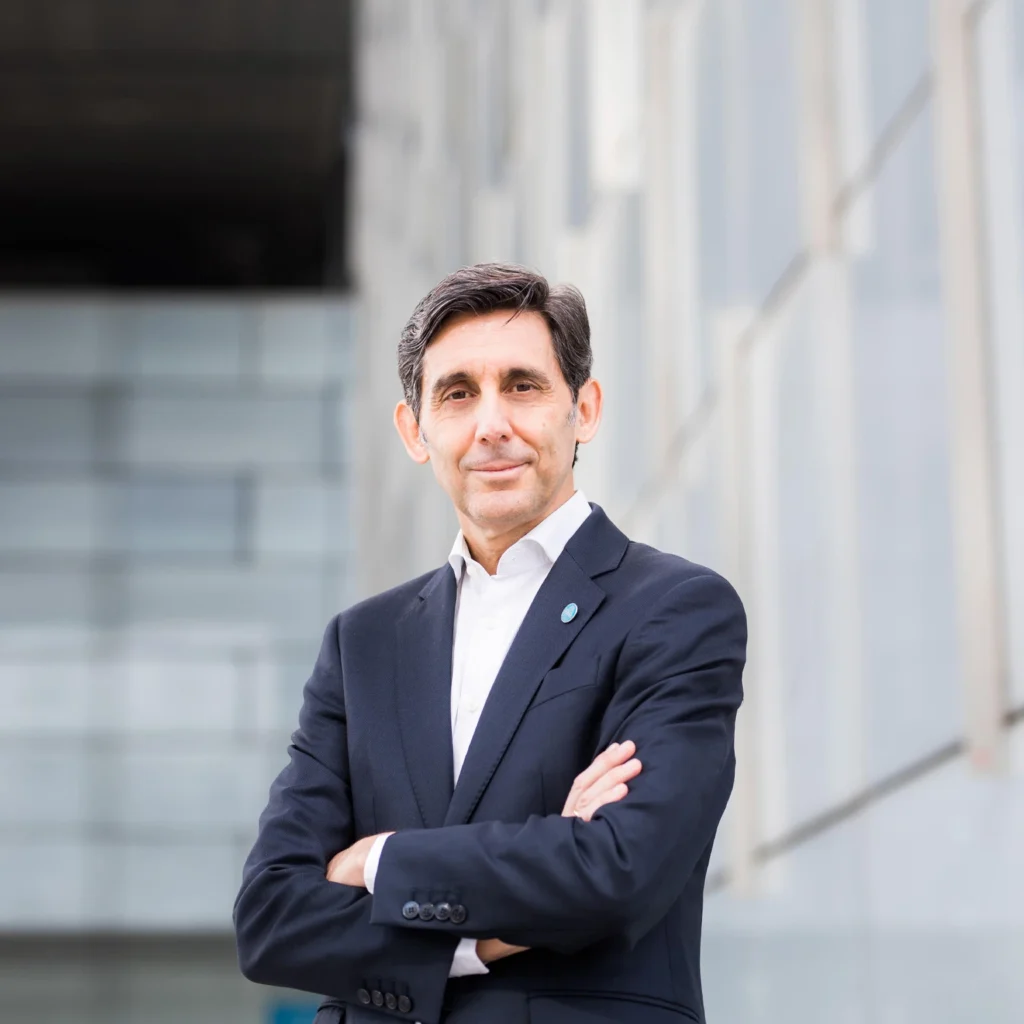
He later became Executive Chairman of Telefónica Europe and, in 2012, Chief Operating Officer of Telefónica. Each position brought a different challenge, from emerging market growth to European competition and the technological evolution of telecommunications.
His years in Latin America were particularly significant. The region was undergoing a dramatic transformation as mobile communications, broadband and digital services changed the way consumers and businesses connected. Álvarez Pallete was involved in major developments that reshaped Telefónica’s operations, including the integration of fixed and mobile businesses and the expansion of next generation networks. His experience in the region helped establish him as an executive capable of managing both operational complexity and large scale technological change.
When he became Chairman and CEO of Telefónica in April 2016, he inherited an organisation operating in an industry being transformed at extraordinary speed. Telecommunications was no longer simply about voice calls and traditional infrastructure. Smartphones had become central to everyday life, cloud computing was expanding, data consumption was accelerating and companies were increasingly expected to provide the digital foundations on which modern economies depended. Álvarez Pallete understood that the future of telecommunications would be defined by connectivity, platforms, data, artificial intelligence and digital services as much as by traditional network operations.
Under his leadership, Telefónica placed increasing emphasis on digitalisation and the development of advanced infrastructure. The company pursued the expansion of fibre networks, the evolution of mobile connectivity and the creation of digital platforms designed to support customers and businesses in a rapidly changing technological environment. Telefónica itself described his contribution as being central to the transformation of the Group and to the development of digital infrastructures and platforms across Europe and Latin America.
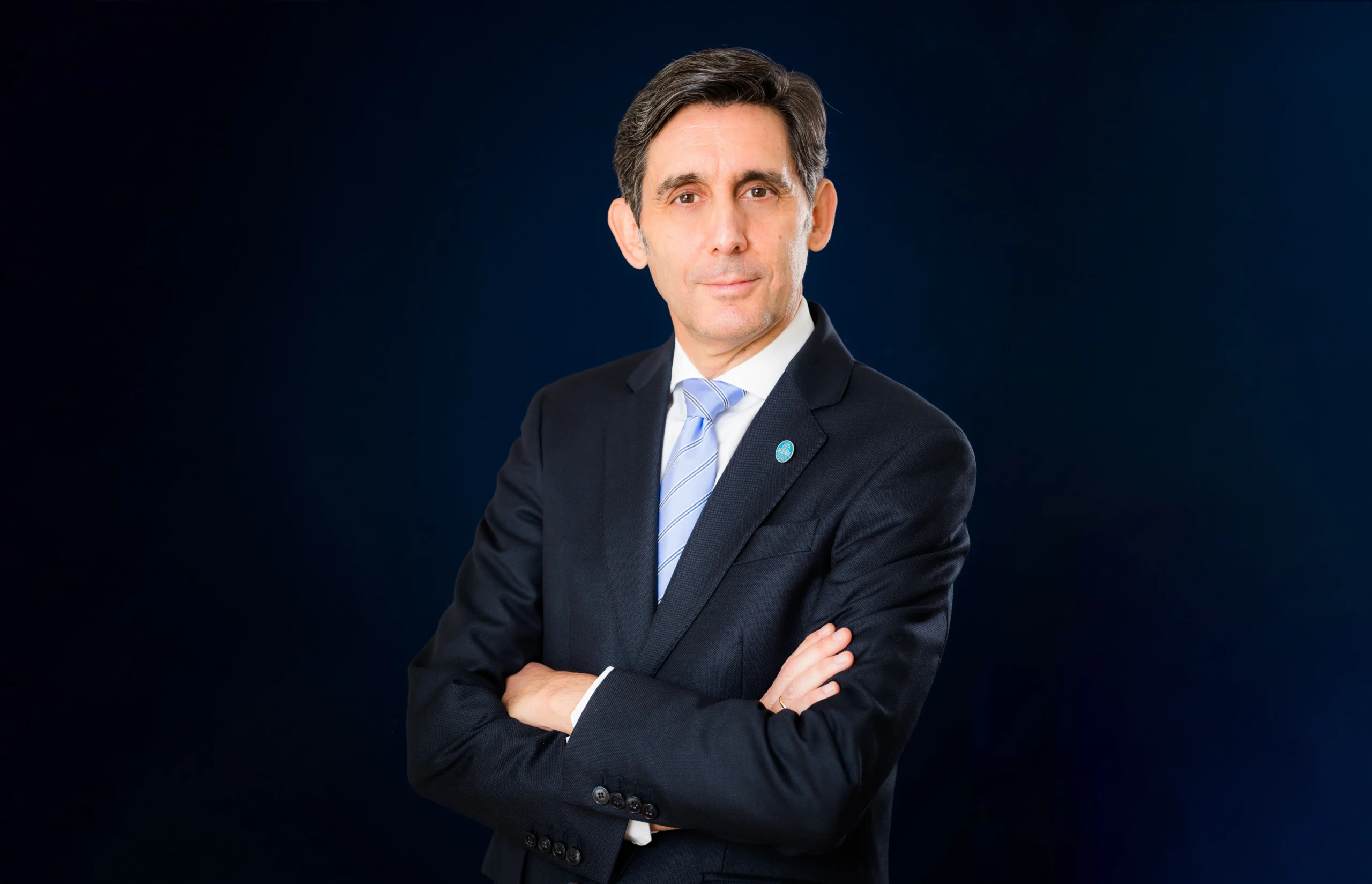
For Álvarez Pallete, technology was never simply about machines, networks or faster connections. A recurring theme in his public thinking was the importance of people. His personal professional philosophy has been expressed through the idea that technology should serve humanity rather than replace the human purpose behind it. That perspective became increasingly relevant as artificial intelligence emerged as one of the most influential forces shaping business, employment and society.
His interest in innovation also extended beyond Telefónica’s traditional corporate structure. Earlier in his career, he was associated with the creation of Wayra, Telefónica’s initiative supporting technology entrepreneurs and startups in Spain and Latin America. The idea reflected a broader understanding of innovation as something that could come from outside established corporations as well as from within them. By creating pathways for entrepreneurs to develop new technologies and business models, Telefónica positioned itself not only as a telecommunications provider but also as a participant in the wider digital ecosystem.
Leadership at a company of Telefónica’s scale also involves navigating forces far beyond technology. Regulation, investment requirements, changing consumer behaviour, geopolitical developments and competition all influence the telecommunications sector. Álvarez Pallete’s background in finance became particularly valuable in this environment because the transformation of telecommunications requires enormous long term investment while customers increasingly expect sophisticated services at competitive prices. His career demonstrated how financial understanding can become a strategic asset when combined with technological vision.
His influence also extended beyond Telefónica. In 2022, he became Chairman of the GSMA, the global industry association representing mobile operators and organisations across the wider mobile ecosystem. The role placed him at the centre of conversations about the future of connectivity, digital infrastructure, artificial intelligence, innovation and the development of the global digital economy. His involvement with the GSMA reflected the broader importance of telecommunications as essential infrastructure for modern society.
Another important dimension of his leadership has been the relationship between technology and society. Digital transformation can create enormous opportunities, but it can also deepen inequalities when access to technology, skills and reliable connectivity is uneven. Álvarez Pallete repeatedly emphasised the need for technology to contribute to human progress. This perspective is particularly relevant as artificial intelligence and digital services become embedded in education, healthcare, finance, government and everyday life.
His tenure also demonstrated that transformation is rarely a single event. It is a continuous process requiring companies to adapt repeatedly as technology changes. The telecommunications industry that existed when Álvarez Pallete joined Telefónica in 1999 was fundamentally different from the industry he led more than two decades later. During that period, fixed line communications gave way to mobile first lifestyles, broadband became essential infrastructure, smartphones transformed consumer behaviour and digital platforms became central to business.
The significance of José María Álvarez Pallete’s career therefore extends beyond a single corporate position. His journey illustrates how an executive can evolve alongside an industry, moving from finance into international operations, from regional leadership into global corporate strategy, and ultimately into a role helping shape conversations about the future of technology itself. His years at Telefónica were defined by an effort to prepare a historic telecommunications company for a digital world that was changing faster than traditional business models could accommodate.
Today, his legacy is best understood through the transformation he helped drive rather than simply through the title he once held. Telefónica’s evolution during his leadership reflected a wider shift taking place across the global economy, where connectivity became the foundation for digital life and telecommunications companies became increasingly important technology institutions. His story is ultimately one of adaptation, strategic courage and the belief that the most successful leaders are those who recognise that the future belongs not merely to those who build new technology, but to those who understand how that technology can create meaningful value for people and society.