Srini Gopalan
Growth Strategy Defining T-Mobile's Next Era
By Nida kanwal
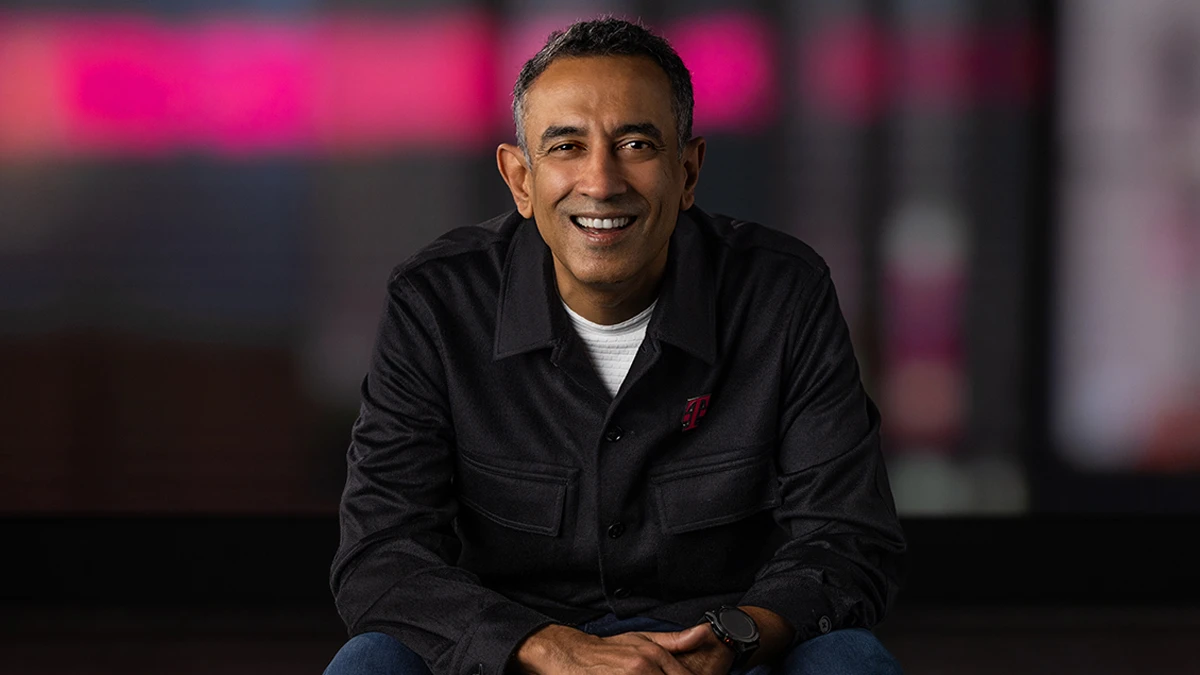
A fresh leadership chapter is taking shape at T Mobile US as Srini Gopalan takes responsibility for guiding one of America’s most successful wireless companies into its next phase of growth. Appointed President and Chief Executive Officer in November 2025 after serving as Chief Operating Officer, Gopalan brings extensive international experience across telecommunications, technology and financial services. His arrival comes at a moment when T Mobile is seeking to build on years of strong customer growth while finding new opportunities in broadband, artificial intelligence, digital services and advanced connectivity.
Gopalan is not an outsider arriving without knowledge of the business. He joined T Mobile in March 2025 as Chief Operating Officer after previously serving on the company’s board of directors. During his time as COO, he was responsible for important areas of technology, go to market operations and customer experience across T Mobile’s Consumer and Business groups. His work focused on strengthening execution and accelerating the company’s transformation into a more data driven, AI enabled and digital first organisation. That experience gave him a close view of the company before he assumed its top leadership position.
His professional background stretches well beyond the United States. Before joining T Mobile, Gopalan served as CEO of Deutsche Telekom Germany, where he helped accelerate growth, expand fiber infrastructure to millions of homes and achieve record mobile market share. Earlier in his career, he held senior positions at Bharti Airtel, Vodafone, Capital One and Deutsche Telekom. These experiences exposed him to highly competitive telecommunications markets and to the increasing importance of digital technology, data and customer focused operations.
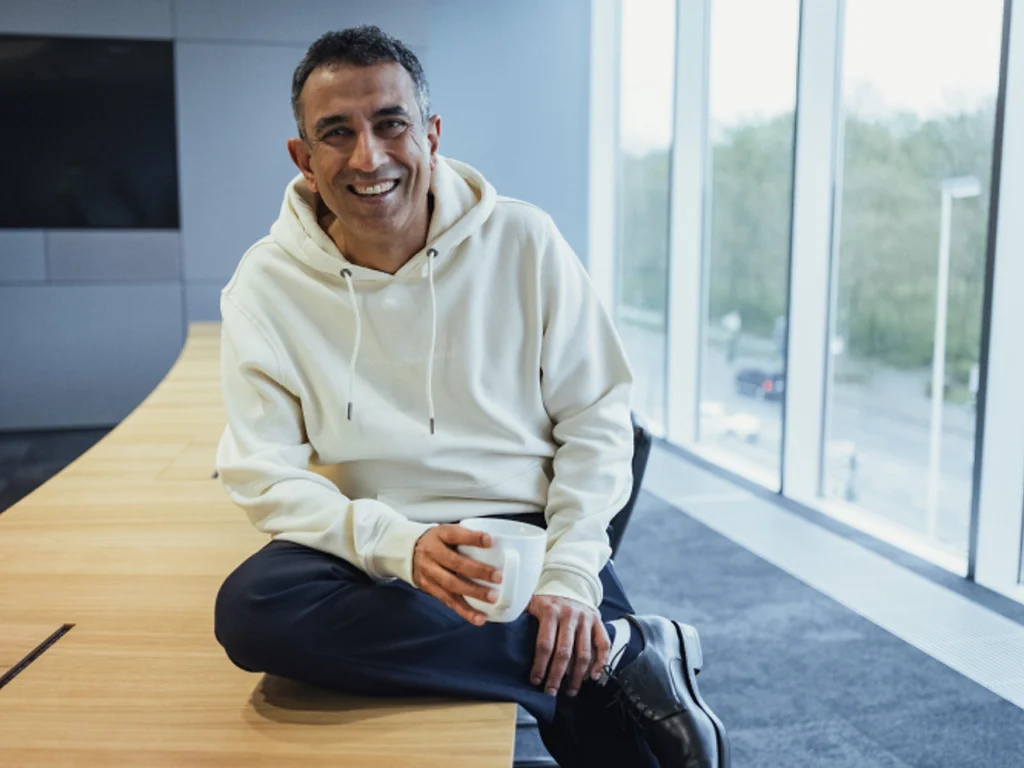
That international perspective is particularly relevant to T Mobile because the company has developed a reputation for challenging established approaches to the wireless industry. The Un carrier philosophy has traditionally focused on simplifying products, improving customer value and disrupting conventional industry practices. Gopalan has inherited that culture while also being tasked with finding the next stage of growth. His challenge is not simply to preserve T Mobile’s momentum but to extend it into markets where the company can create additional value from its network and customer relationships.
The early results of his tenure have provided a strong foundation. In the first quarter of 2026, T Mobile reported accelerating postpaid net account growth and strong postpaid average revenue per account growth. The company also reported industry leading service revenue growth, strong net income and significant cash flow growth. Gopalan described the results as evidence that T Mobile was successfully attracting new customer relationships while deepening engagement with its existing customer base.
Customer relationships are central to Gopalan’s strategy because the American wireless market is no longer simply a contest over network coverage. Network quality remains essential, but consumers also consider price, service experience, device options, digital convenience and the wider range of services available from their provider. T Mobile has built considerable strength by positioning itself as a company that can challenge traditional industry assumptions. Under Gopalan, the focus is increasingly on making that differentiation broader and more difficult for competitors to replicate.
Broadband represents one of the most important opportunities. T Mobile has used its wireless network to build a rapidly growing fixed wireless broadband business, giving households an alternative to traditional cable and fiber providers. Gopalan has identified substantial room for further expansion. In an August 2026 interview with the Financial Times, he said he wanted to more than double T Mobile’s broadband customer base to 20 million over the next four years. He also highlighted the opportunity to increase the company’s presence in rural markets.
This ambition demonstrates how T Mobile is becoming more than a mobile phone company. Wireless connectivity can now serve multiple purposes, from smartphones and tablets to home internet, connected devices and business applications. The company’s network therefore becomes an asset that can support several different revenue streams. Gopalan’s task is to make the most of that infrastructure while ensuring that growth does not compromise the customer experience that helped T Mobile gain market share.
His approach to technology is closely connected to this objective. As COO, Gopalan worked to make T Mobile more data driven, AI enabled and digitally focused. As CEO, he is now responsible for extending that transformation across the organisation. Artificial intelligence can influence customer service, network management, personalisation, fraud prevention and internal operations. The opportunity is not simply to sell AI products but to use AI throughout the company to make the business more efficient and the customer experience more responsive.
The network itself remains at the heart of the strategy. T Mobile’s growth over the past several years has been supported by significant investment following its merger with Sprint. The combination gave T Mobile additional spectrum and greater scale, allowing the company to strengthen its 5G network and compete more aggressively with AT&T and Verizon. Gopalan now inherits a network that has already become one of the company’s greatest competitive advantages and must determine how to turn that advantage into another cycle of growth.
His leadership style also appears to place considerable importance on starting with the customer rather than the technology. That perspective was evident in his recent comments about satellite based mobile services. As SpaceX prepares to expand Starlink’s terrestrial mobile ambitions, Gopalan has argued that the potential threat to traditional wireless operators has been exaggerated. His central question has been what specific customer problem satellite mobile services would solve that existing terrestrial networks cannot already address effectively.
The argument is significant because satellite connectivity is becoming an increasingly important part of the communications landscape. Rural areas, remote locations and emergency situations can benefit from satellite services where conventional infrastructure is difficult to deploy. Gopalan has acknowledged that satellites can complement terrestrial networks, but he does not view them as straightforward replacements for the extensive mobile infrastructure already operated by T Mobile and its competitors. His position reflects a broader belief that technology must ultimately be judged by the customer value it creates.
Another important aspect of Gopalan’s strategy is his confidence that T Mobile still has substantial room to grow. The company has already achieved significant gains in the American wireless market, yet he believes the business remains capable of expanding its customer base and increasing its share of broadband and rural connectivity. In his recent comments, he argued that investors may be underestimating the amount of growth still available to T Mobile.
That confidence will be tested by the competitive response from AT&T and Verizon. Both companies have been investing heavily in their wireless and broadband networks and have been working to regain momentum in areas where T Mobile previously gained an advantage. The American telecommunications market therefore remains intensely competitive. Gopalan must maintain T Mobile’s reputation for value and network quality without allowing pricing pressure to weaken profitability.
The company is also expanding beyond traditional connectivity into what it describes as smart adjacencies. These opportunities can include broadband, connected devices, business services and other products that use T Mobile’s network and customer relationships. The first quarter of 2026 results highlighted the company’s growth portfolio across core wireless, broadband and these adjacent areas, suggesting that management sees multiple engines capable of contributing to the next stage of expansion.
Gopalan’s leadership is also being shaped by his experience in Europe. His time running Deutsche Telekom Germany gave him direct exposure to fiber expansion, mobile competition and the challenge of modernising a large telecommunications organisation. The fact that he previously doubled the German business’s growth rate while expanding fiber and achieving record mobile market share provides an important indication of the operating discipline he brings to T Mobile.
His academic background adds another dimension to his profile. Gopalan earned a bachelor’s degree in business administration from St Stephen’s College in New Delhi and an MBA from the Indian Institute of Management Ahmedabad. His career has subsequently combined business strategy with technology and telecommunications, giving him experience across markets where customer behaviour and technological change have a direct impact on corporate performance.
For T Mobile, the timing of his appointment is important. The company is entering a period in which the traditional wireless market is becoming more mature, while new opportunities in broadband, AI and digital services are opening rapidly. Gopalan therefore has to protect what already works while developing new sources of growth. That balance requires a combination of operational discipline and willingness to experiment, qualities that have been central to his career.
The next several years will show whether Gopalan can turn T Mobile’s existing strengths into an even broader technology and connectivity platform. The company has a powerful wireless network, a growing broadband business, a strong customer base and a culture built around challenging the established order. The opportunity is to combine those assets in ways that increase customer loyalty and create new revenue without diluting the qualities that made the Un carrier successful.
Srini Gopalan’s story at T Mobile is therefore beginning from a position of considerable strength. He arrives as a leader with international telecommunications experience, a detailed understanding of T Mobile’s operations and a clear interest in digital transformation. His immediate challenge is to maintain the company’s competitive momentum, but his larger task is more ambitious. He must define what the Un carrier becomes after its most disruptive years have passed.
If Gopalan succeeds, T Mobile could enter the next decade with a business that reaches well beyond smartphones. Broadband, advanced wireless networks, AI driven services and connected technologies could turn its network into a broader platform for homes, businesses and consumers. His leadership will be measured not only by subscriber numbers or financial results, but by whether he can translate T Mobile’s history of disruption into a sustainable new model of growth. For a company that built its identity around changing the rules of wireless, that may be the most important challenge of all.