Zhang Jinliang
The Strategic Banker Building the Future of Infrastructure Finance
By Michelle Clark
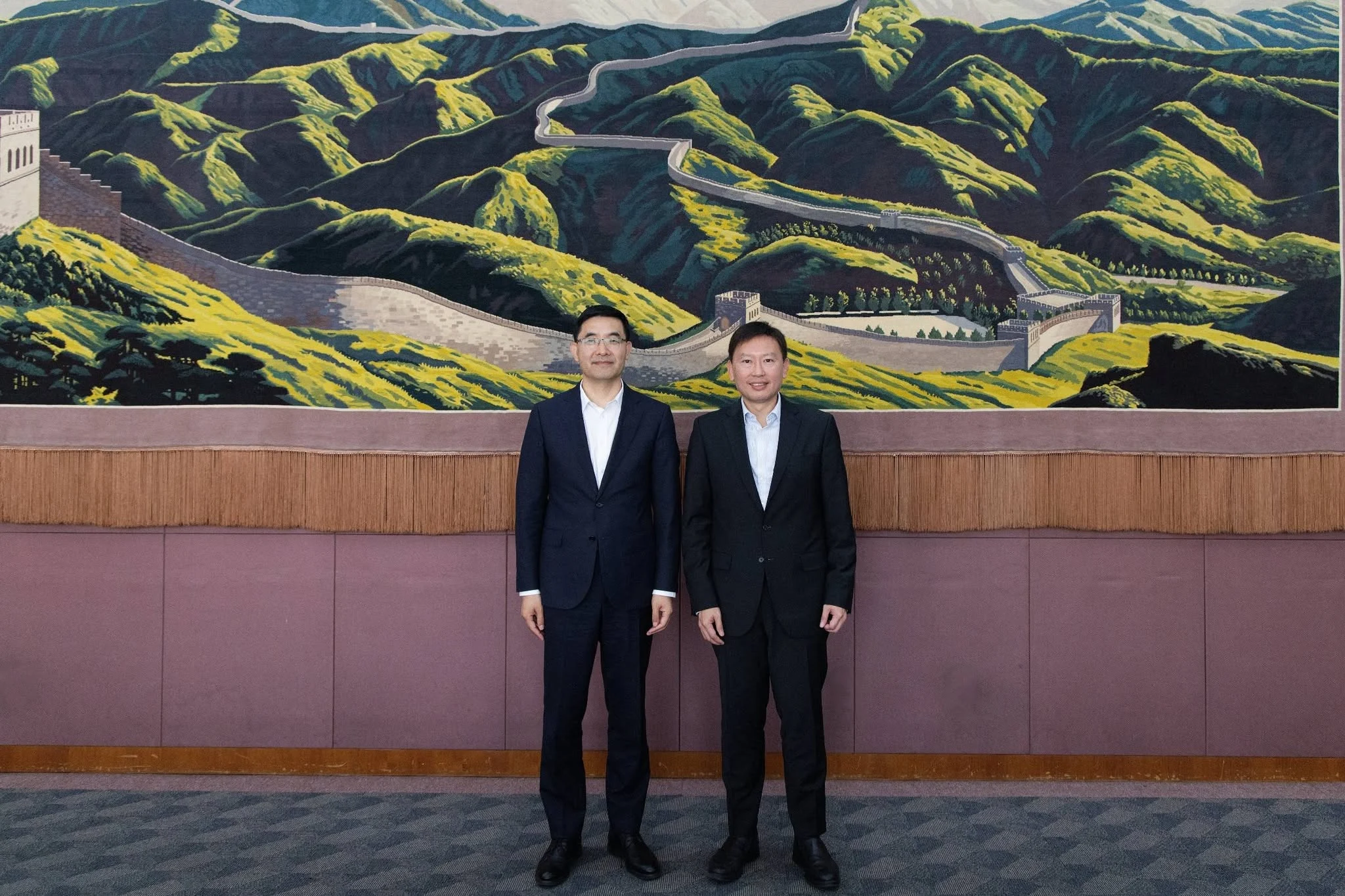
Financial institutions carry responsibilities as extensive and strategically important as China Construction Bank (CCB). Ranked among the world’s largest commercial banks by assets and market value, CCB has long played a central role in financing China’s rapid economic development, supporting everything from major infrastructure projects and urban expansion to corporate investment and household finance. At the helm of this banking giant is Zhang Jinliang, Chairman of China Construction Bank, whose leadership reflects disciplined financial management, technological innovation, and a commitment to sustainable long term growth. Although his public profile remains relatively understated compared with many Western banking executives, Zhang oversees one of the most influential financial institutions in the global economy, making him one of the most significant figures in international banking.
Zhang Jinliang assumed leadership during a period of profound transformation within both China’s economy and the international financial system. Global banking has entered an era shaped by digital disruption, slower economic growth, changing demographics, geopolitical uncertainty, climate related investment, and increasingly sophisticated regulatory expectations. For an institution of CCB’s scale, adapting successfully requires more than financial expertise. It demands strategic vision capable of balancing commercial performance with broader national development priorities while maintaining stability in an increasingly complex economic environment.
Before becoming Chairman of China Construction Bank, Zhang Jinliang accumulated decades of experience across China’s financial sector. His career encompassed senior leadership positions in banking, financial management, and institutional governance, providing him with a comprehensive understanding of credit markets, capital management, corporate finance, and regulatory oversight. This extensive background shaped a leadership philosophy centred on prudent decision making, operational efficiency, and long term institutional resilience rather than aggressive expansion or excessive financial risk.
China Construction Bank occupies a unique position within China’s financial landscape. Established to support the country’s vast construction and infrastructure programmes, the bank has evolved into a comprehensive financial institution serving hundreds of millions of retail customers alongside corporate clients, government agencies, multinational companies, and institutional investors. Its services span retail banking, commercial lending, investment banking, wealth management, digital finance, housing finance, and international banking, making it one of the most diversified financial organisations in the world.
Infrastructure financing remains one of the defining pillars of CCB’s identity. Throughout China’s remarkable economic development, the bank has provided financing for transportation networks, urban redevelopment, energy facilities, telecommunications infrastructure, industrial projects, and public services. Under Zhang Jinliang’s leadership, the institution continues supporting infrastructure investment while adapting its financing strategies to reflect evolving economic priorities, including advanced manufacturing, digital infrastructure, renewable energy, and technological innovation.

As China’s economy transitions towards higher quality growth, the role of financial institutions has become increasingly sophisticated. Rather than simply expanding credit volumes, banks are expected to allocate capital more efficiently, support innovation, strengthen productivity, and contribute to financial stability. Zhang has consistently emphasised disciplined lending practices, recognising that sustainable economic development depends upon prudent risk management and responsible capital allocation rather than rapid expansion alone.
Risk management has consequently become one of the central themes of his leadership. Large commercial banks face exposure to a wide range of economic sectors, including property, manufacturing, infrastructure, technology, agriculture, and international trade. Economic fluctuations, changing market conditions, and evolving regulatory standards require constant monitoring of credit quality and financial resilience. Zhang has prioritised strengthening internal controls, improving asset quality, enhancing governance, and maintaining robust capital reserves to ensure the bank remains well positioned throughout changing economic cycles.
China’s financial authorities have increasingly focused on reducing systemic risk while promoting long term financial stability. In response, China Construction Bank has continued improving compliance systems, strengthening corporate governance, and refining its approach to lending and capital management. These measures are intended to preserve the institution’s financial strength while enabling it to continue supporting economic growth across a broad range of industries and regions.
Technology has become one of the most transformative forces shaping the bank’s future under Zhang Jinliang’s leadership. Digital innovation is fundamentally redefining how financial services are delivered, with customers expecting seamless mobile banking, intelligent financial advice, secure digital payments, and highly personalised services. CCB has invested extensively in digital platforms, cloud computing, artificial intelligence, blockchain applications, and advanced data analytics to modernise both customer services and internal operations.
Artificial intelligence is increasingly integrated throughout the bank’s business model. Intelligent systems support credit assessment, fraud prevention, compliance monitoring, customer service, and operational efficiency. Automation has streamlined many routine administrative processes, allowing employees to focus on higher value advisory services and more complex customer relationships. These technological investments are improving productivity while enabling faster, more accurate financial decision making across the organisation.
China’s leadership in digital payments has created one of the world’s most advanced financial technology ecosystems. Consumers now expect instant transactions, mobile financial management, and integrated digital services as standard features of modern banking. Under Zhang’s guidance, China Construction Bank has continued expanding its digital capabilities to remain competitive while preserving the trust, security, and reliability expected from one of the country’s largest financial institutions.
Housing finance continues to represent another important area of CCB’s operations. For decades, the bank has been closely associated with supporting residential property development and home ownership across China. As the country’s property market undergoes structural adjustment, balancing continued support for housing demand with prudent lending standards has become increasingly important. Zhang has emphasised careful credit management designed to promote financial stability while supporting sustainable development within the housing sector.
Corporate banking remains equally central to the institution’s long term strategy. China Construction Bank provides financing for manufacturers, exporters, technology companies, infrastructure developers, healthcare providers, and businesses operating across virtually every major industry. Supporting industrial modernisation, technological advancement, and innovation has become increasingly important as China seeks to strengthen productivity and global competitiveness. The bank’s ability to allocate capital effectively across these sectors positions it as a critical contributor to national economic transformation.
International expansion has also gained increasing significance. As Chinese companies continue investing overseas and global trade networks become more interconnected, demand for international financial services has grown substantially. China Construction Bank has expanded its overseas presence across major financial centres, supporting cross border investment, trade finance, foreign exchange services, and multinational corporate clients. Zhang recognises that maintaining global competitiveness requires strong international capabilities alongside domestic leadership.
Environmental sustainability has become another major strategic priority. Governments, investors, and financial institutions worldwide are placing greater emphasis on green finance, renewable energy, and environmentally responsible investment. Under Zhang’s leadership, China Construction Bank has expanded financing for clean energy projects, sustainable infrastructure, energy efficient construction, and environmentally focused industrial development. These initiatives align commercial opportunities with broader economic objectives surrounding low carbon growth and environmental responsibility.
Corporate governance remains fundamental to managing an institution of CCB’s enormous scale. Transparency, regulatory compliance, operational accountability, and effective internal controls are essential for maintaining confidence among customers, shareholders, regulators, and international investors. Zhang has continued strengthening governance structures while promoting a culture of professionalism, operational discipline, and continuous improvement throughout the organisation.
Unlike many internationally recognised banking executives, Zhang Jinliang maintains a measured and relatively low profile in public discourse. His leadership is reflected primarily through institutional performance, strategic execution, and long term organisational development rather than frequent public appearances or commentary. This understated approach reflects a broader management philosophy that values stability, consistency, and sustained performance over short term visibility.
Nevertheless, the challenges facing China Construction Bank remain considerable. Slower domestic growth, demographic ageing, evolving regulatory requirements, technological disruption, geopolitical uncertainty, and increasing competition from digital financial platforms all require continuous adaptation. Successfully navigating these developments demands ongoing investment in innovation while preserving the financial resilience that has long defined the institution.
At the same time, CCB possesses formidable competitive advantages. Its vast customer base, strong capital position, extensive domestic branch network, expanding international operations, and advanced digital capabilities provide an exceptional platform for future growth. Under Zhang Jinliang’s leadership, the bank continues strengthening its ability to serve individuals, businesses, and governments while supporting China’s broader economic development objectives.
Zhang Jinliang’s leadership ultimately demonstrates that enduring success in banking is built upon discipline, adaptability, and strategic foresight. Rather than pursuing rapid expansion for its own sake, he has focused on reinforcing financial stability, embracing digital transformation, improving governance, and supporting sustainable economic progress. These priorities have positioned China Construction Bank to remain one of the world’s leading financial institutions during a period of unprecedented economic and technological change.
As global banking continues evolving through artificial intelligence, digital finance, sustainable investment, and shifting international economic relationships, China Construction Bank is expected to remain at the forefront of the industry. Under Zhang Jinliang’s stewardship, the institution is seeking not only to preserve its position as one of the world’s largest banks but also to redefine how modern banking can support infrastructure, innovation, and long term prosperity. His legacy is likely to be shaped by steady leadership, prudent financial management, and an enduring commitment to building a stronger and more resilient financial future.