Sarah London
The Steel Nerved Strategist Reshaping the Fractured Frontiers of American Healthcare
By Michelle Clark

Lugubrious realities often forge the most consequential leaders, especially within industries burdened by political scrutiny, economic volatility and immense social consequence. Few corporate arenas carry such relentless pressure as American healthcare, where the fortunes of vast enterprises intersect daily with the anxieties of ordinary citizens. Within this turbulent landscape, Sarah London has emerged as one of the most intriguing and strategically astute executives of the modern era. Composed yet formidable, analytical yet quietly ambitious, London represents a new generation of healthcare leadership shaped not by old industrial orthodoxy but by technological fluency, institutional adaptability and relentless strategic discipline.
As chief executive of Centene Corporation, London occupies one of the most demanding positions in American business. Centene stands at the crossroads of government funded healthcare programmes, managed care services and complex public policy structures affecting millions of vulnerable citizens. The company’s reach extends deeply into Medicaid, Medicare and marketplace insurance plans, sectors perpetually influenced by elections, regulation and economic instability. To govern such an institution requires more than financial competence. It demands exceptional resilience, political dexterity and the capacity to navigate moral complexity without succumbing to ideological turbulence.
London’s ascent to corporate prominence reflects the changing architecture of executive leadership itself. Unlike many healthcare chiefs forged exclusively through actuarial or insurance traditions, her background carries a distinctly modern character shaped by technology, digital transformation and data driven strategy. Educated at Harvard University before completing advanced studies at the University of Chicago, she developed a reputation for intellectual sharpness and unusually broad strategic thinking. Early in her career, she worked across investment, healthcare innovation and operational leadership, accumulating a perspective far wider than conventional insurance administration.
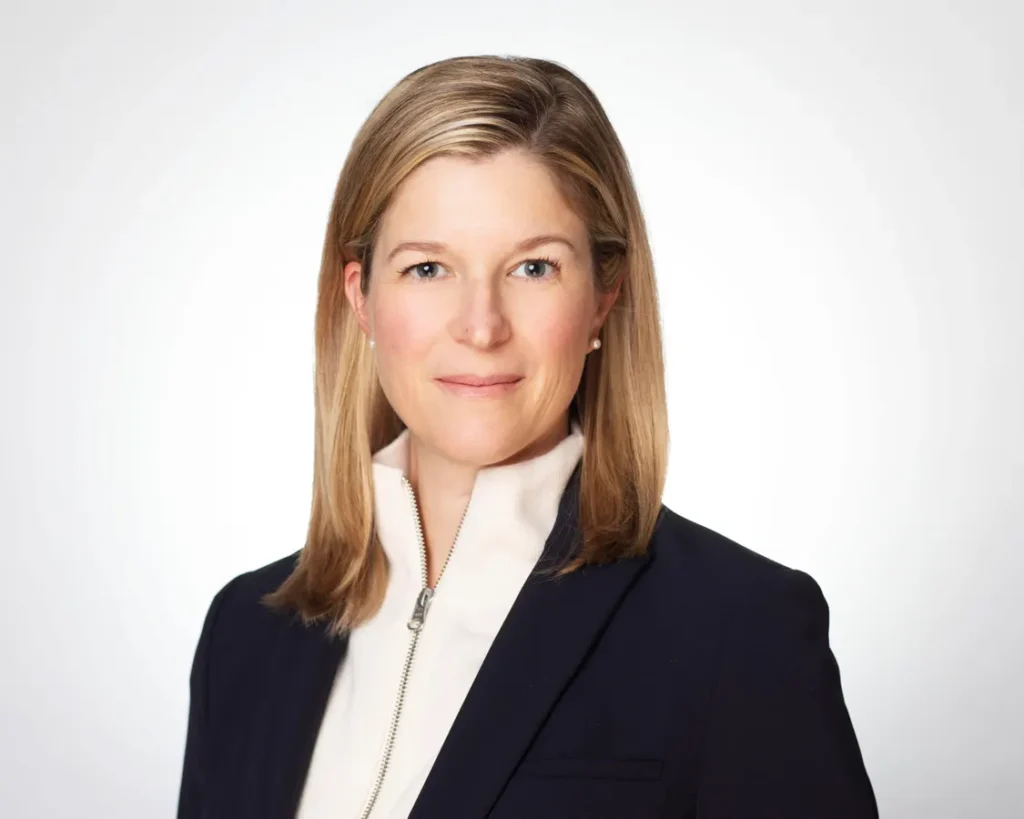

Before becoming chief executive, London played a crucial role in Centene’s technological and strategic evolution. Her experience overseeing digital systems and enterprise modernisation granted her unusual insight into how healthcare was changing beneath the surface. She recognised earlier than many executives that the future of healthcare would depend increasingly upon information infrastructure, predictive analytics and integrated patient engagement rather than merely transactional insurance operations.
When London assumed leadership of Centene in 2022, the company was emerging from a period of considerable strain and scrutiny. Operational complexity, rising medical costs and investor concerns had generated uncertainty surrounding the corporation’s direction. Simultaneously, broader public distrust towards healthcare insurers continued to intensify across the United States. Many Americans viewed large healthcare corporations with suspicion, associating them with bureaucratic obstruction, rising expenses and inaccessible care. London inherited not only a sprawling enterprise but also the immense challenge of restoring confidence and strategic coherence.
Her response reflected a notably disciplined and unsentimental leadership style. London projected calm authority rather than flamboyant optimism. She rarely indulged in corporate grandstanding or fashionable executive theatre. Instead, she emphasised operational clarity, technological modernisation and long term sustainability. There is an unmistakably cerebral quality to her public presence, one suggesting a leader more interested in structural transformation than personal mythology.
Under her stewardship, Centene intensified its focus upon streamlining operations and improving efficiency while continuing to serve populations often neglected within the broader healthcare marketplace. The company’s core business remains deeply connected to government sponsored healthcare programmes, particularly for lower income individuals and vulnerable communities. This reality grants Centene a uniquely sensitive position within American healthcare politics. Every policy debate concerning Medicaid funding or healthcare access directly influences the company’s future.
London appears acutely aware of this delicate balance. She frequently speaks about healthcare not merely as commerce but as infrastructure essential to societal stability. Her rhetoric consistently emphasises accessibility, coordination and community impact. Yet beneath this measured language lies considerable strategic toughness. Healthcare management within public programmes is intensely competitive, politically exposed and operationally unforgiving. London has demonstrated repeatedly that she possesses the resilience required to navigate such terrain.
One of her defining strengths has been her understanding of technological transformation. The healthcare industry has long struggled with inefficiency, fragmented systems and administrative complexity. London recognised that digital infrastructure would become increasingly central to improving patient outcomes and controlling costs. Under her leadership, Centene accelerated investment in data integration, virtual care capabilities and advanced analytics designed to identify healthcare needs more proactively.
Supporters regard this strategy as essential modernisation. They argue that technology driven healthcare coordination can improve preventative care while reducing unnecessary expenditure. Critics, however, caution against excessive corporate reliance upon algorithms and data systems within healthcare decision making. Questions concerning privacy, accountability and equitable treatment continue to shadow the industry’s digital transformation. London therefore operates within a landscape where innovation and ethical scrutiny advance simultaneously.
Her leadership style remains notably restrained compared with the celebrity culture surrounding certain modern executives. London rarely seeks the spotlight unnecessarily. Instead, she projects steadiness and intellectual discipline. This composure became especially valuable during periods of market uncertainty and political volatility. Investors and stakeholders often favour leaders capable of projecting stability amid turbulence, and London cultivated precisely that reputation.
The broader healthcare environment during her tenure has been exceptionally demanding. Rising inflation, labour shortages, demographic pressures and political polarisation have all intensified strain across healthcare systems. Insurers and managed care organisations faced mounting criticism concerning affordability and access. London approached these challenges with measured pragmatism rather than ideological confrontation. She consistently framed healthcare issues as operational and structural problems requiring collaboration, innovation and disciplined management.
There is also a striking generational dimension to her leadership. London belongs to a cohort of executives shaped by the convergence of healthcare and technology rather than by traditional insurance orthodoxy alone. Her worldview reflects a recognition that healthcare corporations increasingly function as complex information enterprises as much as medical payers. This perspective has influenced Centene’s strategic direction profoundly.
Yet her tenure also reveals the deeper contradictions embedded within American healthcare capitalism itself. Centene derives significant revenue from public healthcare programmes while simultaneously operating as a profit driven corporation accountable to shareholders. Critics argue that such arrangements inevitably create tension between financial incentives and patient welfare. London therefore occupies an inherently paradoxical position, expected simultaneously to deliver commercial growth and social responsibility.
Her handling of these tensions has generally reflected disciplined professionalism. She seldom engages in emotional rhetoric or political spectacle. Instead, she emphasises measurable outcomes, coordinated care and operational improvement. Some observers interpret this as evidence of pragmatic leadership suited to modern healthcare complexity. Others view it as the polished language of corporate consolidation. Regardless of interpretation, few dispute her strategic intelligence or managerial capability.
Financially, Centene demonstrated considerable resilience under her guidance. Markets responded positively to efforts aimed at simplifying operations and strengthening long term stability. London’s leadership reassured investors that the company possessed both strategic clarity and operational discipline during a period when healthcare organisations faced extraordinary external pressure.
There is an unmistakable endurance to her approach. Unlike executives seduced by short term acclaim or aggressive theatrics, London appears focused upon institutional durability and structural adaptation. She understands that healthcare transformation unfolds gradually through systems, policy and infrastructure rather than through dramatic declarations alone.
As debates surrounding healthcare access, affordability and technological integration continue to intensify across the United States, London’s influence will likely grow further. Admirers will portray her as a modernising strategist who strengthened Centene’s operational foundations while advancing digital healthcare innovation. Critics will continue questioning the immense power wielded by private healthcare corporations managing public programmes. Both perspectives illuminate the complexity of her role within a deeply contested industry.
What remains undeniable is the scale of her impact. Sarah London has emerged as one of the defining healthcare executives of her generation, steering Centene through turbulence with intellectual discipline and uncommon composure. Beneath her measured demeanour resides a leader of formidable resolve, one who understands that modern healthcare leadership requires not spectacle but strategic endurance.
In an era increasingly dominated by noise, ideological conflict and executive self promotion, London represents something markedly different. She embodies a quieter but no less powerful form of authority rooted in systems thinking, technological fluency and institutional resilience. Through calculated transformation and relentless focus, she has helped redefine what leadership within modern healthcare can resemble. Her legacy will ultimately rest not merely upon corporate growth but upon how effectively she navigated the fractured and politically charged frontier of American healthcare itself.