Meta’s New Glasses
Bet Is Really a Bet on an AI Companion That Never Leaves Your Side
By Paul Smith
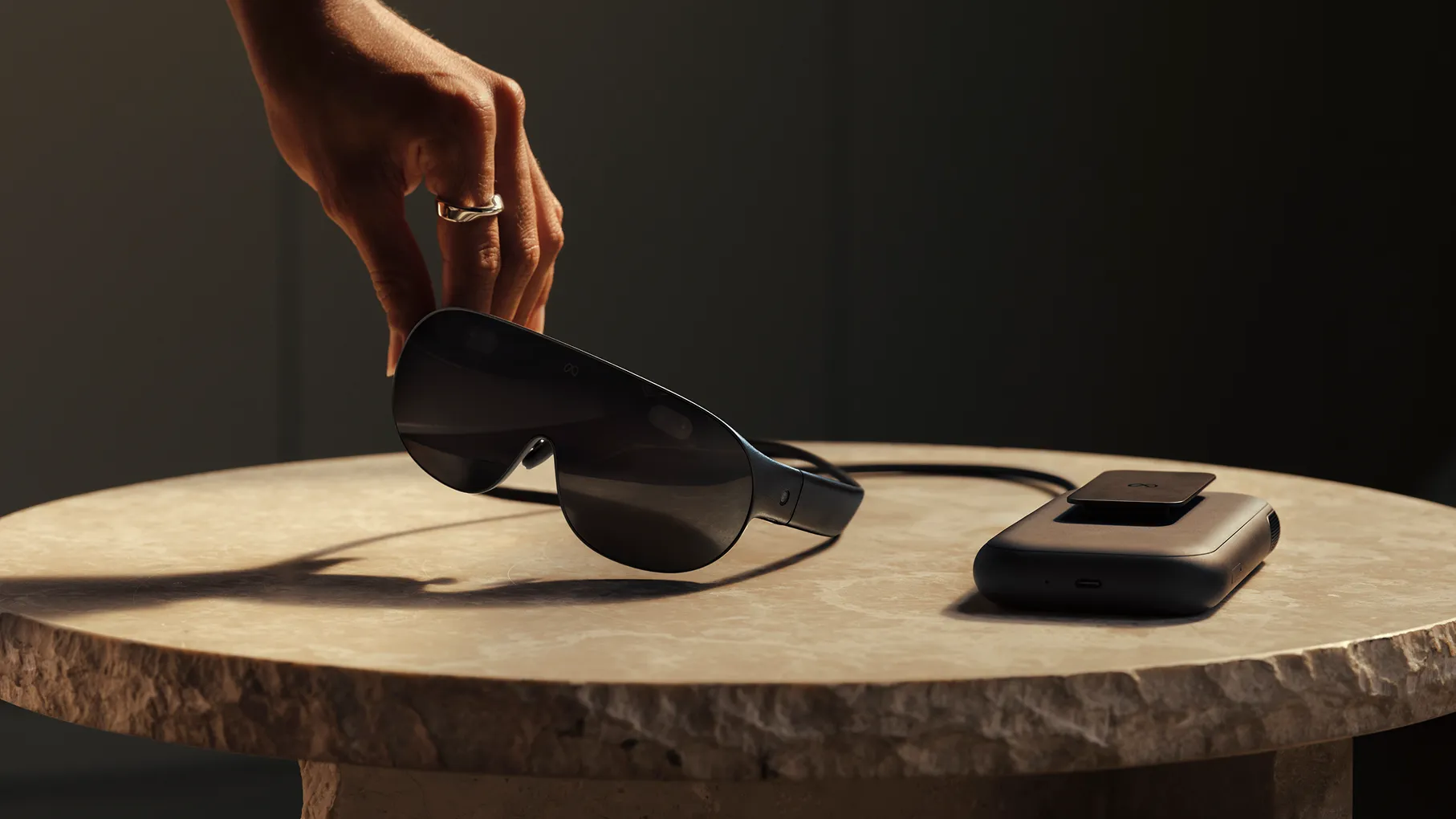
Meta’s latest hardware push is no longer simply about putting cameras, speakers or displays into a pair of glasses. At its Connect 2026 event, whose announcements continued to roll out on September 24, the company presented a broader vision in which artificial intelligence, virtual reality and wearable computing become parts of the same everyday system. At the centre of that strategy is Muse, Meta’s personal AI agent, alongside a striking new product called Meta VR Glasses and a tiny companion device called Muse Charm. Together, the products reveal where Mark Zuckerberg believes computing is heading next: away from the smartphone screen and toward an always available personal assistant that can see, hear and act in the context of a user’s life.
The most ambitious piece of the announcement is Meta VR Glasses, a dramatic attempt to shrink the traditional virtual reality headset into something that resembles an oversized pair of spectacles. Meta says the glasses weigh about 100 grams, roughly the weight of a deck of cards, making them around five times lighter than the company’s Quest 3 headset. Instead of placing the processing hardware, battery and storage directly on the wearer’s head, Meta has separated the system into the glasses and a small computing puck connected by an optical tether. The approach allows the glasses themselves to remain substantially lighter while moving some of the hardware elsewhere. Meta says the VR Glasses will launch in spring 2027 for $1,299.99 in the United States.
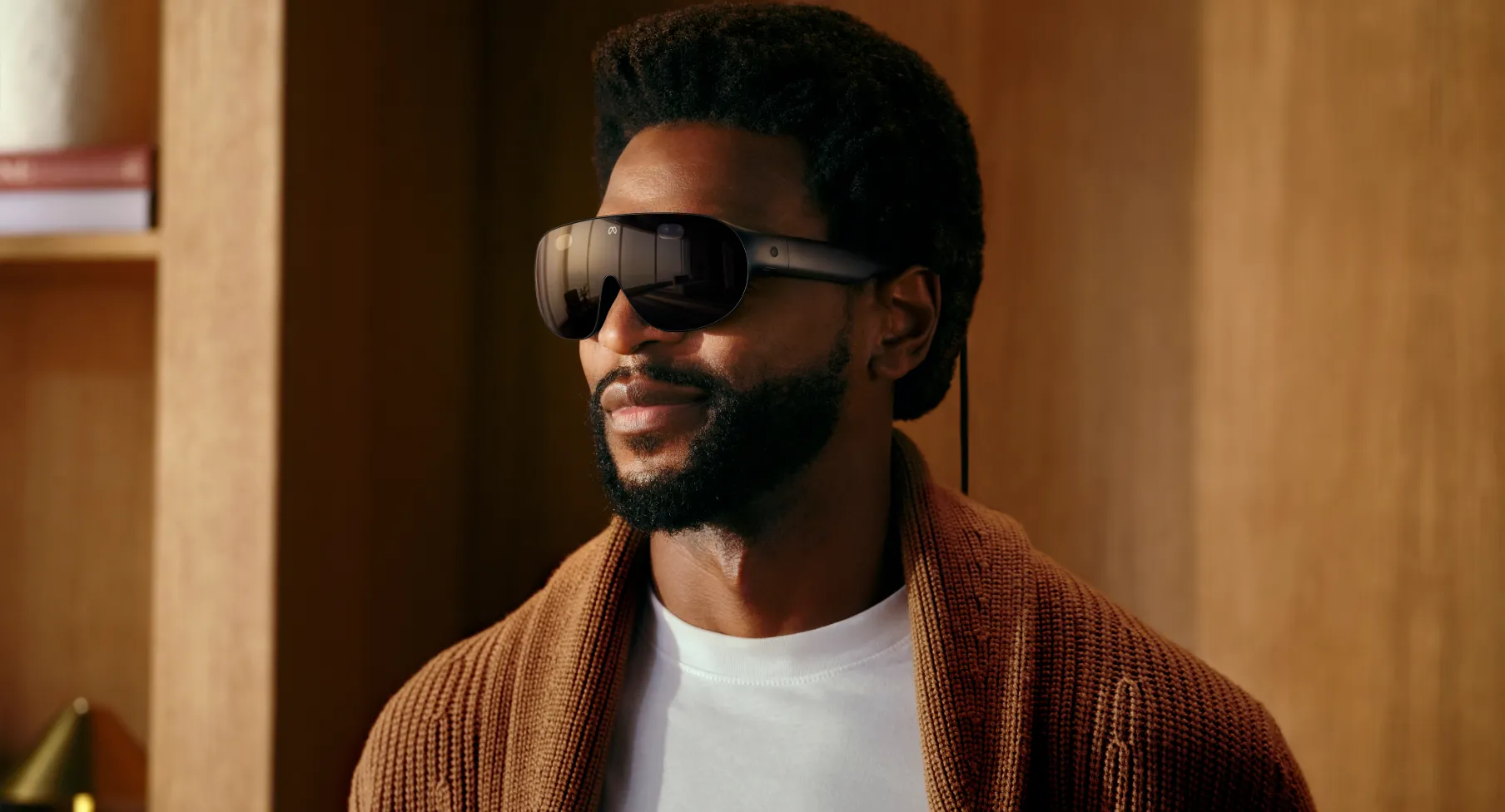
The specifications are designed to make the product feel less like a conventional VR headset and more like a new form of personal computer. Meta says the glasses use a 5K Infinite Display based on micro OLED panels, reaching 37 pixels per degree. The company is positioning the system for everything from private movie watching and immersive sports to gaming and productivity. The glasses can create multiple virtual screens, while a flat surface can be transformed into a keyboard and touchpad. Users can also interact through hand gestures and their eyes rather than relying entirely on conventional controllers. The system incorporates Meta AI directly into the operating experience, giving the company an opportunity to connect its virtual reality hardware with its rapidly expanding AI ecosystem.

Zuckerberg described the concept in unusually direct terms during the Connect presentation. He called the device “a private cinema, a computer with multiple monitors, and a game console in a pair of glasses,” before describing it as “a glimpse of the future.” He also confirmed the $1,299 price point and said the company would ship the product in spring, giving developers and content partners time to prepare.
That positioning is important because Meta is not presenting the VR Glasses simply as another gaming accessory. The company wants the device to compete for time normally spent across several categories of technology. A user could theoretically watch a film on a virtual cinema screen, work with several virtual monitors on a plane, play games, attend a virtual experience and communicate with other people without carrying a conventional laptop or wearing a bulky headset. Meta has also secured partnerships with major entertainment and sports companies. The company says the glasses will support IMAX Enhanced content, 3D movies and more than 100 immersive live sporting events each year once the platform is established.
Yet the more consequential announcement may be Muse. Meta introduced Muse earlier in September as a personal AI agent intended to do considerably more than answer questions. Rather than functioning only as a conversational chatbot, Muse is designed to help users accomplish tasks, make plans and interact with external services. Meta says it has been adding connectors to services including shopping, travel, productivity and payments, with partners such as Walmart, Best Buy, Sephora, Expedia, Instacart, Notion, GitHub and Box among those being integrated or announced for integration. Muse is also getting its own email address, giving the agent another mechanism through which it can communicate and perform tasks.
The real shift comes when Muse moves from the phone into glasses. Meta says users will soon be able to call on Muse through its AI glasses and have the assistant understand what they are looking at. That could mean pointing toward a product on a shelf and asking about it, looking at a complicated list and asking for help or using the system to turn something seen in the physical world into an actionable task. The distinction matters because a conventional chatbot generally requires the user to explain the context. A wearable AI agent can potentially receive some of that context directly from the environment.

Meta is also introducing Muse Charm, a small device designed to make Muse accessible without a phone or glasses. Zuckerberg demonstrated the concept as a compact, keychain sized gadget that incorporates real time voice interaction and can be activated by touching a fingerprint sensor. Meta says the device is intended to give users a quick way to speak with their Muse and, in certain circumstances, show the agent what is happening around them. The company plans to ship it around the holiday period in December, although Meta has indicated that details remain subject to finalisation.
Zuckerberg’s larger argument is that personal AI should not belong exclusively to technology specialists or remain trapped inside a browser window. “Soon, everyone is going to have an extremely capable personal agent,” he said during the keynote, describing a system that could understand goals and work continuously on a person’s behalf. He argued that the purpose of advanced AI should be to give individuals greater creative and practical power rather than simply automate people out of the equation. “The highest purpose of super intelligence is creation and invention, not automation,” Zuckerberg said.
There are clear advantages to Meta’s approach. The most obvious is convenience. An AI agent that can be accessed through glasses, a small wearable or a phone could remove the friction involved in constantly opening applications, typing instructions and explaining what is happening around you. The glasses could also make AI substantially more useful because they provide visual context. Instead of describing an object, document or sign to an assistant, the user could potentially let the system interpret what is already in front of them. That could have practical applications in travel, shopping, accessibility, education and workplace productivity. Meta’s attempt to combine AI with a broad network of services could also make Muse more useful than an isolated chatbot because the assistant can potentially move from conversation to action.
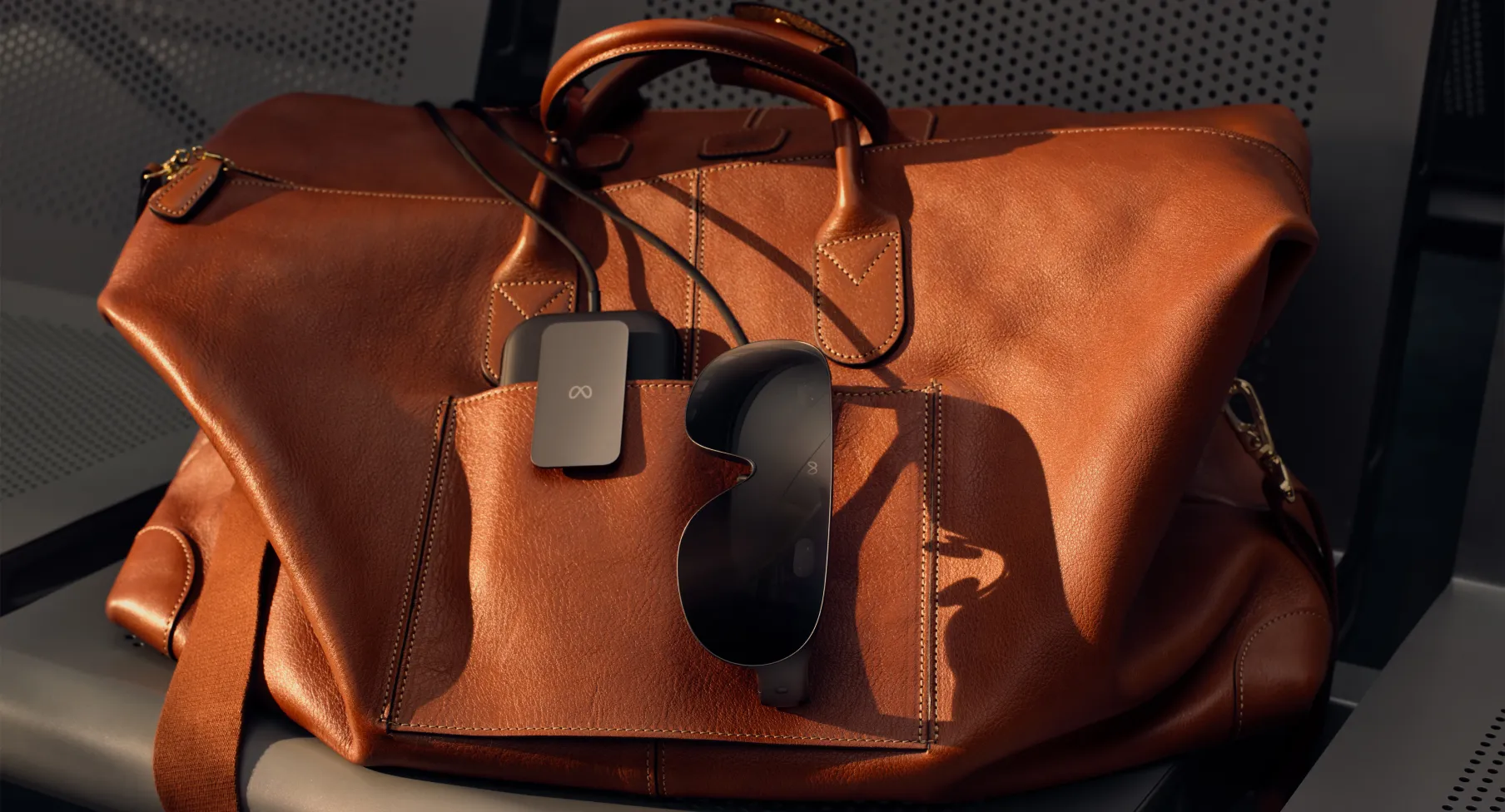
The VR Glasses offer a different advantage. At roughly 100 grams, they represent a significant reduction in weight compared with conventional VR hardware, while retaining the potential for large virtual displays and immersive content. The open design and camera based passthrough are intended to let users remain aware of their physical surroundings. For frequent travellers, professionals and entertainment users, the possibility of carrying a private multi screen workspace or cinema in something closer to spectacles could be compelling. Meta’s partnerships with entertainment and sports companies also address one of the longstanding weaknesses of VR hardware: persuading consumers that there is enough content to justify the purchase.
The disadvantages are equally significant. The first is price. At $1,299.99, Meta VR Glasses are far beyond the cost of mainstream consumer smart glasses and sit firmly in premium technology territory. The computing puck also means the glasses are not completely self contained. Meta says its battery supports up to three hours of continuous high resolution media playback, which means long sessions will still require attention to power management. For a device intended to replace multiple forms of computing, that limitation could matter.
Privacy is the more complicated problem. AI glasses occupy an unusually intimate position because they can potentially observe and hear the world around the wearer. Meta has already faced scrutiny over privacy concerns surrounding camera equipped smart glasses, and the company is now offering camera free audio glasses partly within a broader expansion of its wearable strategy. Reuters has also reported concerns surrounding Muse’s experimental calling capabilities, including a test in which human contractors could handle certain calls made through the assistant. Meta has said the testing is intended to improve safety and privacy protections before broader release, but the episode illustrates the difficulty of creating an AI that can act on behalf of people without exposing sensitive information to systems or people outside the user’s immediate control.
There is another potential weakness in the idea of an AI assistant that is always available: dependence. The more responsibility users delegate to Muse, the more important accuracy, security and transparency become. An assistant that recommends a restaurant is one thing. An assistant that purchases something, sends an email, books travel or communicates with a business on a user’s behalf has a much larger margin for consequences when it gets something wrong. Meta’s strategy therefore depends not only on making Muse capable but also on making users comfortable with granting it increasing levels of autonomy.
Meta’s hardware strategy also carries a familiar commercial risk. The company is effectively asking consumers to adopt a new computing category before it has fully established what people will consistently use it for. Smart glasses have already demonstrated that novelty does not automatically translate into mass adoption, while VR has spent years searching for applications beyond gaming and entertainment. Meta’s answer is to merge the categories with AI. Instead of asking consumers to buy glasses merely for virtual reality or a camera, it is asking them to buy into an ecosystem in which the glasses become an interface for a personal agent.
That may ultimately be the most important part of Meta’s latest launch. The company is not treating Muse, Meta VR Glasses, Ray Ban Meta products and Muse Charm as isolated gadgets. It is attempting to create a family of interfaces around one persistent AI identity. Meta says that by the end of 2026 it expects to offer more than 100 AI glasses options across Meta, Ray Ban and Oakley, while Muse is being extended across those devices.
The strategy is therefore bigger than another VR headset or another AI chatbot. Meta is trying to make the personal assistant a layer that follows the user across devices and eventually across the physical world. The phone remains important, but the company’s direction suggests that Meta wants the next interaction with AI to happen without reaching into a pocket at all. Whether consumers will accept an AI that is constantly available, increasingly autonomous and embedded in their glasses remains an open question. What is clear from Connect 2026 is that Meta is betting heavily on a future in which computing is not something people sit down in front of, but something they carry with them, wear and talk to throughout the day.