Margherita Della Valle
The Transformation Redefining Vodafone for a New Era of Growth
By Sidra Asif
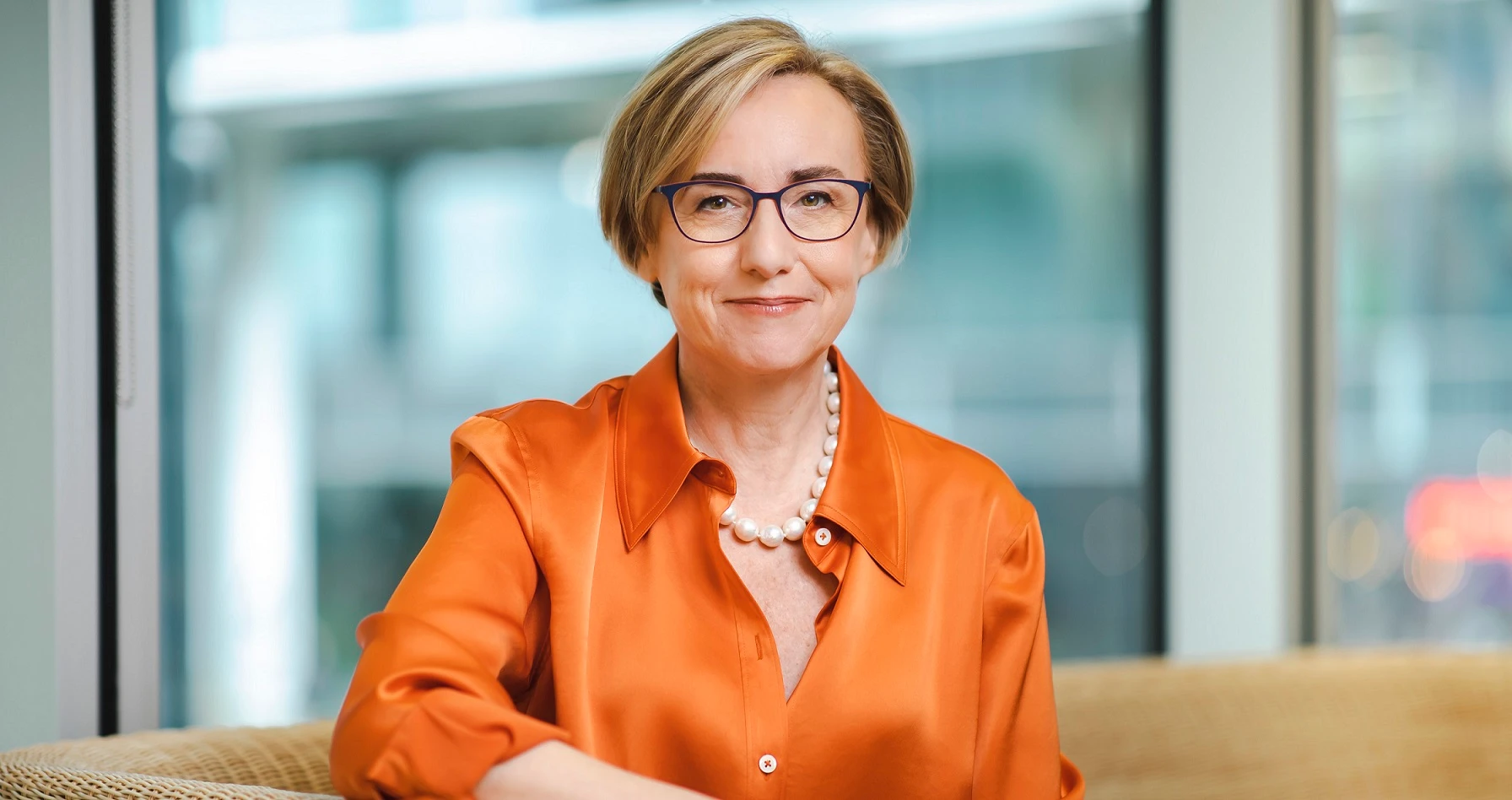
A determined shift in direction has reshaped Vodafone under Margherita Della Valle, turning one of Europe’s best known telecommunications groups into a simpler and more focused business. Appointed Group Chief Executive in April 2023 after serving as Group Chief Financial Officer, Della Valle inherited a company facing pressure to improve its performance, simplify its structure and make better use of its considerable scale. Her response has been a wide ranging transformation built around customers, simplicity and growth, with Vodafone increasingly concentrating its resources on markets and businesses where it sees the strongest long term potential.
Della Valle is very much a Vodafone leader who understands the company from the inside. Her career with the group has included senior financial, operational and commercial responsibilities across several markets. Before becoming CEO, she served as Group Chief Financial Officer from 2018 to 2023, following roles as Deputy Chief Financial Officer, Group Financial Controller, CFO for Vodafone’s European region and CFO of Vodafone Italy. She also established shared operations functions covering areas such as information technology, customer care, supply chain, human resources and finance operations. This experience gave her an unusually broad understanding of how Vodafone operates across countries and business functions.
Her appointment represented more than a change in leadership. Della Valle quickly made clear that Vodafone needed to become simpler, more competitive and more decisive. When she became Group Chief Executive, she outlined a transformation programme focused on improving customer experience, simplifying the organisation and accelerating growth. The strategy involved difficult decisions about Vodafone’s geographical footprint, operating model and allocation of capital, with the objective of building a company that could compete more effectively in its most important markets.
One of the defining characteristics of her leadership has been a willingness to make structural changes rather than relying only on incremental improvement. Vodafone had accumulated a broad international footprint over many years, but Della Valle concluded that greater scale did not necessarily mean greater strength. Her strategy has therefore involved reshaping the portfolio, exiting businesses where Vodafone lacked sufficient competitive advantage and concentrating investment on markets capable of producing stronger long term returns.
Germany has been one of the most important examples of this approach. Vodafone has sought to restore growth in its largest European market while improving customer experience and network performance. Under Della Valle, Germany became a major focus of the transformation because the country’s performance had a substantial influence on the overall group. By 2026, Vodafone reported that it had returned to top line growth in Germany, alongside strong performances in Africa and Türkiye.
The United Kingdom has provided another defining chapter. In May 2025, Vodafone completed its merger with Three UK, creating a larger telecommunications operator in the British market. The transaction was intended to combine complementary assets and create a company capable of investing more heavily in next generation networks. In May 2026, Vodafone announced that it would take full ownership of the VodafoneThree joint venture for £4.3 billion, giving Della Valle and her management team greater control over the business and its future direction.
The significance of the UK transformation extends beyond market share. Telecommunications is an industry in which scale can influence the ability to invest in networks, spectrum, technology and customer services. Della Valle has argued that a stronger Vodafone in Britain can create greater investment capacity while producing operational efficiencies. The challenge is to ensure that those benefits translate into better networks and customer experiences rather than simply greater corporate scale.
Africa represents another important pillar of the strategy. Vodafone has maintained a significant presence across the continent through its investment in Vodacom and associated businesses. Africa offers a different growth profile from mature European telecommunications markets, with expanding demand for mobile connectivity, financial technology and digital services. Della Valle has increasingly highlighted Africa as an important contributor to Vodafone’s growth outlook, particularly through businesses capable of combining communications with digital financial services.
Vodafone’s interest in Africa is also connected to the wider evolution of telecommunications. Mobile networks in many African markets have become platforms for banking, payments, commerce and access to digital services. This creates opportunities that go beyond traditional voice and data services. Vodafone’s relationship with Vodacom provides access to one of the continent’s strongest telecommunications and financial technology platforms, allowing the group to participate in this broader digital transformation.
The company’s strategic priorities have now evolved into four clear areas. Vodafone wants to rebalance its consumer activities toward business solutions, make operations leaner by reducing internal complexity and costs, improve basic consumer connectivity and optimise the portfolio for growth and long term returns. These priorities reveal the central philosophy behind Della Valle’s leadership. The company does not need to be present everywhere or do everything. It needs to perform exceptionally well where it chooses to compete.
Customer experience sits at the centre of that philosophy. Della Valle has repeatedly emphasised that Vodafone’s transformation must ultimately be visible to customers. Telecommunications companies can invest billions in infrastructure, but customers experience the business through practical details such as network reliability, pricing, service quality, digital support and ease of use. Vodafone’s strategy therefore seeks to make connectivity more straightforward and predictable while reducing the complexity that can frustrate customers.
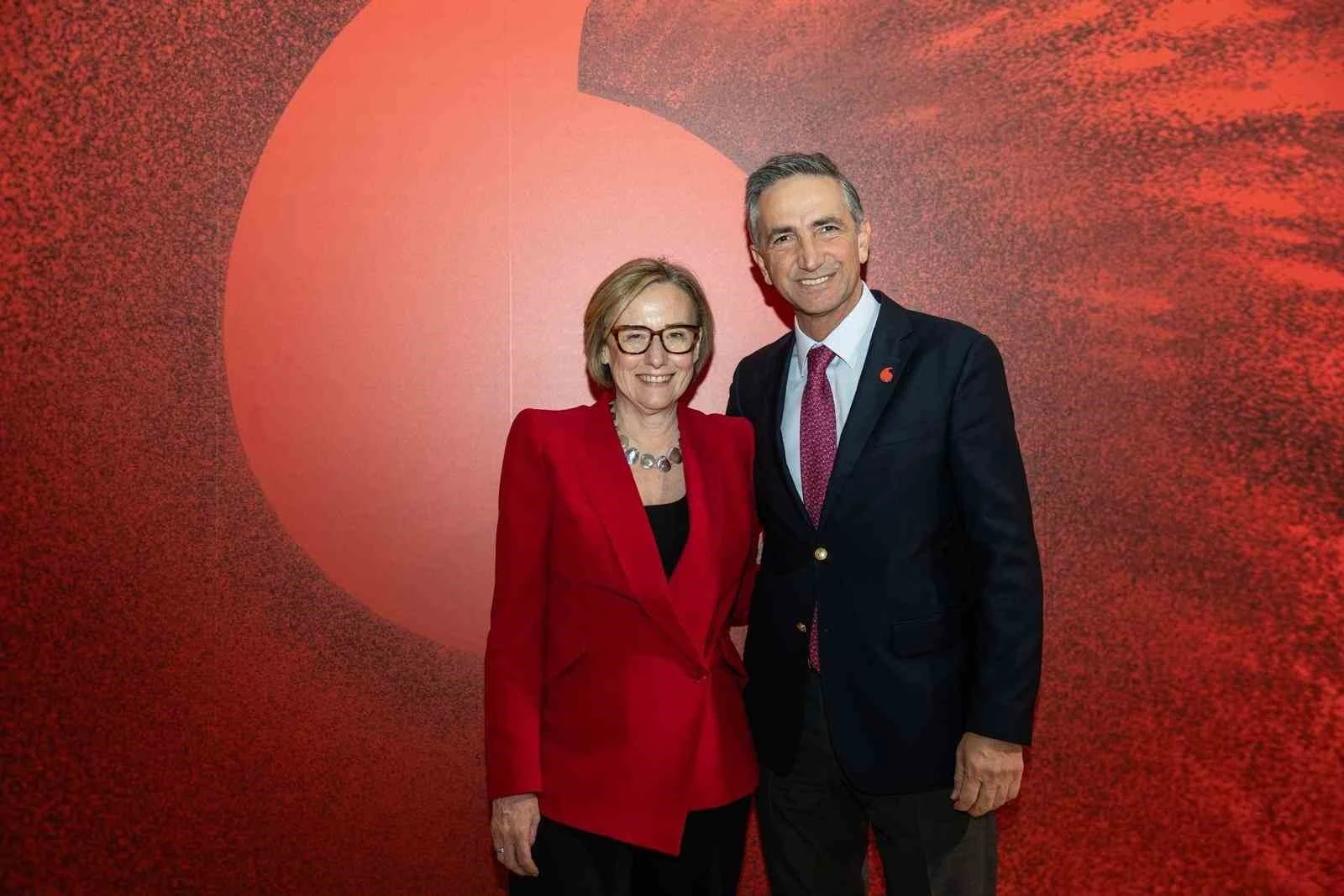
This emphasis on simplicity is also directed inward. Large international telecommunications groups can accumulate complicated structures, duplicated systems and multiple layers of management over time. Della Valle has worked to reduce that complexity, making Vodafone more efficient and easier to manage. The objective is not simply cost cutting. A simpler organisation can make decisions faster, deploy capital more effectively and respond more quickly to changing customer and technological conditions.
The financial results increasingly provide evidence of progress. Vodafone’s 2026 annual report described the group as a simpler and stronger business with a better growth outlook. The company reported good service revenue momentum for the year, with profit and cash flow at the upper end of its guidance range. Vodafone also highlighted strong performances across Africa and Türkiye and the return to top line growth in Germany.
The company’s performance in 2026 also reflected the benefits of the transformation in its portfolio. Vodafone described the previous three years as a period in which it had reshaped its geographical footprint, reset its capital structure and refocused efforts on improving the experience delivered to approximately 300 million customers across Europe and Africa. This represents a considerable change from the more sprawling organisation Della Valle inherited when she became CEO.
Technology remains central to the next phase. Vodafone is investing in 5G, fiber, cloud technologies, artificial intelligence and digital platforms as the telecommunications industry moves toward increasingly intelligent networks. Artificial intelligence can help automate network operations, improve customer support and make complex infrastructure more efficient. Vodafone has also been exploring the use of generative AI and AI agents across internal processes, including testing, service assurance and back office workflows.
The rise of artificial intelligence is particularly significant because it could change the economics of connectivity. AI systems require enormous computing resources and generate increasing demand for high capacity networks. At the same time, AI can make networks more efficient by helping operators predict problems, optimise traffic and automate routine activities. Della Valle therefore has to ensure that Vodafone remains a strong telecommunications company while also positioning its infrastructure to support the broader AI economy.
Another important area is direct to device satellite connectivity. Vodafone has entered into an agreement with AST SpaceMobile aimed at creating a European direct to device satellite service provider. The development illustrates how the definition of mobile connectivity is changing. Traditional cellular networks remain the foundation, but satellite systems can potentially extend coverage into remote areas and complement terrestrial infrastructure. For Vodafone, such partnerships create the possibility of expanding the reach of its services without relying exclusively on conventional network deployment.
The transformation of Vodafone also has an important regulatory dimension. European telecommunications companies have long argued that fragmentation makes it difficult to achieve the scale needed to compete with technology and communications companies in other parts of the world. Della Valle’s strategy has therefore unfolded against a broader debate about consolidation, investment and the future competitiveness of European telecommunications.
The UK merger with Three is an especially important example. The combination reduced the number of major mobile network operators in the British market from four to three, creating a larger Vodafone business with greater scale. The transaction was accompanied by commitments around investment and competition, but its long term success will ultimately be judged by whether Vodafone can translate greater scale into stronger networks, better customer services and sustainable financial returns.
Della Valle’s financial background has clearly influenced the way she approaches this challenge. Her career has been built around understanding how large organisations allocate resources, manage costs and create sustainable returns. As CEO, however, she has demonstrated that financial discipline is only one part of the transformation. The broader objective is to make Vodafone more competitive operationally and more relevant to customers.
Her leadership style is therefore characterised by focus and decisiveness. Vodafone’s recent history has involved difficult portfolio decisions, major transactions and significant organisational changes. Such a transformation requires a willingness to accept short term disruption in pursuit of a clearer long term structure. Della Valle has consistently presented these decisions as part of a broader effort to create a stronger and more sustainable Vodafone.
The next stage will be particularly important. The company has completed much of the initial restructuring and is now moving from transformation toward growth. Vodafone describes this phase through the simple idea of becoming simpler, stronger and growing. The emphasis is shifting from fixing the structure of the company toward improving performance across its markets and finding new opportunities for expansion.
There are still significant challenges. Germany remains a highly competitive telecommunications market, while European consumers are sensitive to pricing and service quality. Vodafone must integrate the enlarged UK business successfully, continue improving operations across Europe and manage the complexity of a geographically diverse African portfolio. At the same time, it must invest in new technologies without allowing capital requirements to undermine financial returns.
Della Valle also faces a changing competitive environment beyond traditional telecommunications companies. Technology companies, digital platforms and alternative connectivity providers are increasingly influencing how consumers and businesses access digital services. Artificial intelligence is creating new opportunities but also changing customer expectations at extraordinary speed. Vodafone therefore needs to become more technologically agile while maintaining the reliability expected from a major telecommunications operator.
Her international perspective is particularly valuable in this environment. Della Valle has worked across Vodafone’s European operations and at group level, giving her experience of different regulatory systems, consumer markets and operational environments. Her education in economics at Bocconi University complements that experience with a strong foundation in business and financial analysis.
Margherita Della Valle’s story at Vodafone is ultimately a story about simplification as a route to growth. Rather than attempting to preserve the company’s historical scale for its own sake, she has sought to build a more focused organisation with stronger positions in selected markets. The transformation has involved difficult decisions, but it has also created a clearer platform for future investment and expansion.
The Vodafone she leads today is significantly different from the organisation she inherited in 2023. Its geographical footprint has been reshaped, its UK business has been transformed through the Three merger, Germany is showing signs of renewed growth and Africa continues to provide important momentum. The company is also preparing for a future in which artificial intelligence, advanced connectivity and digital services will increasingly shape the telecommunications industry.
The next chapter will determine whether Della Valle can turn this structural transformation into sustained growth. Her task is no longer simply to make Vodafone simpler. It is to make the simpler Vodafone stronger, more innovative and more valuable. That means improving customer experience, strengthening networks, expanding business services, using artificial intelligence intelligently and allocating capital toward markets with the greatest potential.
Her leadership has already changed the character of Vodafone. The company is becoming more focused on quality than sheer geographical breadth, more disciplined in its investment decisions and more determined to improve the everyday experience of its customers. As telecommunications moves deeper into an era defined by AI, cloud computing, 5G, fiber and new forms of satellite connectivity, Della Valle has positioned Vodafone to compete with a clearer identity.
Margherita Della Valle’s legacy will ultimately depend on what comes after the transformation. She has spent the first years of her leadership simplifying the company and rebuilding its foundations. The opportunity now is to convert those foundations into durable growth. If Vodafone can combine stronger market positions, better customer experiences, intelligent technology and disciplined execution, her tenure could be remembered not simply as a period of restructuring but as the moment when one of Europe’s largest telecommunications groups found a more focused and sustainable path into the future.