Fact vs. Fiction with Dmitri Leonov
Are We Living Through a Silent Medical Revolution?
By Alhanouf Mohammed Alrowaili
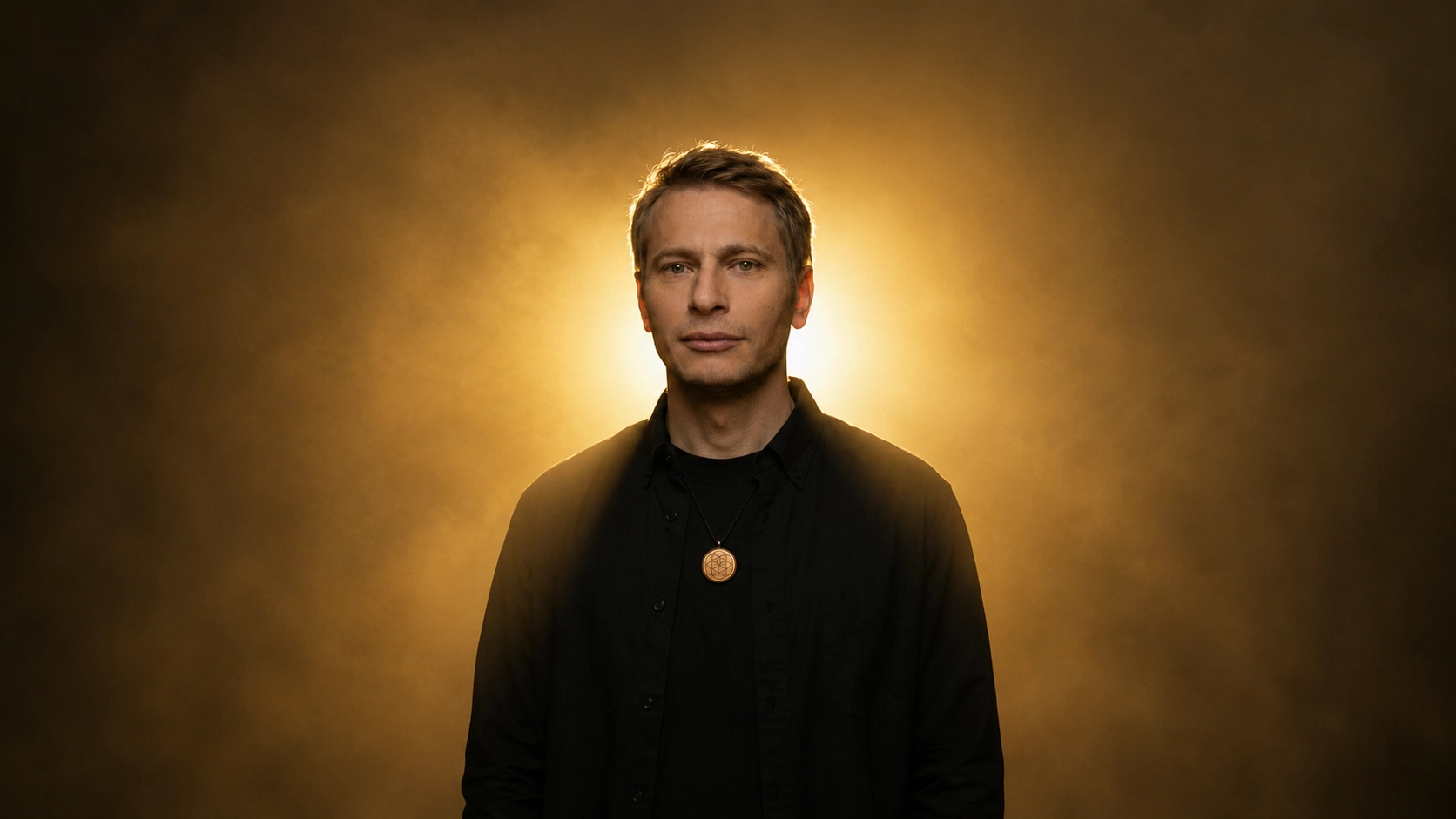
Dmitri Leonov, entrepreneur and co-founder of several technology ventures, including One Device, has established himself within the emerging wellness and frequency technology industry. His work explores the relationship between vibration, sound, the nervous system and human wellbeing, drawing on ideas that have attracted growing interest among wellness enthusiasts and biohacking communities. At the heart of his philosophy is a question about the modern human experience: whether a better understanding of the body’s responses to its environment could help people manage stress, improve their sense of balance and approach everyday life with greater clarity.
Light, infrared radiation, mechanical vibration and sound-based therapies have been explored in various areas of health and wellness. Some applications have scientific evidence supporting specific uses, while others remain experimental or are supported by limited research. Although personal accounts frequently describe improvements in sleep, anxiety, stress and chronic pain, such experiences do not, on their own, establish clinical effectiveness. The distinction between individual testimonials and scientifically demonstrated outcomes remains important as frequency-based wellness technologies seek wider recognition.
Leonov’s approach draws inspiration from Nikola Tesla’s enduring association with energy, frequency and vibration. Tesla’s work contributed significantly to electrical engineering, and his name has since become closely associated with broader interpretations of energy and resonance. For Leonov, the underlying appeal lies in considering the human body as a complex system whose different processes interact continuously, rather than viewing wellbeing exclusively through isolated physical or chemical mechanisms. His perspective reflects an interest in holistic wellness, although the scientific concept of a human biofield and claims that specific frequencies can restore the body’s overall balance remain subjects requiring further evidence.
Leonov’s interest in this field also emerged from personal experience. He describes the importance of achieving a state of flow, in which concentration, motivation and performance appear to align naturally. In such a state, activities that might otherwise feel demanding can become more manageable, while a lack of mental or neurological balance can make ordinary responsibilities feel disproportionately exhausting. This observation has helped shape his interest in technologies intended to support relaxation, focus and personal wellbeing.
His understanding of the relationship between resonance and human health begins with an analogy drawn from music. In a musical composition, dissonance introduces tension, while its resolution creates a sense of release and harmony. Leonov applies a similar framework to his interpretation of the body’s internal processes. He views dissonance as a departure from what he considers a balanced relationship between frequencies, with resonance representing a more harmonious state.


Within this philosophy, One Device is designed to expose users to a coordinated range of frequencies that Leonov believes may encourage a return towards balance. This remains an interpretation of the technology’s intended mechanism rather than an established medical explanation of disease or recovery.
Rather than identifying one universal frequency as the foundation of human health, Leonov argues that the relationships between different frequencies are more significant. He describes the body as a symphony in which different organs and physiological processes operate through distinct rhythms and signals. From his perspective, the interaction between these patterns is central to understanding individual wellbeing. He is particularly interested in developing a personalised approach through heart rate variability, or HRV, biofeedback, a method that measures variations in the intervals between heartbeats and can provide information about aspects of autonomic nervous system activity.
Leonov has discussed plans to explore this approach in partnership with an advisor, Dr Jeffrey Thompson, whose work includes sound-based and vibroacoustic approaches to wellness. The proposed concept involves observing how an individual’s HRV responds to different frequencies and using those responses to identify a personalised setting for the device. While HRV biofeedback is an established area of research, the ability to identify a unique therapeutic root frequency through this method, and the clinical benefits of programming such a frequency into a consumer device, require independent validation.
Another element of Leonov’s philosophy concerns the body’s potential to respond to vibration without consciously hearing it. He suggests that a transducer-based device can deliver subtle vibrational stimuli through physical contact, potentially interacting with sensory pathways and the nervous system. He refers to areas associated with the vagus nerve, the Ren Meridian and the heart chakra when describing the device’s intended points of interaction. The vagus nerve has a recognised role in autonomic regulation, and the body possesses sensory receptors capable of responding to mechanical vibration. However, the specific mechanisms proposed for One Device, including claims involving energy centres or subtle frequencies, should be distinguished from established neurophysiology.
Leonov believes that frequency-based approaches have not yet received the level of recognition he anticipates they will eventually achieve. He points to the difficulty many people experience in accepting phenomena that cannot be directly seen, even though modern life depends on invisible technologies such as radio waves and wireless communication. In his view, conventional medicine has historically concentrated on physical and chemical interventions, leaving opportunities for further exploration of frequency-based approaches. He also argues that the expanding body of published research could help encourage greater interest in the field. The strength of the evidence, however, varies considerably between different applications, and research supporting one form of vibration or light therapy cannot automatically validate unrelated frequency-based claims.
Looking further ahead, Leonov envisages a future in which frequency technologies could play a more substantial role in biohacking and health optimisation. He is interested in the possibility that particular frequencies might reproduce some effects associated with biochemical compounds, potentially creating complementary approaches to existing therapies. He recognises that such developments would not necessarily eliminate the need for conventional medicines, but believes that successful applications could have significant implications for treatment and the management of side effects. At present, the proposition that frequencies could replace vitamins, supplements or medicines, including insulin, remains speculative and should not be interpreted as an established medical capability.
For Leonov, the concept of frequency hygiene is equally important. Modern life exposes people to a continuous stream of sensory stimuli, environmental influences and emotionally demanding experiences. He believes that developing greater awareness of these influences, while cultivating environments and habits that support wellbeing, could become an increasingly important aspect of contemporary wellness. One Device reflects this philosophy through its emphasis on rotating frequencies rather than concentrating exclusively on one setting. Leonov’s broader ambition is to encourage a more deliberate approach to the conditions that shape people’s daily experiences, although claims about harmful environmental frequencies must be assessed individually rather than assumed.
Among the experiences that have particularly captured his attention are what he describes as synchronicities. Leonov recalls encountering accounts from users who reported meaningful coincidences, unexpected opportunities and chance meetings after using the device over an extended period. He sees these experiences as a reason to explore whether changes in physical, mental and emotional states might influence how people engage with their surroundings. His interpretation follows a chain of personal influence, beginning with an individual’s state of mind and extending to relationships, decisions and the opportunities they recognise or pursue. Although such experiences may be personally meaningful, there is currently insufficient scientific evidence to conclude that frequency devices cause synchronicities or influence external events through an energetic mechanism.
When considering the potential influence of wellness technologies on global leadership, Leonov returns to the importance of emotional balance. If he could select a single frequency setting for world leaders, he would choose 528 Hz, a frequency popularly associated in some wellness communities with love. His preference reflects a symbolic aspiration towards compassion, understanding and more constructive relationships rather than an established scientific finding that 528 Hz produces these outcomes. For Leonov, the broader message is that personal wellbeing should not be separated from the way people make decisions, communicate and relate to others.
Ultimately, Dmitri Leonov’s work sits at the intersection of technology, personal experimentation and the expanding commercial landscape of holistic wellness. His vision is built around the possibility that a deeper exploration of vibration and the nervous system could contribute to new ways of supporting everyday wellbeing. The challenge for frequency-based technologies will be to translate that ambition into measurable, reproducible outcomes while maintaining a clear distinction between personal experience, scientific hypotheses and clinically established benefits. As interest in biohacking continues to grow, the field’s long-term credibility will depend not only on its promise of balance and optimisation, but also on its willingness to embrace independent research, transparency and rigorous scientific scrutiny.