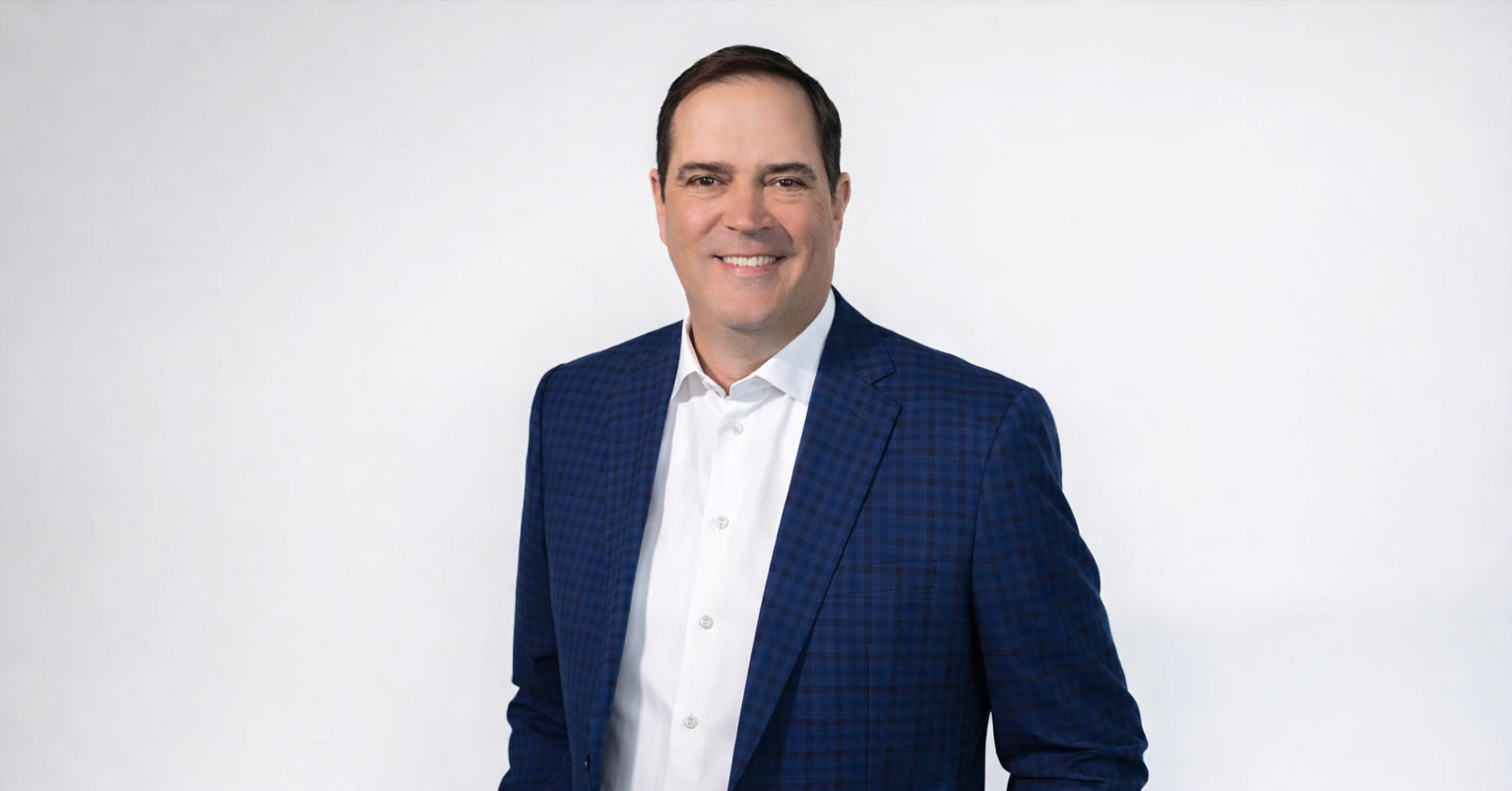
Minna Song
The Woman Building AI Where Technology Meets Everyday Life
By Afef Yousf

Minna Song represents a different chapter in the evolution of artificial intelligence. While much of the AI industry has been built around increasingly sophisticated models, enormous computing systems and applications designed primarily for the technology sector, Song has taken a more grounded route. As co founder and chief executive of EliseAI, she has built her career around a deceptively simple question: what happens when artificial intelligence is designed not merely to demonstrate what technology can do, but to solve the repetitive and often overlooked problems that shape everyday life?
Song’s journey into AI entrepreneurship began with a technical foundation. She studied computer science at the Massachusetts Institute of Technology, where she met her future co founder, Tony Stoyanov. The two shared an interest in building a company around fundamental human needs rather than creating another product aimed solely at the technology industry. They began looking at areas in which software could have a tangible effect on people’s lives and eventually focused on housing. Song has explained that their thinking began with basic human needs, with shelter emerging as an industry where technology could address significant operational problems.
The decision was unconventional. Neither Song nor Stoyanov came from the property management industry. Instead of treating that lack of experience as a disadvantage, Song immersed herself in the sector. She took a job at a real estate firm in Manhattan so that she could observe how the industry worked, listen to employees and understand where problems actually occurred. What she discovered was that communication was one of the industry’s persistent weaknesses. Prospective residents could wait for responses, enquiries could disappear and employees were spending considerable amounts of time managing repetitive conversations.
That observation became the foundation for what was initially called MeetElise and later developed into EliseAI. The company began by applying natural language processing to leasing communications, allowing an AI system to respond to prospective residents and manage conversations at a scale that human teams could not easily achieve. What began as a focused solution gradually expanded into a broader vision for artificial intelligence within housing operations.

Song’s approach has always placed considerable emphasis on understanding the customer rather than beginning with the technology itself. In the company’s earliest days, she and her co founder personally monitored the AI’s conversations around the clock. Song has described working one shift while Stoyanov worked another, with the founders reviewing conversations and intervening whenever the system produced an imperfect response. That intense founder involvement allowed them to observe real interactions, identify unusual situations and understand where the technology failed. It also established a principle that continues to shape Song’s leadership: artificial intelligence may automate work, but building trustworthy AI requires humans to remain deeply involved in understanding how the system behaves.
This philosophy has become increasingly relevant as the AI industry moves towards autonomous agents. Much of the current conversation focuses on systems capable of completing tasks independently, communicating with users and making decisions across complex workflows. Song’s work offers a practical example of that transition. EliseAI has developed from an AI leasing assistant into a broader platform designed to automate communication and operational processes across housing, while also expanding into healthcare.
The company’s growth reflects the scale of the opportunity Song identified. EliseAI has attracted major investment and expanded its customer base across the American housing market. Its technology is used by large property operators to manage conversations, enquiries, leasing processes and resident interactions. The company has also begun applying its approach beyond housing, entering healthcare with the aim of automating administrative and non clinical tasks. Song’s broader ambition is therefore not simply to create an AI assistant for one industry, but to build an underlying layer of intelligent automation for sectors that have traditionally been underserved by advanced technology.
Her thinking about artificial intelligence is closely connected to this idea of practical impact. Song has argued that some of the industry’s most heavily funded AI companies are primarily building for other technology companies, while many of the industries that directly affect people’s lives remain comparatively underserved. Housing and healthcare represent a deliberate alternative. They are complex, highly operational sectors where communication, administration and responsiveness can directly affect people’s experiences.
That perspective also gives Song an interesting position in the wider debate about AI safety and responsible deployment. Rather than approaching AI safety only through the lens of hypothetical future systems, her work demonstrates the importance of reliability in ordinary interactions. An AI system communicating with a prospective tenant or handling information connected to a patient cannot simply be impressive. It needs to be accurate, consistent and capable of recognising when human involvement is necessary. The consequences of an error can be immediate and personal.

Song’s emphasis on close customer feedback is therefore an important part of her philosophy. She has spoken about the need to stay close to users, move quickly and improve systems continuously. For her, speed and quality are not necessarily opposites. Rapid development only works when companies are equally committed to identifying mistakes and correcting them. That approach reflects a broader belief that AI products should evolve through real world experience rather than being developed in isolation from the people expected to use them.
The significance of Song’s work extends beyond property technology. Her career illustrates the emergence of what is increasingly being described as vertical AI, where artificial intelligence is developed specifically around the workflows and requirements of particular industries. Instead of asking how a general purpose model can be applied everywhere, vertical AI begins with the problem and builds the technology around it. Song’s journey demonstrates how deep customer understanding can become as important as technical sophistication when AI enters industries with complex human processes.
There is also a larger cultural dimension to her approach. Housing and healthcare are not abstract markets. They affect where people live, how they communicate with service providers and how institutions respond to their needs. By focusing AI on these areas, Song has placed technology within a much more tangible social context. The success of such systems is not measured only by model performance, but by whether they make organisations more responsive and whether people experience a better service as a result.
Minna Song’s story ultimately reflects a changing definition of what an AI company can be. She is not building an organisation around the spectacle of artificial intelligence, but around its ability to disappear into the background and make complicated systems work more efficiently. Her ambition is rooted in the belief that some of the most meaningful applications of AI may not be the ones that attract the greatest attention, but the ones that quietly improve the systems people depend upon every day.
In an industry fascinated by increasingly powerful models, Song has built her reputation around something more practical: understanding people, identifying neglected problems and using AI to address them. Her evolution from computer science student to co founder and chief executive of one of the most prominent vertical AI companies illustrates how the next phase of artificial intelligence may be shaped not only by those developing the most advanced models, but by entrepreneurs capable of bringing those technologies into the everyday infrastructure of human life.