Akira Shimada
The Leadership of a Global Technology Architect
By Michelle Clark
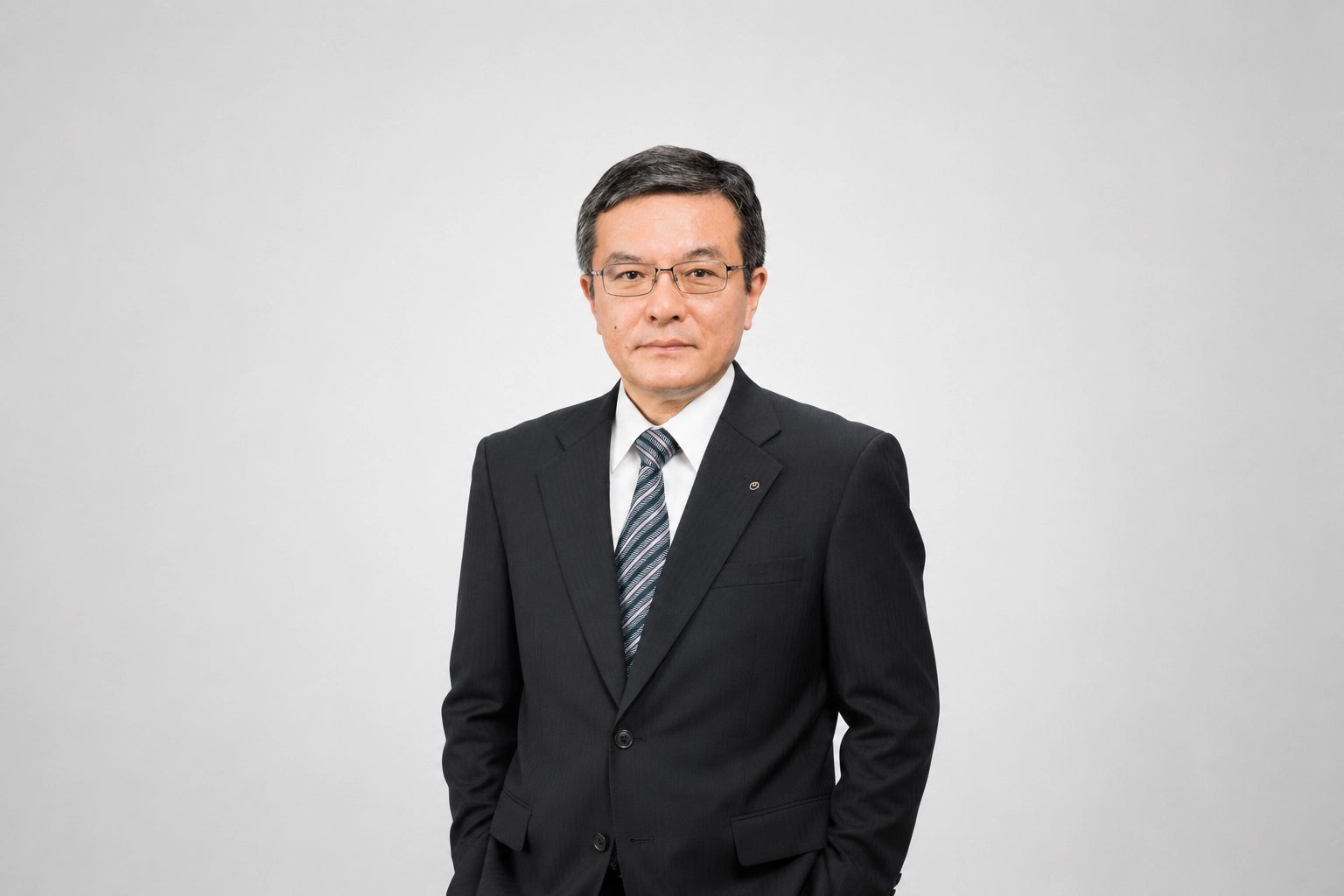
For more than four decades, Akira Shimada has watched the communications industry change from within, moving through the ranks of one of Japan’s most influential corporate institutions as telecommunications evolved from fixed line infrastructure into a foundation for a digitally connected society. Today, as President and Chief Executive Officer of NTT, Inc., Shimada stands at the centre of NTT Group’s continuing transformation, guiding a business whose reach extends far beyond traditional telecommunications into mobile communications, information technology, data, research, energy, real estate and international digital services. As of June 2026, he remains President and CEO and a Representative Member of the Board of NTT.
Born on December 18, 1957, Shimada joined Nippon Telegraph and Telephone Public Corporation in April 1981, before it became the modern NTT following the company’s privatisation. His career has therefore unfolded alongside one of the most important chapters in the history of Japan’s communications sector. Rather than arriving at the top through a short succession of external corporate appointments, he developed his experience through decades of work across the NTT Group, gaining exposure to corporate strategy, finance, personnel, general affairs and operations. That long internal journey has given him an unusually comprehensive understanding of the organisation he now leads.
His early progression included responsibility for corporate strategy planning and financial management. In 2007, he became Vice President of Corporate Strategy Planning at NTT and subsequently served as General Manager of the Accounts and Finance Department at NTT West. In 2009, he moved to NTT East as General Manager of the General Affairs and Personnel Department. These assignments placed him across different parts of the organisation and gave him experience in both business management and the human systems required to operate a major telecommunications group.
The following years brought increasing responsibility. Shimada became Senior Vice President in 2011 and joined the board of NTT East. In 2012, he became Senior Vice President and Head of General Affairs at NTT, before advancing to Executive Vice President in 2015. By 2018, he had become Senior Executive Vice President and Representative Member of the Board. This progression reflected not simply seniority, but the breadth of responsibilities he had accumulated across the organisation.
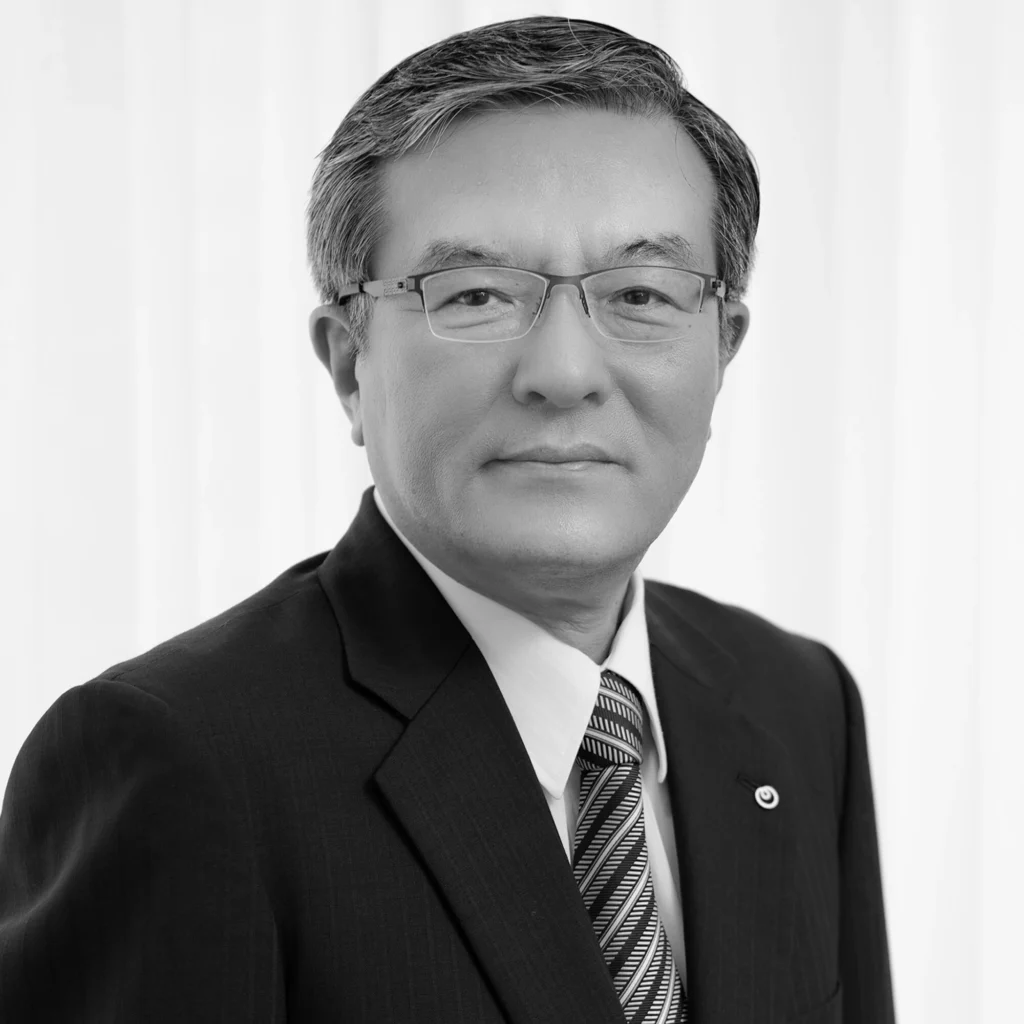
When Shimada was appointed President and CEO in June 2022, he inherited an organisation already undergoing a fundamental transformation. His predecessor, Jun Sawada, described Shimada as an executive with extensive experience across the NTT Group, including NTT East, NTT West, NTT Communications and NTT DATA, as well as overseas experience. Sawada also highlighted the fact that the two had worked together for many years on reforms within NTT, making Shimada a natural choice to continue the transformation already underway.
The challenge facing Shimada was considerably larger than maintaining the performance of a traditional telecommunications company. The definition of connectivity itself was changing. Customers expected faster networks, businesses required sophisticated digital infrastructure and emerging technologies were creating entirely new possibilities for communication, computing and data. Under Shimada’s leadership, NTT has continued to position itself as a technology and innovation group capable of operating across multiple dimensions of the digital economy.
One of the clearest expressions of this direction has been NTT’s focus on the Innovative Optical and Wireless Network, better known as IOWN. The concept represents an ambitious attempt to develop next generation communications infrastructure by combining optical technologies, advanced computing and innovative network architecture. For NTT, this is not simply another generation of telecommunications technology. It reflects a long term vision of infrastructure capable of supporting the enormous growth in data, artificial intelligence and digital services expected in the coming decades.
Shimada’s leadership has also coincided with an important redefinition of NTT’s corporate identity. In 2025, NTT announced that the company would adopt the name NTT, Inc. and introduce a new corporate identity, reflecting the transformation of its business since privatisation in 1985. The company explained that its activities had expanded from domestic fixed line communications into mobile communications, information technology, overseas operations, real estate, energy and other businesses. The new identity was designed to better represent what NTT had become and where it intended to go.
That transformation is significant because NTT occupies a unique position in the global technology landscape. Its history is deeply connected with telecommunications, yet its future increasingly depends on integrating communications with computing, artificial intelligence, data and advanced research. Shimada has therefore been leading an organisation where the boundaries between telecommunications and technology are becoming progressively less distinct.
His approach also reflects an understanding that technological leadership cannot be separated from social responsibility. Communications infrastructure has become essential to almost every aspect of modern life. Education, healthcare, financial services, commerce, public administration and personal relationships all depend on reliable digital networks. As technology becomes more powerful, the responsibilities of the organisations building that infrastructure become correspondingly greater.
Artificial intelligence is adding another dimension to this responsibility. The rapid expansion of AI is creating extraordinary opportunities while simultaneously raising questions around energy consumption, security, privacy, employment and the reliability of digital information. NTT’s ongoing investment in advanced networks and research places Shimada in a position where these issues are not theoretical. They are part of the strategic environment in which the company must operate.
His leadership has also placed considerable emphasis on responding to change rather than simply reacting to it. In his first message as CEO, Shimada spoke of continuing the transformation of NTT and of responding to changes in the economic and business environment, while at times anticipating those changes. He described the objective as creating new experiences and value for customers.
This philosophy captures an important characteristic of his career. Shimada’s rise through NTT has been gradual, but the environment surrounding him has never remained still. He began his career when telecommunications were primarily associated with physical networks and voice communication. He now leads an organisation dealing with cloud computing, artificial intelligence, advanced networks, global digital infrastructure and technologies that may define the next generation of the information society.
Corporate governance has also become an important part of NTT’s evolution. The company has strengthened its governance framework as its business has become more complex and internationally diversified. In 2025, NTT announced organisational changes that included the establishment of a dedicated Legal Department and an Audit and Supervisory Committee Office, reflecting the increasing complexity of legal, regulatory and technological risks associated with global operations and emerging technologies such as AI.
By 2026, Shimada remained at the helm as NTT continued to expand its technology focused agenda. The company’s current management structure places dedicated leadership around technical strategy, business strategy, business development, research and development, artificial intelligence and technology planning, demonstrating how deeply technology has become embedded in the Group’s corporate direction.
What makes Akira Shimada’s story particularly compelling is the continuity between his career and the transformation of NTT itself. He did not simply arrive at a technology company after the digital revolution had taken place. He spent his professional life inside an organisation that experienced the revolution firsthand. From finance and corporate strategy to personnel, governance and executive leadership, his career has provided him with an understanding of the many forces required to transform an institution of extraordinary scale.
His leadership represents a bridge between NTT’s historic identity and its emerging future. The company was once primarily associated with telephone infrastructure. Today, it is increasingly positioned around a much broader vision of digital society, where networks, computing, artificial intelligence, research and human experience intersect. Shimada’s task is to ensure that NTT can remain relevant not only to the technologies of today, but to the infrastructure and ideas that will define tomorrow.
In an era when technological change is measured in months rather than decades, experience can be as valuable as innovation. Akira Shimada brings both a deep institutional understanding and a forward looking perspective to one of the world’s most important technology groups. His journey demonstrates that meaningful transformation is rarely achieved through one dramatic decision. It is built through decades of learning, adaptation and the willingness to continually rethink what a company can become. For NTT, that journey continues, and under Shimada’s leadership, its ambition reaches well beyond connecting people. It is increasingly about creating the technological foundations for the next era of society.