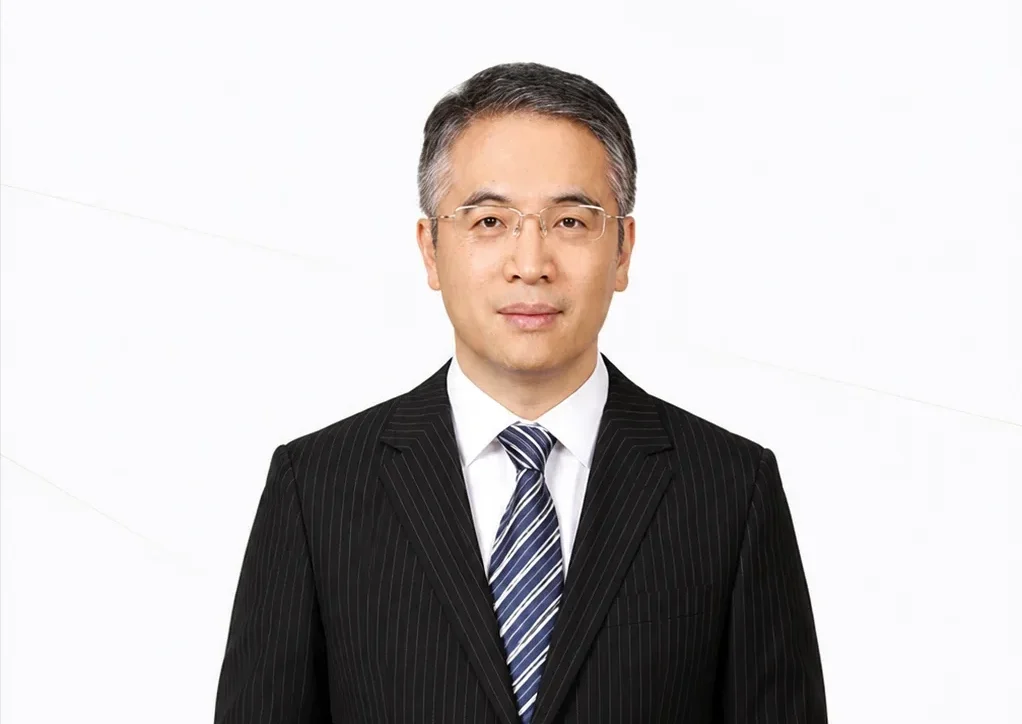
Hironori Kamezawa
The Strategic Banker Guiding Japan's Financial Giant into a New Global Era
By Michelle Clark
Few names evoke a sense of legend in South Asia quite like Imran Khan. A man who defied the conventions of sport, philanthropy, politics, and charisma, Khan’s story reads less like a biography and more like a tapestry of ambition, aura, struggle, and belief. In his life, he has been celebrated, envied, worshipped, and vilified, often all at once. But through each phase, one thing has remained constant: Imran Khan’s ability to captivate hearts and command attention.
Financial institutions possess the scale, heritage, and international influence of Mitsubishi UFJ Financial Group, widely known as MUFG. As Japan’s largest banking group and one of the world’s biggest financial institutions by assets, MUFG plays a pivotal role in supporting global trade, corporate finance, wealth management, investment banking, and infrastructure development. At the centre of this vast organisation is Hironori Kamezawa, President and Group Chief Executive Officer, whose leadership is steering MUFG through an era defined by technological disruption, shifting economic power, geopolitical uncertainty, and changing customer expectations. His measured yet forward looking approach is positioning the banking group to remain one of the most influential players in global finance while adapting to the demands of an increasingly digital economy.
Hironori Kamezawa assumed leadership during a period of considerable transformation for both Japan’s banking sector and the wider global financial system. Years of exceptionally low interest rates, demographic change, technological innovation, and increased international competition have fundamentally reshaped the environment in which financial institutions operate. At the same time, global businesses require increasingly sophisticated banking services capable of supporting cross border investment, multinational supply chains, sustainable finance, and digital commerce. Leading an institution of MUFG’s scale requires not only financial expertise but also the strategic vision to balance stability with innovation.
Before becoming President and Group Chief Executive Officer, Kamezawa built a distinguished career across multiple divisions within MUFG. His experience includes corporate banking, international finance, risk management, strategic planning, and executive leadership, giving him an exceptionally broad understanding of the institution’s operations. Rather than specialising in a single area of finance, he developed expertise across the diverse businesses that define a modern international banking group. This comprehensive background has shaped a leadership philosophy centred on disciplined management, operational resilience, and sustainable long term growth.
MUFG occupies a unique position within international finance. While firmly rooted in Japan’s financial system, the institution has evolved into a truly global banking organisation with operations spanning Asia, Europe, North America, the Middle East, and emerging markets. It serves multinational corporations, governments, institutional investors, financial institutions, and millions of individual customers through services that include commercial banking, investment banking, securities, trust banking, asset management, and consumer finance. Managing such a globally interconnected organisation requires exceptional coordination and an ability to respond rapidly to changing economic conditions across multiple regions.
One of Kamezawa’s central priorities has been strengthening MUFG’s international presence. As Japanese companies continue expanding overseas and global commerce becomes increasingly interconnected, demand for sophisticated international banking services continues to grow. MUFG has steadily expanded its partnerships, overseas operations, and cross border financial capabilities, enabling clients to manage international trade, foreign exchange, mergers and acquisitions, infrastructure financing, and capital market activities through an integrated global network.
Asia occupies a particularly important position within MUFG’s long term strategy. The region continues to experience significant economic growth, expanding middle class populations, rising consumer spending, and increasing demand for financial services. Under Kamezawa’s leadership, MUFG has continued strengthening its presence across key Asian markets through partnerships, investments, and expanded banking operations. These initiatives reflect the bank’s recognition that Asia will remain one of the world’s most important engines of economic growth throughout the coming decades.
Corporate banking continues to represent one of MUFG’s greatest competitive strengths. The institution provides financing for manufacturers, technology companies, infrastructure developers, energy producers, exporters, and multinational corporations operating across diverse industries. Supporting business investment, innovation, and international expansion remains fundamental to MUFG’s mission. Kamezawa has consistently emphasised prudent lending and disciplined capital allocation, ensuring that growth opportunities are pursued without compromising financial resilience.
Risk management has become increasingly important in an era characterised by economic volatility, geopolitical uncertainty, fluctuating interest rates, and evolving regulatory standards. As one of the world’s largest financial institutions, MUFG manages exposure across numerous industries, countries, and currencies. Kamezawa has prioritised strengthening governance frameworks, enhancing internal controls, improving credit quality, and maintaining robust capital reserves to ensure the organisation remains resilient under changing market conditions.
Japan’s banking sector has faced unique structural challenges over the past two decades. Prolonged low interest rates compressed lending margins, while an ageing population altered patterns of savings, investment, and borrowing. These conditions required banks to improve operational efficiency while seeking growth beyond domestic markets. Under Kamezawa’s leadership, MUFG has responded by expanding internationally, investing in technology, and diversifying revenue streams beyond traditional lending activities.
Technology has become one of the defining pillars of MUFG’s transformation. Customers increasingly expect seamless digital banking experiences, intelligent financial advice, instant payments, and secure online services. Recognising these changing expectations, Kamezawa has overseen significant investment in digital infrastructure, cloud computing, artificial intelligence, cybersecurity, and advanced data analytics. These initiatives are modernising the bank’s operations while improving efficiency, customer satisfaction, and long term competitiveness.
Artificial intelligence is playing an increasingly important role across MUFG’s business. Intelligent systems assist with fraud detection, anti money laundering compliance, customer service, credit analysis, and operational decision making. Automation has streamlined numerous administrative functions, allowing employees to focus more effectively on advisory services, relationship management, and complex financial solutions. These technological capabilities not only improve operational efficiency but also strengthen the institution’s ability to manage risk in an increasingly complex financial environment.
Digital payments and financial technology continue reshaping global banking, creating both opportunities and competitive challenges. Consumers and businesses expect faster, more flexible methods of transferring money across domestic and international markets. MUFG has continued investing in payment innovation while collaborating with technology companies and financial institutions to improve transaction speed, security, and customer convenience. Under Kamezawa’s leadership, the bank seeks to combine the reliability of a traditional financial institution with the agility required in a rapidly evolving digital economy.
Sustainable finance has become another defining element of MUFG’s long term strategy. Governments, corporations, and investors increasingly recognise the importance of financing projects that contribute to environmental responsibility and long term economic resilience. MUFG has expanded lending for renewable energy, clean infrastructure, energy efficient technologies, and environmentally sustainable business initiatives. Kamezawa views sustainable finance not simply as a regulatory obligation but as an important driver of future economic growth and investment opportunity.
Infrastructure financing continues to remain a significant area of expertise for MUFG. Around the world, governments and private investors require substantial capital to develop transportation systems, renewable energy facilities, telecommunications networks, water infrastructure, and urban development projects. MUFG’s global capabilities position the institution as a major provider of long term financing for these essential investments. Supporting infrastructure development strengthens economic productivity while reinforcing the bank’s international presence.
Corporate governance has also received considerable attention under Kamezawa’s leadership. Managing one of the world’s largest banking groups requires transparency, accountability, disciplined oversight, and effective regulatory compliance. MUFG has continued strengthening governance structures designed to improve operational efficiency while maintaining confidence among regulators, shareholders, customers, and international partners. Strong governance has become particularly important as financial institutions operate within increasingly complex legal and regulatory environments.
Unlike some internationally recognised banking executives, Hironori Kamezawa maintains a relatively understated public profile. His leadership is defined less by high profile public appearances and more by consistent institutional performance, careful strategic planning, and disciplined execution. This management style reflects a broader Japanese corporate tradition that places greater emphasis on collective organisational success than individual visibility. Nevertheless, his decisions influence financial markets, international investment, corporate lending, and economic development across numerous countries.
The challenges confronting MUFG remain substantial. Rapid technological change, evolving customer expectations, geopolitical tensions, inflationary pressures, cybersecurity threats, and increasing competition from financial technology firms require continuous adaptation. Successfully responding to these developments demands sustained investment in innovation while preserving the financial discipline that has long characterised the institution.
Despite these challenges, MUFG enters the future from a position of considerable strength. Its extensive international network, strong capital base, deep corporate relationships, advanced technological capabilities, and diversified business model provide exceptional resilience in an increasingly competitive global financial marketplace. Under Kamezawa’s leadership, the institution continues balancing innovation with stability while strengthening its ability to support customers across every stage of economic development.
Hironori Kamezawa’s leadership ultimately reflects the evolution of modern banking itself. Financial institutions today must combine technological sophistication with prudent risk management, international connectivity with local expertise, and innovation with long term stability. His measured approach demonstrates that sustainable success in global finance depends not upon rapid expansion alone but upon disciplined strategy, operational excellence, and the ability to anticipate structural change while maintaining unwavering financial resilience.
As banking continues evolving through artificial intelligence, digital payments, sustainable investment, and shifting global economic relationships, Mitsubishi UFJ Financial Group remains one of the world’s most influential financial institutions. Under Hironori Kamezawa’s stewardship, the organisation is not merely adapting to change but helping shape the future of international banking. His legacy is likely to be defined by steady leadership, strategic foresight, and a commitment to ensuring that MUFG remains a trusted financial partner connecting businesses, governments, and individuals across an increasingly interconnected global economy.