Brian Niccol
Reengineering a Global Icon Through Operational Rejuvenation
By Nida kanwal

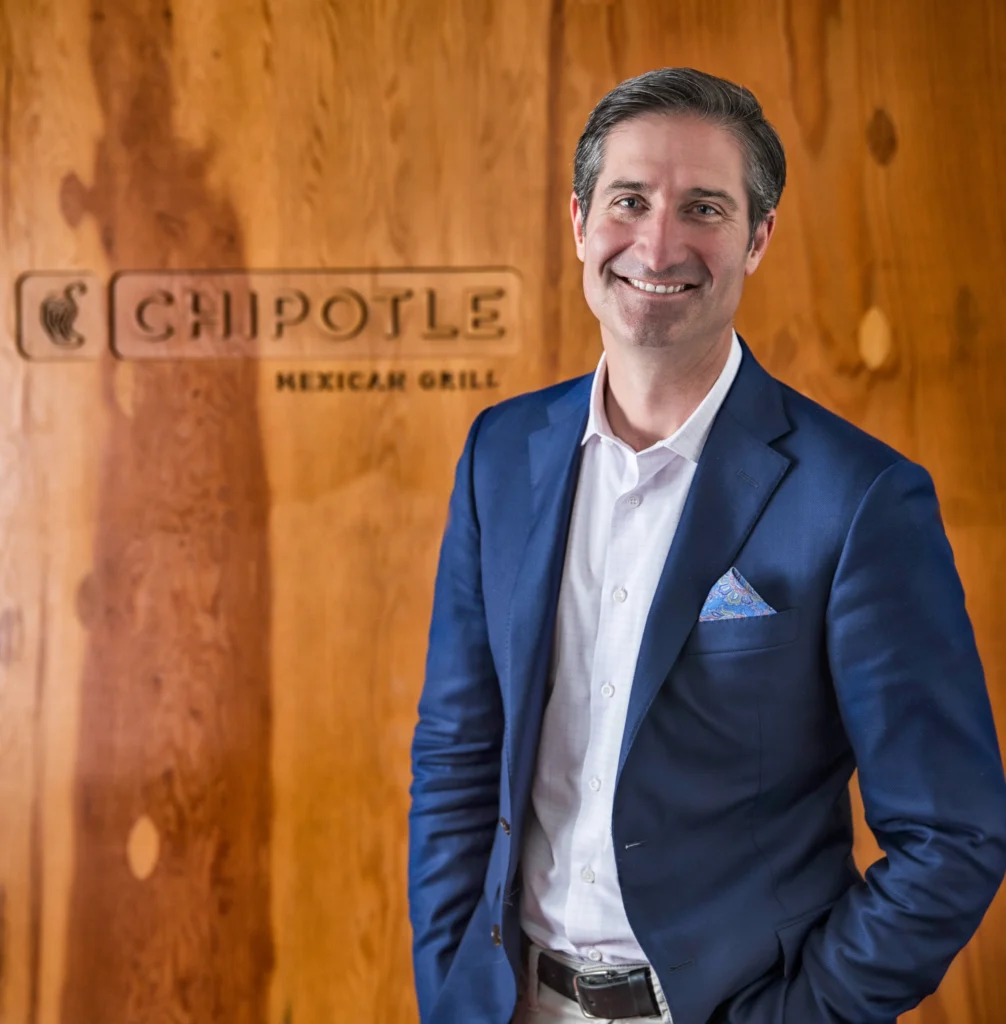
Brian Niccol stands at the centre of one of the most closely analysed corporate transformations in global retail. As Chief Executive Officer of Starbucks, he has become a major search trend not merely because of his appointment, but because of the scale and ambition of his Operational Rejuvenation strategy. After a widely regarded tenure leading Chipotle Mexican Grill, Niccol’s move to modernise Starbucks through Real Time Logistics AI has rapidly evolved into a defining case study for business schools worldwide.
Niccol’s reputation was forged in the crucible of turnaround leadership. At Chipotle, he demonstrated that operational discipline, brand clarity and digital innovation could coexist, restoring consumer trust and accelerating growth. That experience shaped expectations when he took the helm at Starbucks, a company already iconic yet confronting new pressures. Slower service times, supply chain complexity and shifting consumer habits demanded more than incremental reform. They required structural recalibration.
Operational Rejuvenation, as articulated by Niccol, is neither a superficial rebranding nor a cost cutting exercise. It is a systemic overhaul of how a global enterprise sources, distributes and delivers its products. At its core lies the integration of Real Time Logistics AI, a technology driven framework designed to synchronise supply chain data, store level demand and labour allocation in continuous motion. The ambition is simple in phrasing yet formidable in execution. Make every store more responsive, every shipment more precise and every customer interaction more efficient.
Starbucks operates thousands of locations across continents, each with unique demand patterns influenced by culture, climate and commuting rhythms. Historically, such scale could produce friction. Inventory surpluses in one region might coexist with shortages in another. Labour scheduling often relied on historical averages rather than dynamic forecasting. Niccol recognised that in an era of advanced data analytics, static planning was an avoidable constraint.
Real Time Logistics AI addresses this by ingesting live sales data, weather forecasts, promotional calendars and supply availability to generate predictive adjustments. If demand for a seasonal beverage spikes in a particular city, distribution routes recalibrate. If footfall declines during unexpected weather disruptions, staffing levels adjust accordingly. The system functions as a digital nervous system, transmitting signals across the organisation with speed and precision. Yet technology alone does not guarantee transformation. Niccol’s leadership has emphasised cultural alignment alongside technical deployment. Baristas and store managers are not treated as passive recipients of algorithmic directives.

Instead, they are trained to interpret data insights and integrate them with human judgement. This balance between automation and agency echoes Niccol’s broader managerial philosophy. Efficiency must empower employees, not diminish them.
The term Operational Rejuvenation carries symbolic weight. It suggests renewal rather than rupture. Starbucks, long associated with ambience and community, could not afford to sacrifice its experiential identity in pursuit of speed. Niccol has been careful to frame logistics optimisation as a means of enhancing, rather than replacing, the brand’s human touch. Shorter queues and reliable stock levels allow staff to focus on service and connection.
Business schools have seized upon this narrative as a contemporary exemplar of digital transformation in legacy enterprises. Students analyse how Niccol leverages prior experience while adapting to a different corporate culture. They examine the interplay between data science, supply chain management and brand stewardship. Case discussions often revolve around a central question. How can a mature global company innovate at start up velocity without eroding its core identity.
The financial implications are equally significant. Improved forecasting reduces waste, particularly in perishable ingredients. Streamlined logistics lower transportation costs and carbon emissions. Enhanced store efficiency translates into higher throughput during peak hours. Each incremental gain compounds across thousands of outlets, generating measurable impact on margins. Niccol’s strategy demonstrates that operational excellence can serve both profitability and sustainability.
Public fascination with his leadership also reflects the broader economic climate. Consumers in 2026 expect immediacy. Mobile ordering, customisation and contactless payment have reshaped expectations of convenience. Delays once tolerated now prompt frustration. By embedding Real Time Logistics AI into Starbucks’ infrastructure, Niccol aligns operational capability with contemporary consumer psychology.
Critically, his approach avoids technological theatrics. Real Time Logistics AI is not marketed as futuristic spectacle. It is presented as disciplined infrastructure, quietly orchestrating supply and demand. This understated framing reinforces credibility. Niccol communicates with the measured assurance of an executive accustomed to scrutiny, favouring metrics and outcomes over hyperbole.
The comparative lens between his tenure at Chipotle and his current role at Starbucks enriches the narrative. Chipotle’s transformation hinged heavily on digital ordering platforms and menu simplification. At Starbucks, the challenge is more intricate, involving global commodity sourcing, franchise partnerships and cultural legacy. Niccol’s willingness to tailor strategy rather than replicate formulas underscores his adaptability.
Employee engagement forms another pillar of the rejuvenation agenda. Operational strain often manifests first at store level, where inefficiencies translate into stress. By smoothing supply flows and improving scheduling accuracy, the AI system alleviates pressure. Niccol has emphasised that rejuvenation must be felt on the shop floor, not merely reflected in quarterly reports.
The ripple effects extend beyond Starbucks. Competitors monitor the initiative closely, recognising that advancements in logistics intelligence may redefine industry benchmarks. Suppliers, too, adjust to a more data integrated relationship, where transparency and responsiveness become prerequisites. In this sense, Niccol’s strategy influences not only one corporation but the broader ecosystem in which it operates.
There is, inevitably, risk. Complex AI systems require vigilant oversight to prevent overreliance or systemic error. Data security and algorithmic bias remain salient concerns. Niccol addresses these through layered governance structures and continuous evaluation. Operational Rejuvenation is framed as iterative, subject to refinement as insights accumulate.
Ultimately, Brian Niccol’s prominence in 2026 reflects more than executive mobility between high profile brands. It signals a maturation in how global companies conceptualise operations. Supply chains are no longer backstage mechanics but strategic differentiators. By harnessing Real Time Logistics AI to modernise Starbucks’ infrastructure, Niccol has transformed operational management into a narrative of renewal.
His leadership offers a compelling lesson for contemporary business. Heritage does not preclude innovation, and scale need not stifle agility. Through disciplined execution and technological integration, even the most recognisable global icons can recalibrate for a new era. In doing so, Niccol has ensured that Operational Rejuvenation is not merely a corporate slogan, but a blueprint for resilient growth in an increasingly data driven world.