The Urdu Poet of the Cloud
Satya Nadella
How a cricket-inspired philosophy of grace and grit transformed a corporate fortress into a global catalyst for human potential.
By Paul Smith
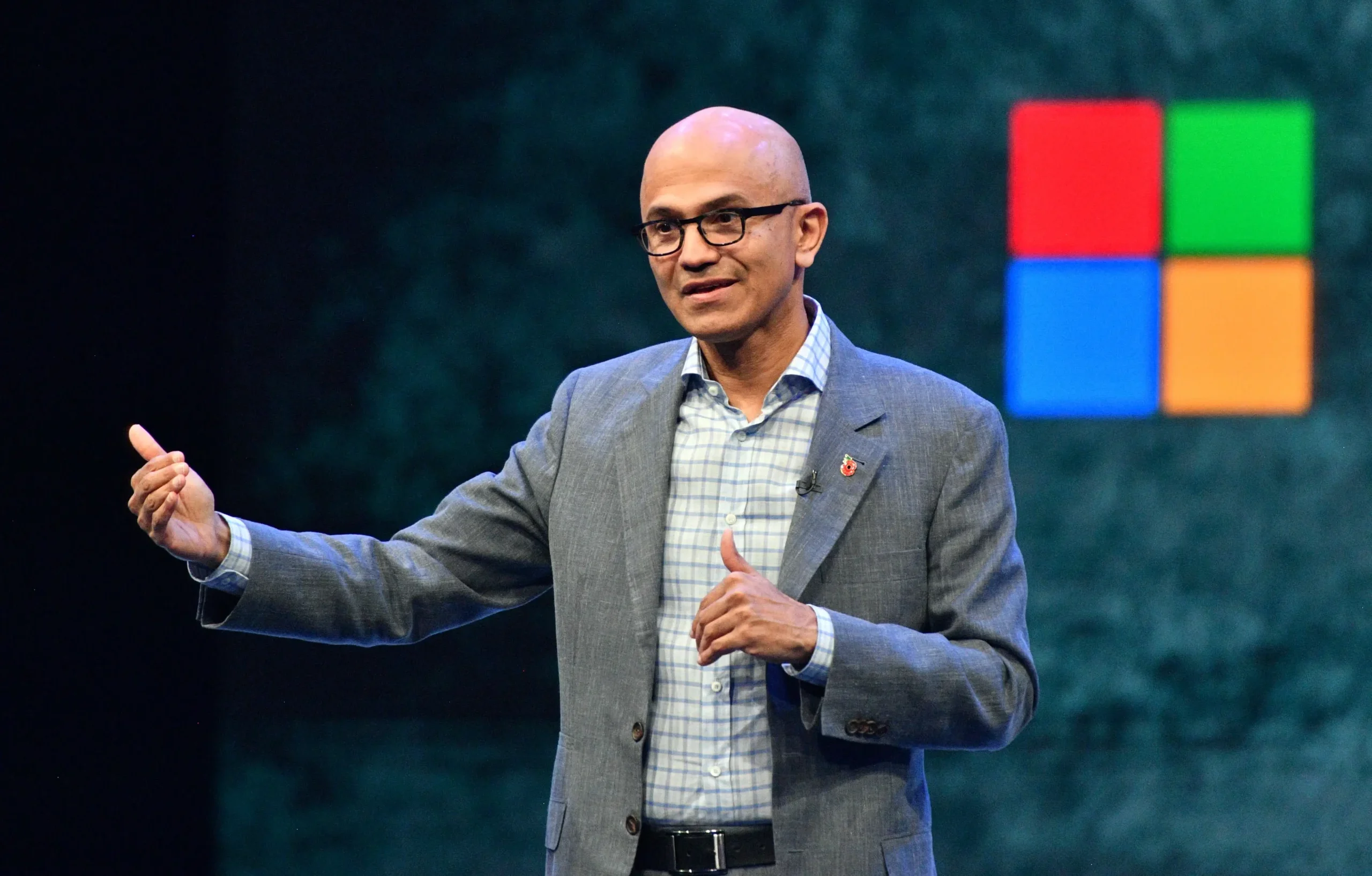
There is a specific kind of silence that exists in the upper atmosphere of global power, a thin, oxygenless space where most leaders become brittle or blustering. Yet, sitting across from Satya Nadella, one senses a different frequency altogether. He does not occupy a room so much as he dissolves the tension within it. In a world of tech titans who model themselves after Napoleonic conquerors or eccentric recluses, Nadella remains an anomaly: a man who leads through the gravitational pull of humility. He is the chief executive who saved Microsoft not by shouting louder than his predecessors, but by whispering a new set of instructions into the company’s very marrow. To understand him is to look past the staggering market valuations and the silicon-etched dreams of artificial intelligence, and instead to look at the worn spine of a book of Urdu poetry or the steady, rhythmic focus of a cricket batsman facing a delivery.
When he first stepped into the role in 2014, Microsoft was a kingdom of jagged edges and internal fortresses. It was a place where brilliance was often weaponized and where the “know-it-all” was the local deity. Nadella did not arrive with a sledgehammer; he arrived with a question. He asked what the company’s soul was meant to be. This was not the typical corporate jargon found in glossy brochures, but a genuine, almost spiritual inquiry. He recognized that for a giant to move, it first had to remember why it stood up in the first place. He replaced the sharp, competitive elbows of the past with a concept that felt almost alien to the tech sector: empathy.
It was a word often dismissed as soft, yet in Nadella’s hands, it became a surgical tool. He understood that you cannot build a product for a world you do not feel for, and you cannot lead a team whose private struggles you choose to ignore. This philosophy was forged in the quiet, difficult corridors of his own life. The experience of raising a son with profound disabilities, Zain, who passed away in 2022, stripped away the luxury of professional detachment. It forced a young, ambitious engineer to realize that control is an illusion and that the only meaningful response to the unpredictability of existence is grace. This lived reality became the blueprint for his leadership. When he speaks of a growth mindset, he isn’t just citing a psychology textbook; he is describing the necessity of being a “learn-it-all.”
He views the world as a vast, unfolding classroom where the moment you stop being a student, you begin to fossilize. This intellectual hunger is why he can pivot a trillion-dollar ship toward the cloud or artificial intelligence with the agility of a startup. He isn’t protecting a legacy; he is chasing a horizon. In the current dawn of 2026, as the initial spectacle of artificial intelligence begins to settle into the substance of daily life, Nadella has emerged as the industry’s primary philosopher. While others fixate on the raw horsepower of large language models, he is preoccupied with the scaffolding of the human spirit. He recently introduced the idea of the “cognitive amplifier,” a rejection of the fear that machines will replace us.
To him, technology is a bicycle for the mind, a tool that should allow a poet to see further and a doctor to heal faster. He has even begun to push back against the term “AI slop,” the low-grade digital noise that has begun to clutter our screens. He argues that we must move toward a new equilibrium, a theory of mind where we don’t just use tools, but evolve alongside them. It is a sophisticated, deeply humanistic view of a future that many find cold and intimidating.
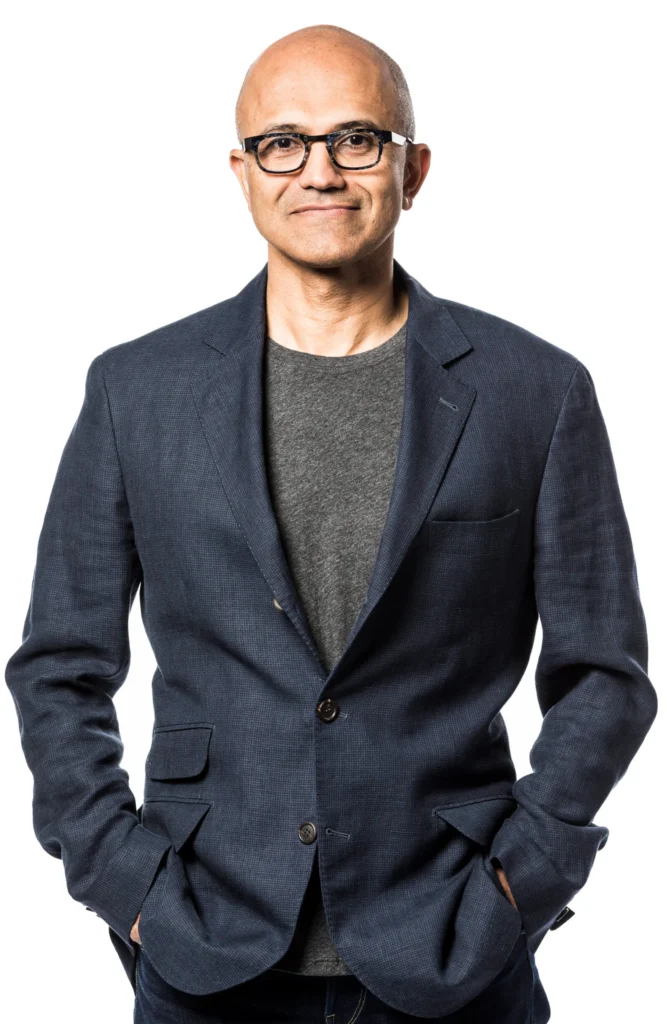
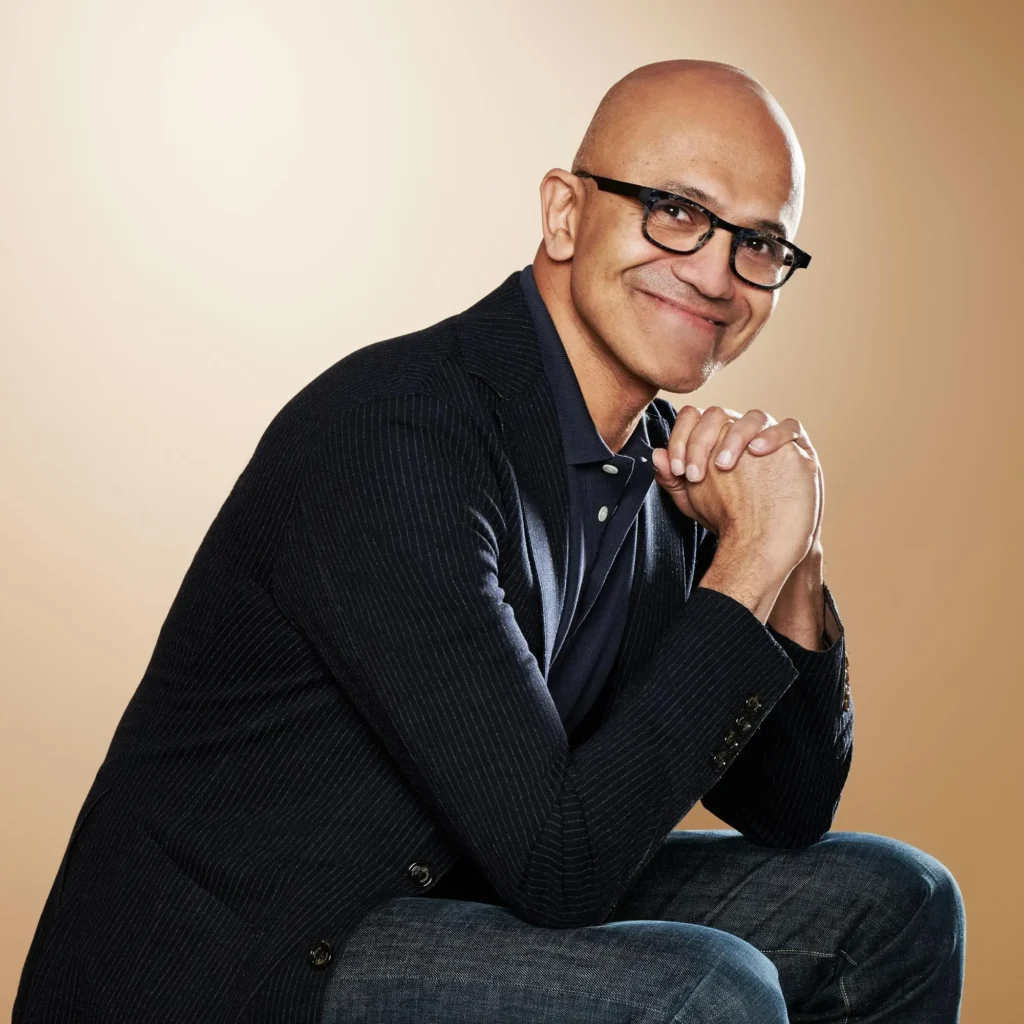
Watching him navigate a boardroom or a keynote stage, there is an unmistakable cadence to his movements, perhaps a remnant of his love for cricket. In that sport, as in his leadership, there is a balance between the explosive action of the play and the long, meditative stretches of waiting and strategy. He possesses the patience of a test match player, willing to endure the jagged edges of a transition if he knows the foundational direction is sound. He has delegated much of the granular day-to-day operations to a trusted circle of leaders, allowing himself the mental space to act as a public thinker.
This isn’t a retreat; it’s a recalibration. He is spending his time on a personal scratchpad, a private space where he distills complex socio-technical issues into prose that reads more like a letter to a friend than a corporate dispatch. There is a certain irony in the fact that the man who oversees the most ubiquitous software on the planet is so deeply tethered to the analog world. He remains a voracious reader, finding more truth in the heavy prose of Russian novelists or the rhythmic beauty of Ghalib’s verse than in a quarterly earnings report.
He sees the world through the lens of a culinary explorer, believing that food is the simplest way to touch the texture of another culture. This curiosity is his greatest defense against the arrogance that often plagues successful men. He knows that his position is a temporary stewardship of a massive, living organism. He does not seek to be the face of Microsoft so much as he seeks to be its heartbeat. Under his watch, Microsoft hasn’t just become more profitable; it has become more legible. It is no longer a sprawling, confusing collection of products, but a unified mission to empower.
This clarity is Nadella’s greatest gift to the organization. He stripped away the vanity projects and the toxic rivalries, replacing them with a singular focus on the customer’s success. He proved that you can be the most powerful person in the room without being the loudest. He demonstrated that kindness is not a weakness in the marketplace, but a competitive advantage. In an era defined by disruption and discord, he stands as a testament to the power of the steady hand and the open mind.
As he looks toward the remainder of 2026, he seems less like a CEO and more like an architect of the intangible. He is building the frameworks of trust and safety that will allow a skeptical public to embrace the next great shift in human capability. He understands that for technology to have societal permission, it must prove its worth not in the lab, but in the living room. He remains grounded in the belief that the most meaningful measure of progress is the outcome for the individual. Whether he is discussing the model overhang that challenges developers or the ethical permits required for deep integration, he never loses sight of the person on the other side of the screen.
Ultimately, Satya Nadella’s legacy will not be written in code or on a balance sheet. It will be found in the culture of curiosity he has woven into the fabric of the modern world. He has taught us that the most important software we ever run is our own internal operating system, our values, our empathy, and our willingness to change. He remains a man of the quiet middle, a bridge between the high-tech future and the ancient truths of the human heart. In the grand, noisy theater of Silicon Valley, he is the one who reminds us that even the most complex machines are, at their best, simply tools to help us be more fully ourselves.