Sergey Brin
The Visionary Behind Google’s Technological Revolution
By Editorial Desk

Sergey Brin stands as one of the most influential figures in the modern technological era, a pioneer whose intellect and curiosity reshaped how the world accesses and processes information. Born in Moscow in 1973, Sergey Mikhailovich Brin’s life journey from a young boy in the Soviet Union to a billionaire innovator in Silicon Valley is one defined by intellect, courage, and a relentless pursuit of knowledge. His story is not only that of personal success but also one of global transformation through technology. The creation of Google, the company he co founded with Larry Page, marked a turning point in human interaction with the digital world, revolutionizing information accessibility and shaping the internet into the indispensable resource it has become today.
Brin’s early life laid the foundation for his inquisitive nature and analytical mind. His parents, both highly educated, were deeply involved in academia. His father, Michael Brin, was a mathematics professor, and his mother, Eugenia Brin, worked as a researcher at NASA’s Goddard Space Flight Center. Growing up in a family that valued education and intellectual exploration gave Sergey an environment where questions were encouraged and curiosity was rewarded.
However, his childhood was also marked by the challenges faced by Jewish families in the Soviet Union, where discrimination and restrictions on professional advancement were widespread. This atmosphere ultimately pushed his family to emigrate to the United States in 1979 when Sergey was just six years old, seeking freedom and opportunity that would allow their talents to flourish. The Brin family settled in Maryland, where Sergey quickly adapted to his new surroundings.
He displayed an early aptitude for mathematics and computers, showing signs of the analytical thinking that would later define his career. Encouraged by his father and mother, he pursued rigorous studies that combined science, mathematics, and logic. His brilliance was evident even during his school years, and his teachers noted his exceptional talent for problem-solving. Brin’s intellectual development was also shaped by his exposure to computer technology at a young age.
His father introduced him to early personal computers, sparking an interest that would grow into a lifelong passion for computing and data analysis. Brin’s academic journey took him to the University of Maryland, where he earned a bachelor’s degree in mathematics and computer science.
His performance was stellar, and his professors recognized his deep understanding of complex computational theories. However, it was his decision to continue his studies at Stanford University that would change the course of his life and the future of the digital world. At Stanford, Brin met Larry Page, a fellow graduate student with a similar fascination for data and technology. The two shared an interest in understanding how vast amounts of information could be organized, analyzed, and retrieved efficiently. Their partnership began as a research collaboration focused on improving search engine technology.

At the time, the internet was growing rapidly, but finding useful and relevant information remained a major challenge. Existing search engines ranked results based primarily on how often a term appeared on a webpage, without truly assessing the quality or authority of the content. Brin and Page set out to solve this problem through a novel approach that considered the structure of the web itself. Their idea was to rank pages based on how many other pages linked to them, interpreting these links as indicators of relevance and trust. This system became known as PageRank, and it would form the foundation of Google’s search algorithm.
The early stages of Google were marked by hard work, innovation, and an almost obsessive attention to detail. Brin’s technical skills and mathematical precision complemented Page’s analytical thinking and design insight. Together, they transformed their research project into a working prototype that quickly outperformed existing search engines. The simplicity of the Google interface, with its clean white background and single search bar, belied the complexity of the algorithms operating behind it. Their project attracted attention from professors, students, and eventually investors who saw its immense potential.
In 1998, Brin and Page officially founded Google, operating out of a rented garage in Menlo Park, California. The name, derived from the mathematical term “googol,” symbolized their ambition to organize an almost infinite amount of information. Google’s mission, “to organize the world’s information and make it universally accessible and useful,” reflected Brin’s vision of technology as a tool for empowerment and knowledge sharing.
Within a few years, Google grew from a small startup to a global powerhouse, fundamentally changing how people searched for and consumed information.
Brin’s role at Google extended beyond his contributions as a programmer and data scientist. He was known for his creativity, curiosity, and willingness to explore unconventional ideas. While Larry Page often focused on long-term strategic goals, Brin gravitated toward experimentation and new technologies. His leadership style was characterized by openness to innovation and a belief in the power of data-driven decision-making. Under their combined direction, Google expanded rapidly, launching products that would redefine communication and digital life, including Gmail, Google Maps, Google News, and the Android operating system.
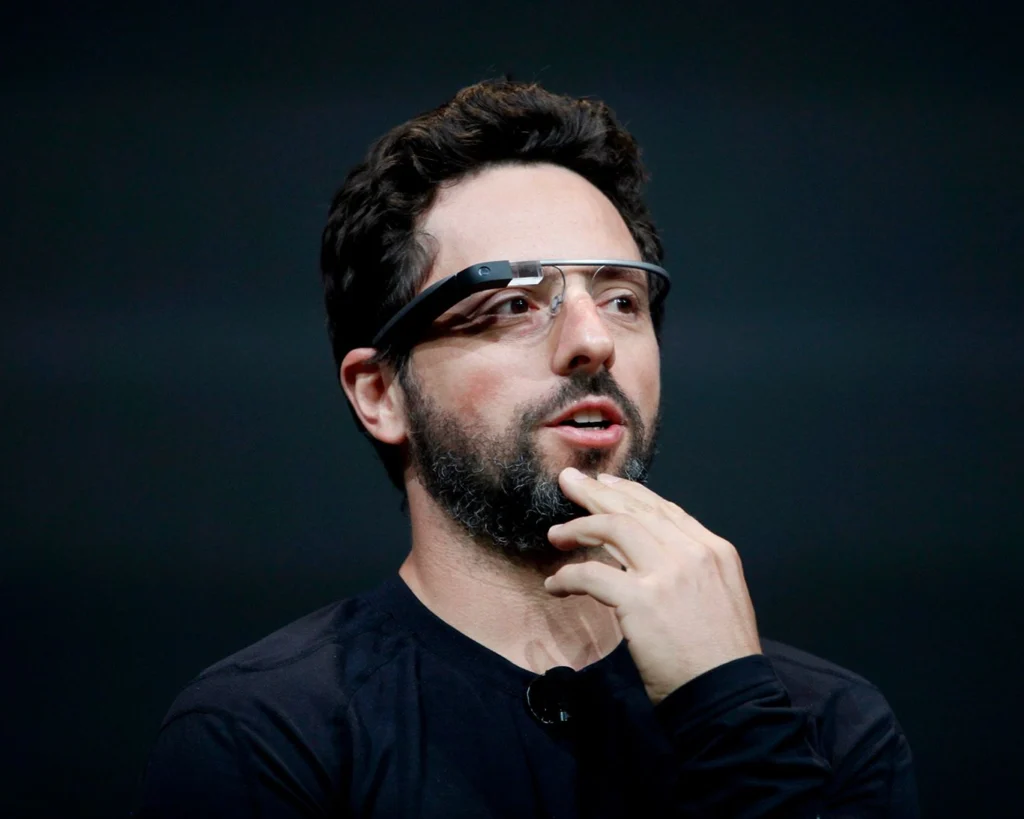
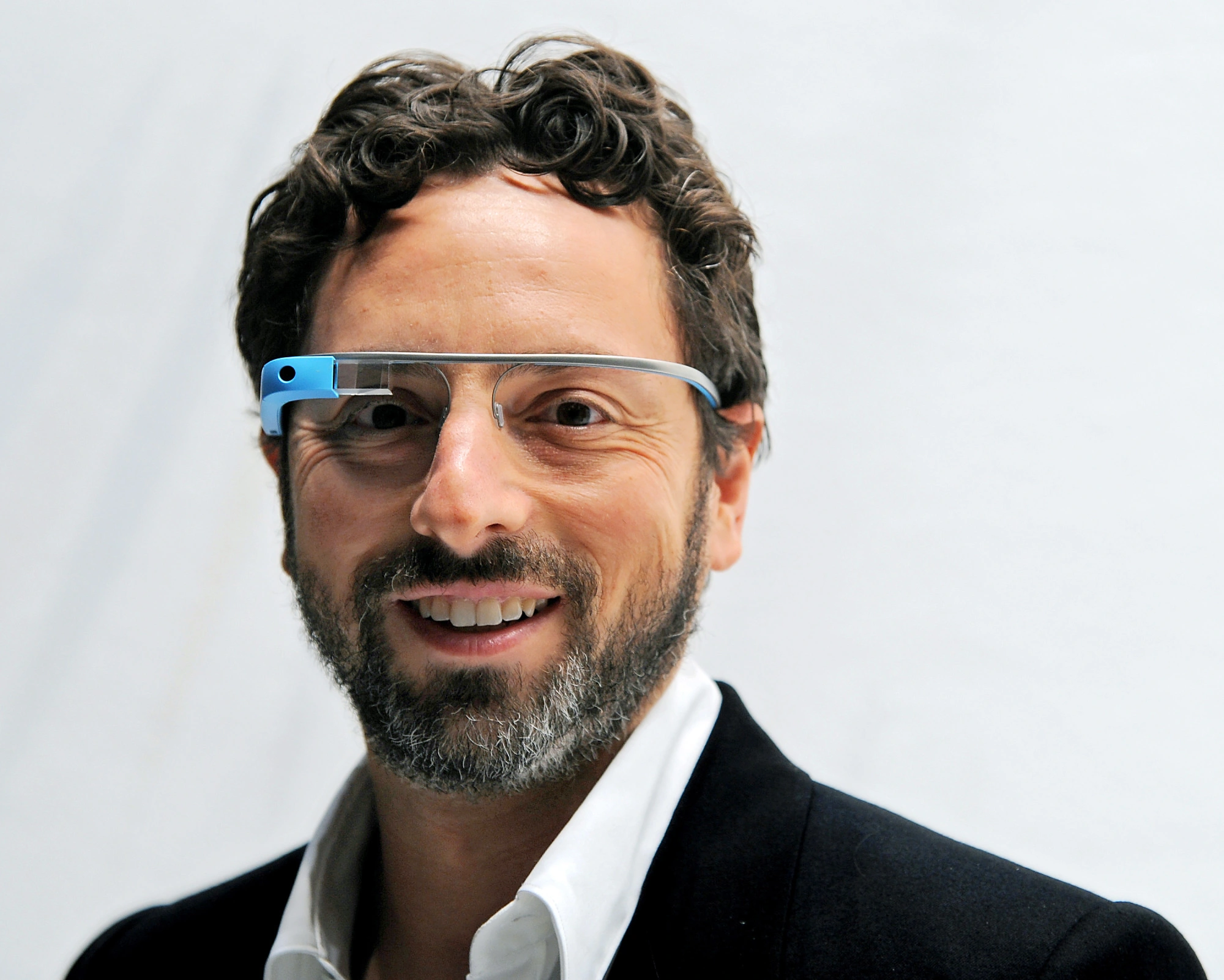
As Google evolved, Brin’s interests shifted toward more futuristic projects that combined technology, science, and social impact. He played a major role in the establishment of X, formerly known as Google X, a research division dedicated to ambitious projects known as “moonshots.” These initiatives aimed to tackle some of humanity’s most complex challenges through technology. Among these projects were self-driving cars, smart glasses, and renewable energy solutions. Brin’s fascination with artificial intelligence and machine learning also guided much of his later work, as he envisioned a future where intelligent systems could augment human capabilities and solve global problems.
Brin’s leadership within Google and later its parent company Alphabet was marked by his preference for exploration rather than administrative control. In 2015, when Google underwent corporate restructuring and Alphabet was created as the parent entity, Brin assumed the role of president of Alphabet. This allowed him to focus more on experimental projects while delegating daily management to others. His contributions to Google’s culture and philosophy remained deeply ingrained in the company’s identity.
Beyond his technological pursuits, Sergey Brin has also been active in philanthropy and humanitarian efforts. Through the Sergey Brin Family Foundation, he has supported research in Parkinson’s disease, environmental protection, education, and other social causes. His commitment to scientific inquiry extends beyond business, as he has personally funded projects related to health and sustainability. His philanthropic work reflects his belief that technology should serve humanity and contribute to global well being.
Despite his immense success, Brin has often maintained a relatively private personal life. Known for his down to earth demeanor and curiosity about the world, he is an adventurer who enjoys challenges both intellectual and physical. He has participated in skydiving, kite surfing, and other adventurous pursuits that mirror his fearless approach to innovation. His colleagues often describe him as an analytical thinker who is also deeply humanistic, blending logic with empathy and creativity.
Sergey Brin’s impact on the world extends far beyond the confines of Silicon Valley. His contributions to computer science, artificial intelligence, and data processing have fundamentally altered how societies function in the information age. Through Google, billions of people around the world gained access to knowledge and resources previously unimaginable. His innovations democratized information and created opportunities for education, business, and communication on a global scale.
However, Brin’s legacy is also intertwined with complex ethical and societal questions. The immense power of Google and its influence on privacy, information control, and digital behavior has sparked ongoing debates about technology’s role in society. Brin himself has acknowledged the need for responsibility and ethical consideration in technological advancement. He has advocated for transparency and accountability in data usage while continuing to emphasize the importance of innovation for the greater good.
In reflecting on Sergey Brin’s life and career, it becomes clear that his story is not simply about wealth or corporate success but about vision and transformation. From a young immigrant with a passion for mathematics to a global icon of technological progress, Brin embodies the spirit of innovation and discovery. His ability to merge scientific rigor with imaginative exploration set him apart as a leader in one of the most transformative periods in human history. The search engine he helped create became more than a tool; it became a symbol of curiosity, connection, and the boundless potential of human knowledge.
Today, as the world continues to evolve through artificial intelligence, quantum computing, and new frontiers of data science, Sergey Brin’s influence remains profound. His commitment to progress, creativity, and the responsible use of technology continues to inspire a new generation of innovators who seek to build on the foundations he helped establish. The impact of his work is visible in every corner of the digital world, from the smartphone in one’s hand to the vast systems that power global communication and commerce.
Sergey Brin’s legacy is that of a visionary who looked beyond the immediate and imagined what the world could become when information was free, accessible, and intelligently organized. His journey from a Soviet immigrant to a pioneer of the digital age is a testament to the power of intellect, curiosity, and perseverance. He transformed not only how people search for knowledge but how they understand and interact with the world itself. In the grand narrative of technological progress, Sergey Brin will forever be remembered as a thinker, a dreamer, and a creator who helped redefine the boundaries of human possibility.