Zahra Bahrololoumi
Leading with Trust in the Age of Intelligent Enterprise
By Michelle Clark
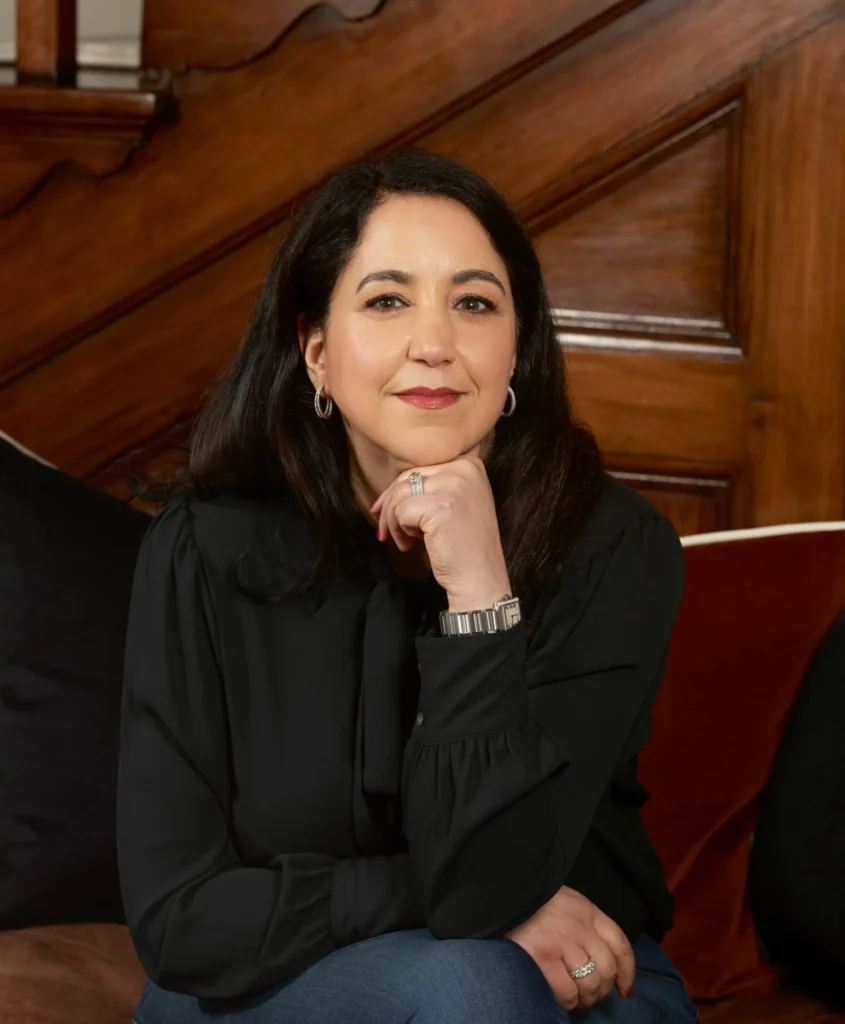
Zahra Bahrololoumi has emerged as one of the most compelling voices in enterprise technology. As Chief Executive Officer of Salesforce UK and Ireland, she stands at the forefront of a profound shift in how global businesses approach artificial intelligence, digital transformation and organisational culture. Her leadership is increasingly associated with the principle of Trust First AI, a framework that places ethics, transparency and human value at the centre of technological advancement.
Bahrololoumi’s influence derives not merely from her title but from the clarity of her perspective. In an industry often captivated by the speed and spectacle of innovation, she consistently returns to a foundational question. How can technology serve people without compromising their confidence or security. This emphasis on trust is not rhetorical flourish. It is a strategic imperative shaped by the realities of data governance, cyber risk and public scepticism about automation.
Her career trajectory reflects a sustained engagement with digital transformation at scale. Before assuming the helm of Salesforce UK and Ireland, she built extensive experience guiding organisations through complex technological shifts. That background informs her approach today. Rather than framing artificial intelligence as a disruptive force to be feared or worshipped, she presents it as a tool whose value depends entirely on the integrity of its deployment.
Under her leadership, Salesforce UK and Ireland has deepened its focus on responsible innovation. The company’s global reputation as a pioneer in cloud based customer relationship management places it at the heart of enterprise operations. In this context, Trust First AI becomes more than a slogan. It becomes a discipline embedded in product development, client advisory services and corporate governance. Bahrololoumi advocates for systems that are explainable, accountable and aligned with regulatory standards, ensuring that businesses can harness AI without eroding stakeholder confidence.
The timing of her prominence is significant. Organisations across sectors are grappling with the implications of generative AI, predictive analytics and automated decision making. Boards demand growth, regulators demand oversight and customers demand reassurance. Bahrololoumi articulates a path through this complexity. She argues that long term competitiveness depends not only on technical capability but on ethical credibility. In her view, trust is an asset as tangible as revenue.
Her leadership style is characterised by composure and intellectual rigour. Colleagues often describe her as both strategic and empathetic, qualities that are essential in guiding large teams through transformation. She emphasises inclusion and diversity, recognising that robust decision making in technology requires a plurality of perspectives. This commitment extends beyond internal culture to the clients Salesforce serves. She encourages businesses to consider how digital tools can widen access and opportunity rather than entrench existing inequalities.

One of Bahrololoumi’s distinguishing strengths lies in her ability to translate abstract technological concepts into practical business language. Enterprise leaders do not require theoretical exposition alone. They need frameworks that connect innovation to measurable outcomes. She frequently highlights the importance of aligning AI initiatives with clear objectives, whether improving customer experience, enhancing operational efficiency or unlocking new revenue streams. In doing so, she grounds futuristic discourse in commercial reality.
Her advocacy for Trust First AI also intersects with the broader regulatory landscape in the United Kingdom and Europe. As policymakers refine rules governing data protection and algorithmic accountability, corporate leaders must navigate evolving compliance demands. Bahrololoumi positions Salesforce as a partner in this journey, helping organisations interpret regulation not as an obstacle but as a foundation for sustainable growth. By integrating compliance into design processes, she argues, companies can avoid reactive crisis management and instead build durable reputations.
The United Kingdom’s ambition to remain a global technology hub provides additional context for her role. In conversations about national competitiveness, she underscores the need for collaboration between public institutions and private enterprise. Skills development, digital infrastructure and responsible innovation are recurring themes in her commentary. She views technology not as an isolated industry but as a catalyst shaping healthcare, finance, manufacturing and education alike.
Her public engagements reveal a leader attentive to both optimism and caution. She acknowledges the extraordinary potential of AI to transform productivity and creativity. At the same time, she insists on guardrails. Bias in algorithms, misuse of data and opaque decision systems can undermine societal trust if left unchecked. By addressing these concerns directly, she differentiates herself from more uncritical proponents of technological acceleration.
Within Salesforce, her stewardship reinforces the company’s longstanding emphasis on stakeholder capitalism. The organisation has historically promoted the idea that businesses bear responsibility to employees, communities and the environment in addition to shareholders. Bahrololoumi extends this philosophy into the AI era, contending that intelligent systems must reflect human values. Trust First AI thus becomes an evolution of a broader corporate ethos rather than a departure from it.
Her impact is also evident in how enterprise clients frame their own narratives. Increasingly, chief information officers and chief executives speak of responsible AI adoption as integral to brand reputation. The language of trust, once peripheral, has moved to the centre of strategic planning. While this shift cannot be attributed to a single individual, Bahrololoumi’s advocacy has contributed to normalising the expectation that innovation must be principled.
In examining her leadership, it is important to recognise the symbolic dimension of her visibility. The technology sector has long faced criticism for homogeneity at senior levels. As a woman leading a major technology business in a critical regional market, she represents progress in broadening representation. Her prominence challenges assumptions about who shapes the future of enterprise technology and offers a model for aspiring leaders from diverse backgrounds.
The digital landscape she navigates is defined by volatility. Economic uncertainty, geopolitical tension and rapid technological iteration create a demanding environment for decision makers. Bahrololoumi responds with a steady emphasis on fundamentals. Clear strategy, ethical clarity and investment in talent form the pillars of her approach. She resists the temptation to chase every emerging trend, instead encouraging disciplined evaluation of which innovations genuinely advance organisational goals.
Her articulation of Trust First AI resonates because it addresses a paradox at the heart of modern business. Companies seek to personalise services and predict customer needs with increasing precision. Yet the very data that enables such precision can provoke anxiety about surveillance and misuse. By foregrounding consent, transparency and accountability, she offers a way to reconcile ambition with responsibility.

As artificial intelligence continues to mature, the distinction between experimental deployment and core infrastructure will blur. Systems that once operated at the periphery will become embedded in everyday workflows. In this context, the principles championed by Bahrololoumi will only grow in relevance. Trust cannot be retrofitted after failure. It must be engineered from the outset.
Ultimately, Zahra Bahrololoumi’s significance lies not solely in her executive authority but in her reframing of technological progress. She challenges the narrative that speed alone defines success. Instead, she contends that durability arises from integrity. In advocating for Trust First AI, she invites global businesses to reconsider what leadership in the digital age truly entails. It is not merely the capacity to adopt new tools but the wisdom to deploy them in ways that earn and sustain confidence.