Vinod Khosla
The Unflinching Patron Of Radical Non-Consensus And The Cartographer Of Tomorrow
By Peter Davis
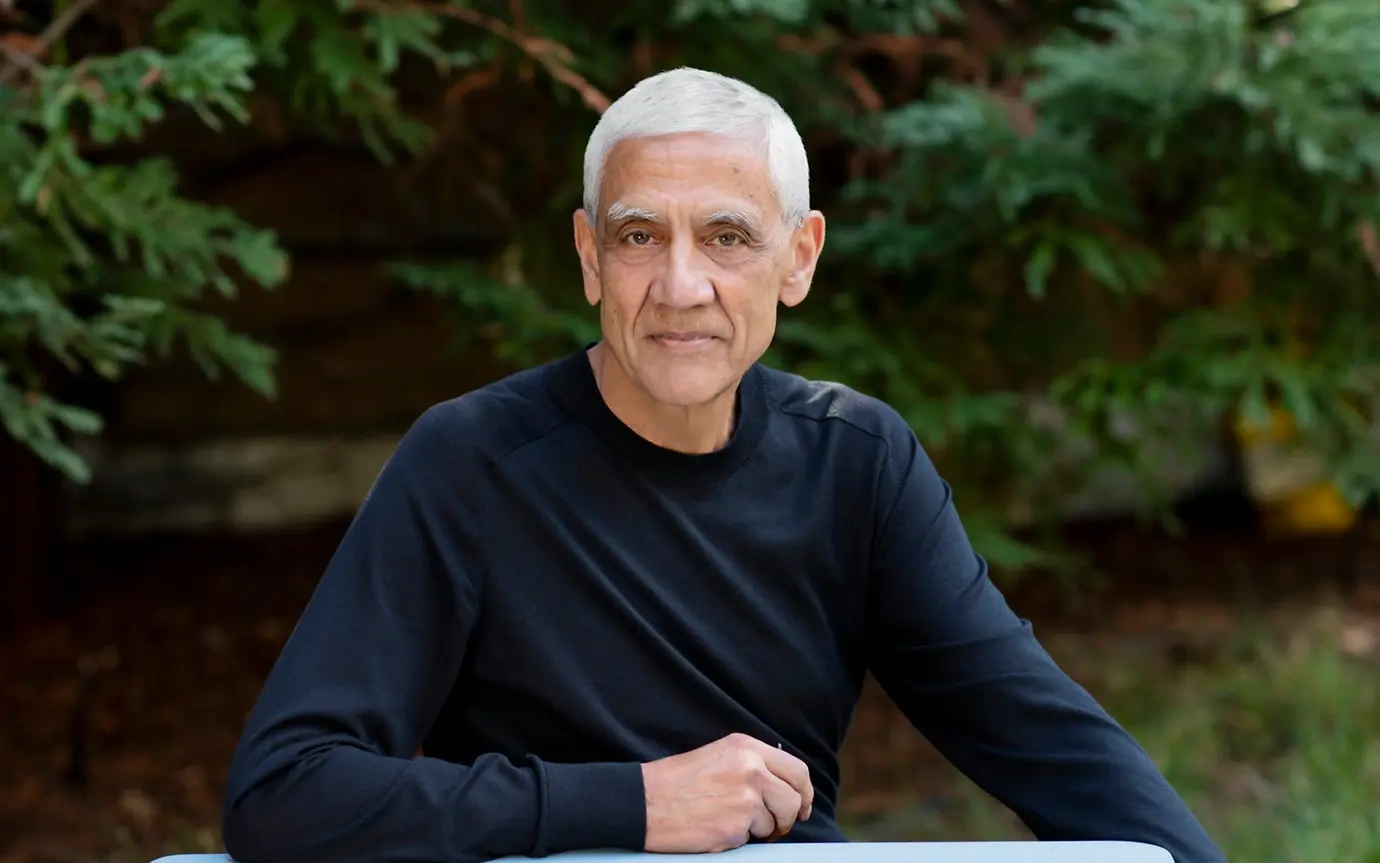
Vinod Khosla, the founder of Khosla Ventures and co-founder of Sun Microsystems, is not merely a venture capitalist, he is a philosophical steward of technological audacity, a figure whose influence is defined less by his substantial wealth and more by his willingness to underwrite ideas deemed lunacy by the conventional wisdom of Silicon Valley. His trajectory began in Pune, India, where, as the son of an army officer, he was an unlikely candidate for the frontier of global computing, yet his early, voracious reading about the inception of Intel planted a seed of ambition that ultimately pulled him to the United States. Following his technical education, including a degree from the Indian Institute of Technology, IIT, Delhi and an MBA from Stanford, he quickly established his entrepreneurial credentials.
His first major contribution to the technology landscape came in 1982 when he co-founded Sun Microsystems, short for Stanford University Network. As its founding CEO, Khosla helped pioneer the concept of open systems and distributed computing, laying foundational planks for what would become the internet’s architecture. This experience was less about a single product and more about the power of open standards and the democratisation of computing resources, a lesson he would carry into his investment career. Sun’s eventual success granted him not just financial freedom, but the intellectual licence to be imprudent, a quality he has since institutionalised in his investment firm.
Khosla Ventures, established in 2004, was explicitly created as an apparatus for funding science experiments, deliberately seeking out ventures with a high probability of failure but possessing a nonlinear, world-altering potential should they succeed. Khosla’s philosophy is famously articulated as a focus on the consequences of success, rather than the probability of it. In a field obsessed with mitigating risk and maximising certainty, he is the definitive champion of the Black Swan, the improbable yet immensely impactful event. He has little interest in incremental improvements or safe, predictable bets, instead preferring to back companies aiming for a tenfold, or thousandfold, impact, often in sectors traditionally resistant to disruption.
This contrarian mandate has directed his firm’s capital into what others view as the technological wilderness, specifically frontier technologies such as industrial robotics, next-generation energy, and synthetic biology. Khosla was an early and often lone voice championing cleantech investments in the 2000s, ploughing money into alternative energy and materials science when the rest of the market was still fixated on web applications. His firm’s early conviction in areas like plant-based meat alternatives, Impossible Foods, and cutting-edge energy storage, QuantumScape, epitomises his commitment to solving problems of planetary scale, believing that the only way to sustain Western consumption levels globally is through radical, technological leaps, not modest conservation efforts. He contends that the sheer magnitude of global challenges like climate change necessitates a thousand per cent solution, not a mere ten per cent improvement.
More recently, Khosla has emerged as one of the most fervent and influential patrons of artificial intelligence, AI, and machine learning, having been an early investor in OpenAI, the developer of ChatGPT. His belief in AI is uncompromising, a conviction that the next wave of computing will not merely amplify human capability but will effectively turn expertise into a free and abundant commodity. He foresees a future where AI models will substitute for eighty per cent of human doctors and educators, rendering human professional judgement less reliable than data-driven algorithmic analysis, a provocative and frequently debated forecast that reflects his zeal for technological substitution.
As an operator and investor, Khosla is renowned for his demanding, yet profoundly supportive, approach to founders. He grants them the runway for large, conceptual risks, but demands brutal honesty in return, viewing unvarnished, direct feedback not as criticism, but as the highest form of professional luxury. He advocates a maverick intellectualism, urging entrepreneurs to embrace ignorance as a virtue, arguing that true disruption rarely comes from the established experts who are inherently biased towards the status quo. His willingness to not just tolerate, but actively subsidise failure, is his competitive advantage, allowing his portfolio companies to pursue paths that would be deemed career-ending in a less forgiving ecosystem.
Vinod Khosla, the engineer, venture capitalist, and institutional sceptic, is fundamentally engaged in the business of re-imagining societal infrastructure. His investment profile reads like a blueprint for a plausible, technologically mediated tomorrow, encompassing everything from fusion power to medical diagnostics. He is a steadfast believer that the only resource that is truly unlimited is human ingenuity and that the ultimate role of the venture investor is to act as a catalyst for the unreasonable, pushing the boundaries of what is technologically feasible to achieve societal outcomes that are profoundly meaningful.