The AI Debate
If Artificial Intelligence Is Already Considered Harmful, What Could Its Impact on Humans Look Like by 2036?
By Rocky Kumar
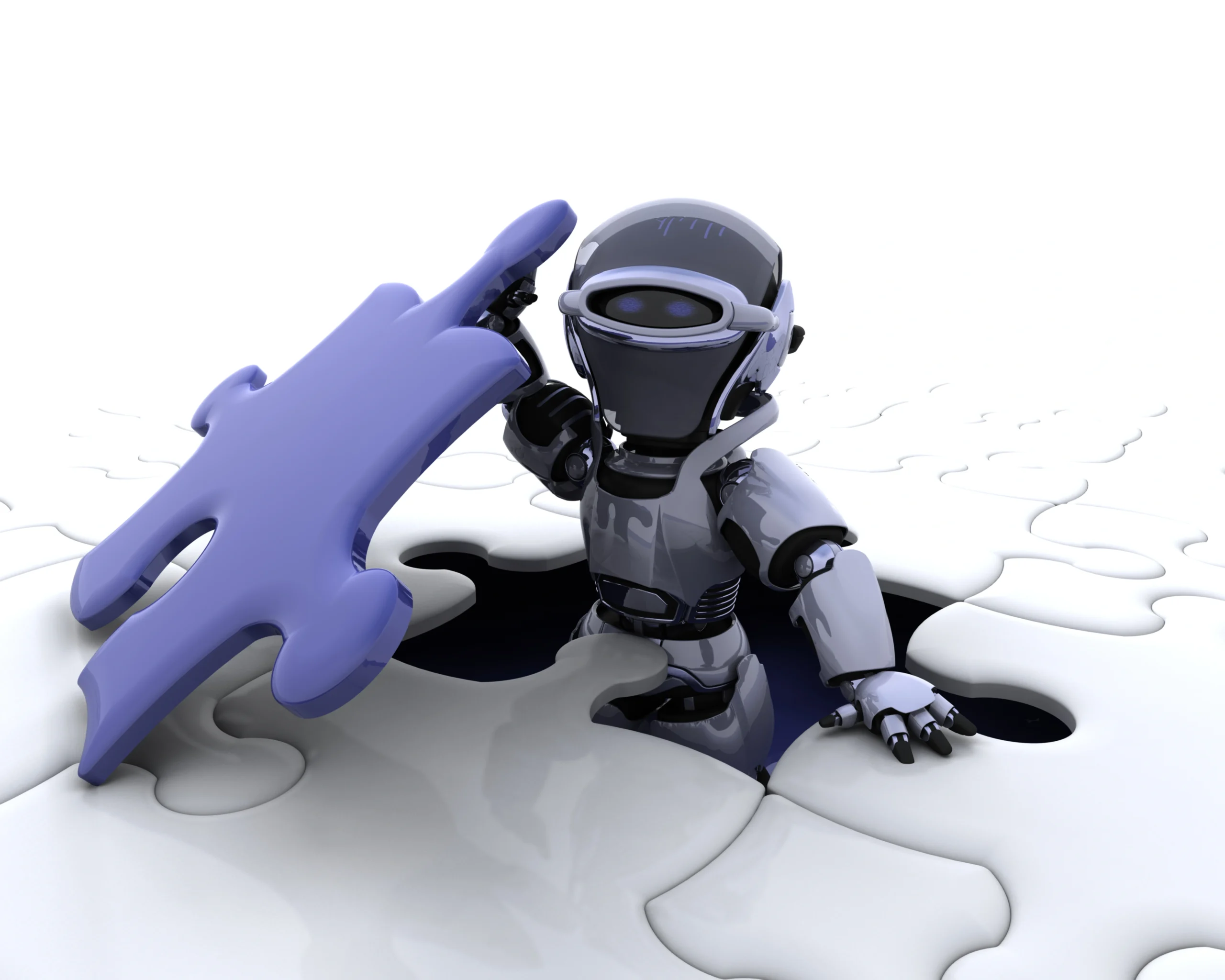
As Artificial Intelligence moves from a digital tool to an everyday partner, the next decade will test not only what machines can do, but how responsibly humanity chooses to use them.
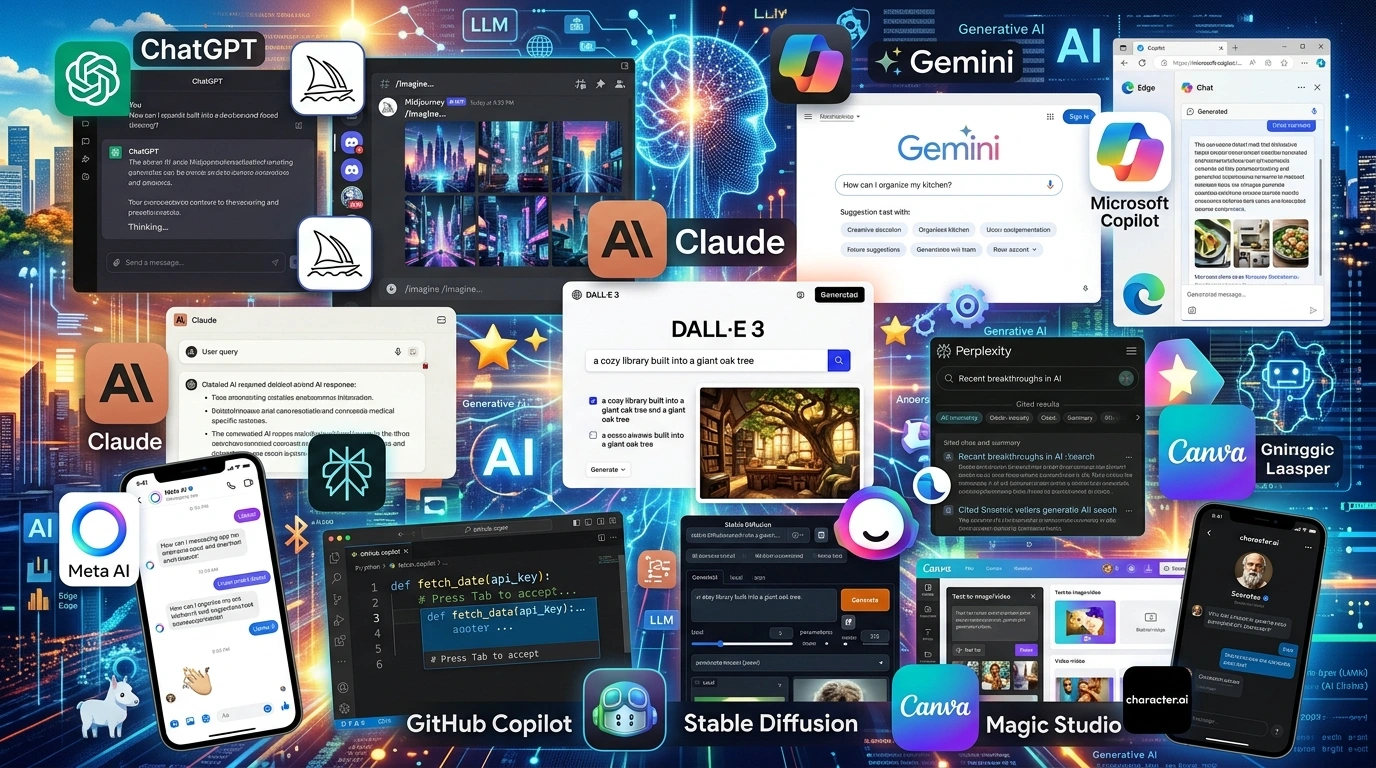
There was a time when artificial intelligence belonged mainly to research laboratories, universities and science-fiction stories. Today, that boundary has almost disappeared. Artificial intelligence has entered our classrooms, workplaces, businesses and everyday digital lives. We use AI to search for information, translate languages, write and analyse content, generate images, develop software, solve problems and support decisions. What once appeared to be a technology of the distant future has become part of our present. As AI continues to develop at an extraordinary pace, however, an important question deserves greater attention: if artificial intelligence is already considered harmful in certain contexts, what could its impact on humans look like by 2036?
From my perspective as an educator and researcher, I believe this question should not be approached through either extreme optimism or fear. Artificial intelligence is neither automatically beneficial nor automatically harmful. Its impact will depend significantly on how humans design it, deploy it, regulate it and, perhaps most importantly, how much responsibility we are willing to retain when using it. The next decade should therefore not simply be a race to build increasingly powerful machines. It should be a period in which society learns how to use increasingly capable technology without losing the human judgement, responsibility and values that give technology its purpose.
One of the most visible changes will be in the world of work. AI is increasingly capable of performing repetitive, analytical and information-intensive tasks. Over the coming decade, organisations may use AI more extensively for data analysis, customer support, software development, content generation, administrative activities, forecasting and decision support. This will inevitably change the nature of many professions. Some tasks may disappear, some jobs may be redesigned, and new forms of employment may emerge. However, I do not believe that the future should be understood simply as a competition between humans and machines. Technology has always changed the workplace. Machines transformed manufacturing, computers transformed office work and the internet transformed communication and commerce. The greater challenge with AI may be the speed of change and the fact that it can increasingly perform tasks associated with human cognitive work. This means that continuous learning, reskilling and adaptability may become essential characteristics of the future workforce.
Education will consequently become one of the most important areas of the AI transformation. As a professor, I see enormous opportunities in the use of AI for learning. A student can ask an AI system to explain a difficult concept in simpler language, generate examples, practise questions or approach the same topic from different perspectives. Teachers can use AI to support lesson preparation, create learning activities and provide students with additional learning resources. For learners who need personalised support, these capabilities can be extremely valuable. Yet education is not simply about obtaining an answer. Education is also about asking questions, making mistakes, struggling with difficult problems, developing curiosity and learning to think independently.
If a student uses AI to understand a difficult concept, technology can strengthen learning. If the student uses AI to complete every intellectual task without understanding the work, the same technology can weaken the learning process. By 2036, therefore, the important question in education may not be whether students use AI, but whether they are using AI to strengthen their thinking or allowing AI to replace their thinking.
This concern extends beyond classrooms. As AI becomes more convenient, human dependency may gradually increase. Technology is valuable because it reduces effort and saves time, but convenience can become problematic when it removes our willingness to exercise important human abilities. If people increasingly depend on AI to write, calculate, research, remember, create and make decisions, some cognitive skills may receive less practice. The objective should not be to reject technology or return to a world without intelligent tools. Instead, we should aim for augmentation rather than surrender. AI should extend human capability, not eliminate the need for human judgement. A navigation system can help us find a destination, but understanding where we are still matters. A calculator can perform a calculation quickly, but understanding the underlying mathematics still matters. In the same way, an AI system can provide an answer, but the ability to evaluate whether that answer is correct remains fundamentally human.
Another major challenge may be our relationship with information. Generative AI can produce highly convincing text, images, audio and video, and these capabilities are likely to become increasingly sophisticated. By 2036, distinguishing authentic information from artificially generated content could become considerably more difficult. This has implications for education, journalism, business communication and society more broadly. In the past, one of the greatest challenges was gaining access to information. In an AI-rich environment, another challenge may be determining whether the information we receive deserves our trust. A professionally written answer is not necessarily a correct answer.
A convincing image is not necessarily an authentic image. A confident explanation is not necessarily supported by reliable evidence. This makes critical thinking increasingly important. Future generations will need to learn not only how to access information, but how to question its origin, examine supporting evidence, compare sources and recognise uncertainty.
Privacy will be another important part of this discussion. The more personalised AI systems become, the more valuable data becomes. Our digital interactions, preferences, learning patterns, professional activities and online behaviour can reveal significant information about us. AI can use such information to provide more personalised and efficient services, but this also raises questions about consent, transparency and responsible data use. By 2036, privacy may involve much more than protecting passwords, photographs or documents. It may increasingly involve protecting behavioural patterns and the inferences that intelligent systems can make about individuals. The important question will not simply be whether AI can collect and process information, but whether that information is being used appropriately and whether people genuinely understand what they are sharing.
The growing capabilities of AI are also challenging our traditional understanding of creativity. AI systems can already create stories, pictures, music, patterns, and other types of creative material. As these capabilities become better, some may wonder what place remains for human creativity. I think that the future might be a little more complicated. Human creativity is not simply about producing an output. It’s linked to experience, feeling, culture, imagination and personal significance. AI can be an extraordinary creative collaborator, which can help individuals dream up concepts and make them in various hues of form. But the intentions of a creation and the values it embodies and significance it has for humans are profound parts of the human experience. The success of the creative future might then lie not in the rivalry between man and machine but in the skilful use of machines without sacrificing the human intent in what was created.
As artificial intelligence systems become more autonomous, there may be some of the more challenging questions that pop up. Planning tasks, using digital tools to analyse information and interact with other systems and to make recommendations with limited interaction. Those abilities might be of great use, but these could also raise the issue of responsibility. Who is responsible when an AI-based decision causes harm? The developer? Which organisation deployed the system? Who approved its use? The system designer? The ability to answer these questions can’t be achieved by technology. Need to be responsible in clear institutions, ethics and law. It does not need to be an either-or scenario. It’s not an either/or proposition. Delegation of tasks to an intelligent system means that humans should not also delegate responsibility for consequences.
In the healthcare sector, for instance, AI-driven choices have the potential to impact human lives, a scenario will become more significant in this principle. In the healthcare sector, for example, AI-supported decisions have the potential to impact human lives, a scenario that will become more significant of this principle. While efficiency is important, it is insufficient as a means of successful AI adoption. Transparency, security, fairness and human oversight and responsibility will need to be taken into account. While there is no doubt that AI can help automate a task or process, that doesn’t always mean it is the right choice for an organisation. It should also enquire about the right to be automated, the ability to be trusted in that context, and if there is any meaningful human oversight left.
It would be unfair to talk about the future of AI in regards to just risk. The opportunities are no less exciting. AI has the potential to streamline the processing of complex data, enhance and tailor learning environments for teachers, make information more accessible to people with disabilities as well as support professionals in handling big data to solve problems more efficiently for organisations. It can facilitate the development of scientific knowledge and initiate new human-intelligent system cooperation structures. Just the same, innovation that brings new dangers may also render new opportunities. It is not the possibilities themselves; rather, the way they are regulated and utilized.
The coming ten years should be a period of getting ready not of prediction for society. The implications for businesses will be significant when making decisions on how to adapt to the impact of AI on employees and customers. It is crucial for educational institutions to equip students with the skills and values needed to adapt to ongoing learning and responsible interaction with AI. Social and ethical implications of the research will be important to take into consideration, in addition to the technical performance. The appropriate individual(s) would have to become accustomed to asking questions or revisiting automated recommendations when they are not satisfied with them. Governments and institutions will also play a crucial role in setting up adequate measures to enable responsible innovation.
However, above all, I am convinced that education should be at the heart of this change. There’s never just text that needs to be delivered and that’s it. It is to create viable thinkers, Communicators, Problem Solvers, Alternative Perspective takers, Innovators and Decision makers with responsibility. These characteristics further become more desirable in a society that is generating more and more information and content in seconds. Not all the knowledge will need to be stored within the student of 2036, as intelligent systems could access vast amounts of knowledge. However, they will need to learn how to ask relevant questions, assess the information and understand that there are areas that are limited and learn to make informed decisions.
The impact of AI by 2036 will thus not just rely on technological advancement, but also on other factors. It will be based on the linkage between technological capability and human responsibility. A future where humanity rejects any intelligent system, due to fear should not be created. Nor should we build a future where all things a machine decides are automatically accepted as being trustworthy, simply for the sake of convenience. The other positive trajectory is one where we rely on AI to augment our capabilities, yet the humans remain in control and accountable for decisions that have critical impacts.
Perhaps the most important question about artificial intelligence in 2036 is not, “How intelligent will machines become?” The more important question is, “How wisely will humans choose to use that intelligence?”
AI is poised to become an era-defining technology. There is potential to transform our mechanisms of working, learning, communicating, creating and problem solving. However, the power of technology will not dictate the fate of that transformation in terms of whether it serves humanity or not. Human choices will.
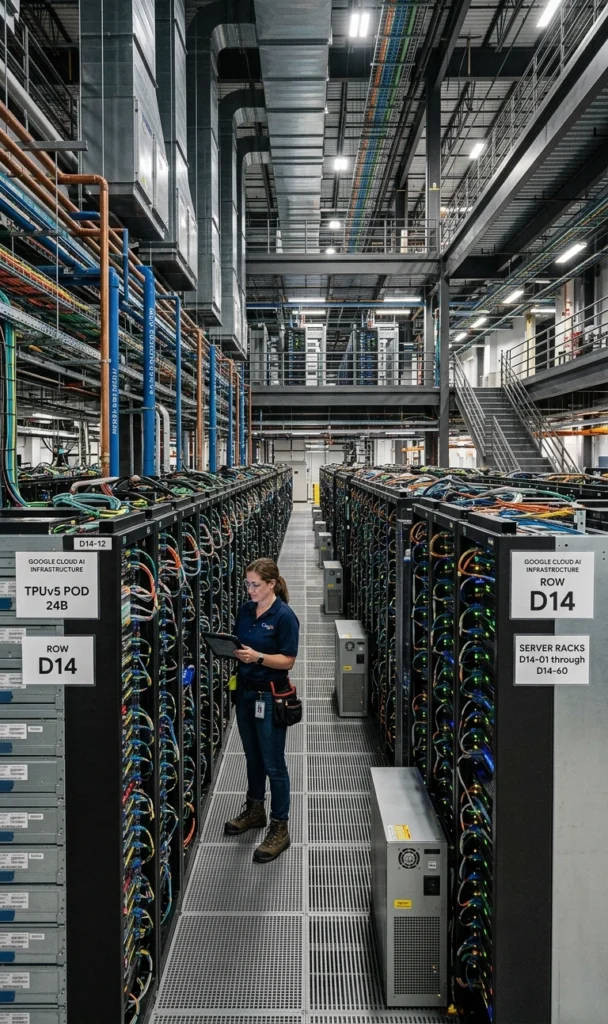
AI can be a potent force for human advancement when developed responsibly, used judiciously, and taught to the next generation to ask questions of and work together with intelligent systems. The risk might escalate if it is judged by convenience, held accountable by automation, and critically confident by technological means.
The decade ahead should not be just a decade of MORE Power BEFORE machines. It should be a time when humanity is able to learn how to live and work responsibly with increasingly intelligent systems. Have no doubt, AI’s future isn’t all about machines. It’s the tale of humans–all the things that we treasure, all the things we defend, all the things we willingly give away, and all the things we wish to keep.
And perhaps that is the conversation we should begin today, long before 2036 arrives.