Patrick Collison
The Architect Of Internet Commerce & An Advocate For Progress
By Nida Kanwal

Patrick Collison, the co-founder and Chief Executive Officer of Stripe, stands as one of the most compelling figures in modern technology, a quintessential twenty-first century entrepreneur whose trajectory from a rural Irish childhood to the pinnacle of Silicon Valley success is marked by precocious talent, intellectual rigour, and a steadfast belief in the power of building fundamental economic infrastructure for the internet. Born in Dromineer, County Tipperary, Ireland, on the 9th of September 1988, Collison, the eldest of three brothers, grew up in an environment where intellectual curiosity was actively nurtured by his parents, a microbiologist and an electronic engineer, fostering a deep-seated fascination with technology from a remarkably young age.
His early life was characterised by an uncommon aptitude for computing and programming, a passion he began cultivating around the age of eight with his first computer course and later through self-taught programming at the age of ten. This early focus on problem-solving and creation culminated in a striking academic achievement when, at just sixteen, Patrick Collison won the prestigious 41st Young Scientist and Technology Exhibition in Ireland in 2005. His winning project involved the creation of Croma, a LISP-type programming language, a feat that not only demonstrated his exceptional technical skill but also hinted at the ambitious, first principles thinking that would later define his career. His triumph earned him a significant prize and a presentation by the then President of Ireland, Mary McAleese, but more profoundly, it established him as a prodigious talent on the global stage.
Following this early success, Collison enrolled at the Massachusetts Institute of Technology, MIT, in the United States, an institution he entered early, having taken the SAT examination at the age of thirteen. While at MIT, the pull of entrepreneurship proved stronger than the academic path, and he ultimately dropped out to pursue his burgeoning business interests. The groundwork for his future colossal success was laid earlier, in 2007, when he and his younger brother, John Collison, co-founded their first software company, Shuppa, in Limerick, Ireland. This venture, which began life as a tool for managing eBay auctions, soon led the brothers across the Atlantic to Silicon Valley after securing interest from the famed startup accelerator, Y Combinator.
Shuppa was re-formed as Auctomatic, merging with a project from two Oxford graduates, and it was quickly evident that the Collison brothers possessed not only technical brilliance but also a shrewd commercial sensibility. In a stunning display of entrepreneurial acuity, Auctomatic was sold in March 2008 for a reported $5 million to Live Current Media, making Patrick and John teenage millionaires and instantly catapulting them into the pantheon of successful young Irish entrepreneurs.
However, Auctomatic was merely a precursor to a far grander vision, the founding of Stripe. In 2010, Patrick and John, having experienced firsthand the cumbersome, bureaucratic, and highly friction-filled process of accepting payments online during their time running Auctomatic, identified a profound deficiency in the economic infrastructure of the internet. They saw that while setting up a website or launching an online service was becoming progressively easier and quicker, integrating the necessary systems to get paid remained a bafflingly complex undertaking, often requiring weeks of paperwork, faxes, and antiquated bank relations.

Their solution, Stripe, was conceived with a clear and elegant mission: to make it radically simple for any person or business, anywhere in the world, to accept payments over the internet. Patrick Collison, serving as CEO, focused on building a developer-first product, an application programming interface, or API, that could be integrated with just a few lines of code, abstracting away the immense complexity of banking, regulation, and payment networks into a seamless, modern service. This developer-centric approach was revolutionary, quickly winning the allegiance of a new generation of startups and online businesses who valued speed, simplicity, and global scalability.
Stripe’s growth was exponential, attracting early investment from technology heavyweights including PayPal co-founders Elon Musk and Peter Thiel, validating the Collison brothers’ vision and cementing their status as serious innovators. Under Patrick Collison’s leadership, the company rapidly evolved from a simple payment processor into a sprawling platform offering a suite of financial tools, or “economic infrastructure for the internet,” encompassing everything from billing and tax automation to corporate card services, fraud detection, and even identity verification. This continuous expansion into adjacent financial services transformed Stripe into one of the world’s most valuable private technology companies, a powerful engine underpinning a significant portion of global internet commerce.
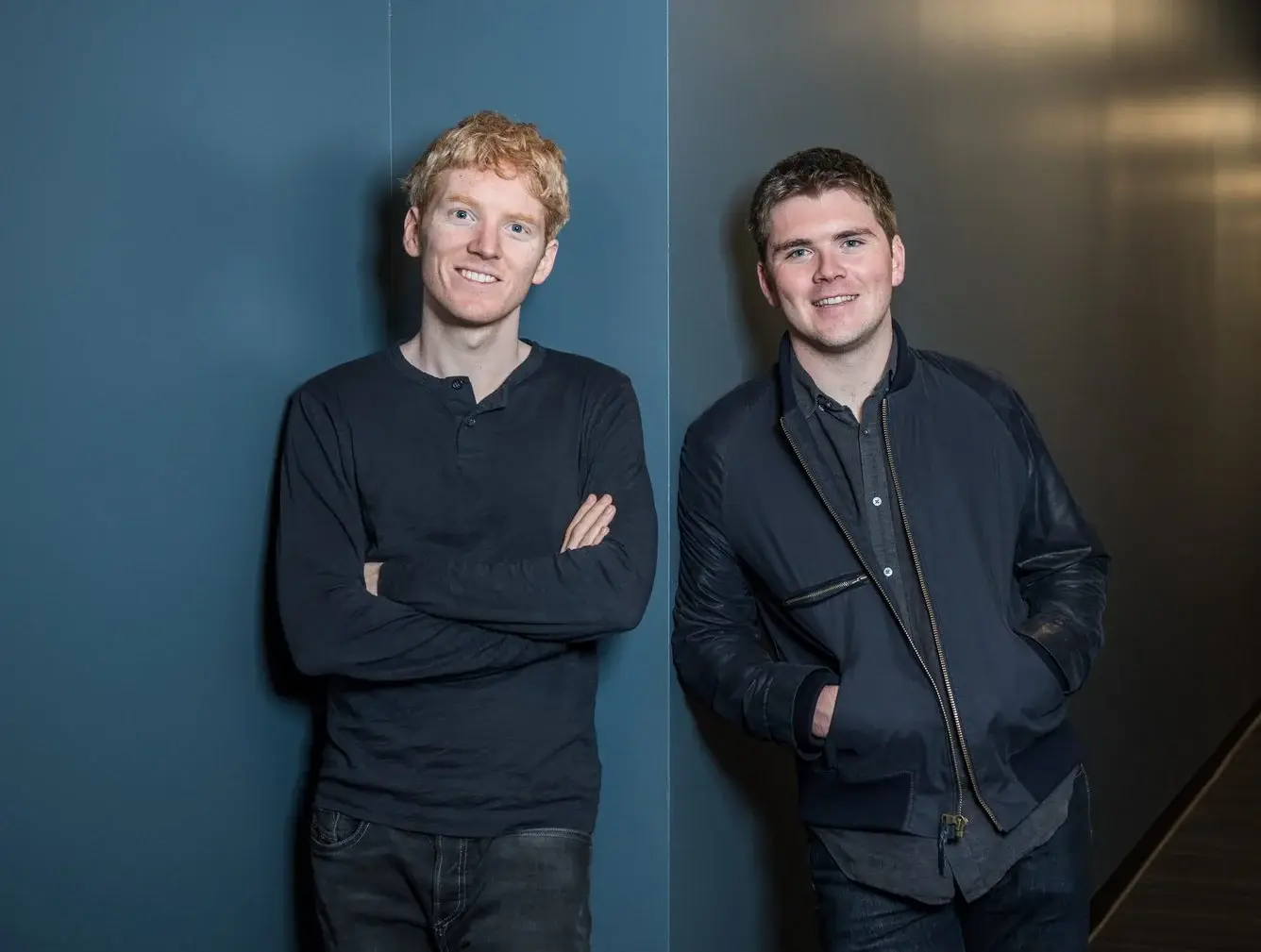
Patrick Collison’s impact extends far beyond the confines of Stripe, as he is a thinker deeply invested in broader societal progress and intellectual pursuits. He is an avid, voracious reader with interests spanning history, technology, philosophy, and art, and he frequently shares his reading lists and intellectual musings publicly. This philosophical bent fuels his engagement with meta-scientific and societal challenges. Alongside economist Tyler Cowen, he co-founded the intellectual movement known as “Progress Studies,” a field dedicated to investigating the causes of accelerated technological and social advancement and identifying the policy, institutional, and cultural levers that could stimulate further progress.
His commitment to accelerating fundamental scientific discovery led him to co-found the Arc Institute in 2021, a non-profit biomedical research organisation designed to pioneer a new, more flexible, and investigator-focused model for basic research in partnership with major Californian universities. This venture, along with his role in establishing Fast Grants in 2020 to rapidly fund COVID-19-related science, underscores his belief that institutional and funding innovation is as crucial as scientific discovery itself to address complex global challenges.
Collison is known for a distinctive leadership style characterised by relentless curiosity, an aversion to institutional friction, and a focus on first-principles reasoning. He views complexity as a sign of flawed design, constantly questioning why systems are the way they are and seeking elegant, technological solutions to dismantle bureaucratic hurdles, a philosophy that is deeply embedded in Stripe’s DNA. This mindset is evident in initiatives such as Stripe Atlas, which aims to democratise global entrepreneurship by providing a simple, standardised platform for entrepreneurs anywhere in the world to incorporate a US company, open a bank account, and begin accepting payments.
He embodies a modern archetype of the technical CEO, someone who maintains a deep involvement in engineering and product architecture while simultaneously articulating a grand, long-term vision for the company and the world. His contributions to the global economic landscape, driven by an unwavering dedication to reducing the ‘hassle’ in starting and scaling an internet business, have fundamentally reshaped how money moves and how commerce is conducted online.
Patrick Collison, the quiet, intellectually formidable man from County Tipperary, remains an influential voice and a pivotal architect of the digital economy, a figure whose work ethic, intellectual depth, and commitment to progress position him not merely as a corporate leader but as a significant global proponent for a more productive, open, and economically dynamic future.