The New Nomads How
Gen Z and Alpha
Redefined Global Mobility in 2025
By Marina Ezzat Alfred

In 2025, the world felt a bit different. Borders still appeared on maps, but for millions of young people, they no longer defined what was possible. Gen Z and Gen Alpha, known as the “New Nomads,” were living lives that earlier generations could only dream about. Travel, work, and education were no longer separate aspects of life; they merged into a rich tapestry of global experiences. These generations moved with purpose and curiosity. They believed life shouldn’t be limited to one city, country, or continent.
Unlike the early digital nomads, who were often freelancers pursuing adventure, today’s young global citizens saw mobility as a way of life. Mobility was not about escaping but about feeling at home everywhere. From Lisbon’s cobbled streets filled with the smell of coffee to Seoul’s bright study cafés, from Riyadh’s tech hubs to Bali’s sunlit beaches, each city became a chapter in a life lived across borders. For the New Nomads, every experience added to their identity, and every journey contributed to their personal growth.
Architects of Borderless Living
Gen Z is now entering adulthood after growing up amid constant change. They faced economic instability, global pandemics, and rapid digital growth. Instead of feeling overwhelmed, they learned to adjust. Remote work became the norm, allowing young professionals to collaborate easily across continents and neighborhoods. For Gen Z, mobility is an essential skill, not a luxury. They see the world as a workspace, a classroom, and a playground all at once.
This generation prioritizes flexibility. Unlike their parents, who linked success with stability, Gen Z measures achievement through freedom, experiences, and cultural involvement. They are attracted to cities that offer affordability, connectivity, and creative energy. Cities like Lisbon, Barcelona, Kuala Lumpur, and Dubai have become global centers not due to big corporations but because they foster communities where young people can live, work, and thrive across borders. For Gen Z, life isn’t about square footage or job titles. It’s about the richness of experiences and the connections made along the way.
The First Born-Nomad Generation
Following closely behind is Gen Alpha, the first generation to truly grow up with mobility as a baseline. Since birth, these children have interacted with AI tutors, virtual classrooms, and metaverse learning environments. They are used to parents who move across cities, countries, and continents for work or education, often choosing locations based on opportunity, affordability, and quality of life. For Gen Alpha, mobility is not an adventure; it is a normal, everyday reality.
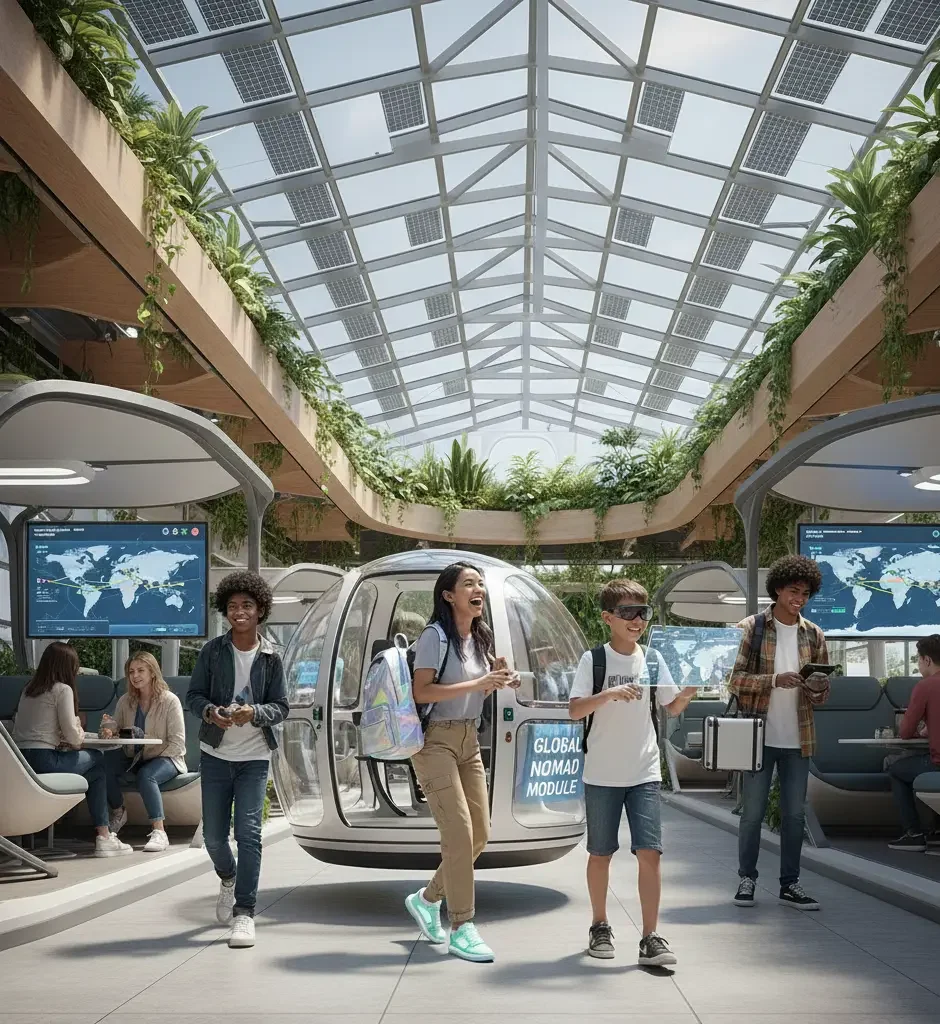

These young nomads live in a world where digital and physical life are inseparable. Virtual playdates, online global collaborations, and hybrid learning platforms create connections that span continents. Their sense of home is fluid; they define it by relationships, shared experiences, and personal growth rather than a single address. In this sense, Gen Alpha represents the complete maturation of the mobility movement begun by Gen Z, paving the way for a future where global living is standard rather than an exception.
Technology as the Engine of Mobility
The changes in mobility in 2025 are closely linked to technology. AI assistants help manage schedules across different time zones, handle administrative tasks, and suggest the best travel and housing options. Fast internet, eSIMs, and global banking apps make moving much easier. Within minutes of arriving in a new city, a young traveler can get a local phone number, open a bank account, and join coworking spaces. This makes the line between visitor and resident less clear.
The tech environment has improved not just to support mobility but to make it common. Tools that used to be optional are now essential, allowing Gen Z and Gen Alpha to move easily between cities, countries, and continents without losing productivity, community, or personal growth.
Destinations and Communities Shaped by Young Nomads
The rise of the New Nomads has changed some cities into hotspots for young people from around the world. Lisbon and Porto have turned into centers for creative entrepreneurship and digital collaboration. Seoul draws in students and professionals with its cutting-edge technology and lively urban culture. Dubai, Riyadh, and Doha provide a unique mix of modern infrastructure, safety, and job opportunities, appealing to nomads looking for long-term career growth. Even smaller cities like Tbilisi and Valencia have become places for affordability, innovation, and cultural diversity.
Young nomads choose their destinations based on work options as well as lifestyle, community, and inspiration. Cafés, coworking spaces, local art scenes, and cultural events matter just as much as job offers. These cities are not just background settings; they actively influence the lives, identities, and goals of the New Nomads.
Redefining Work, Education, and Life
The New Nomads approach work and education in a unique way. Remote work is not just a convenience; it is a core part of their lifestyle. Global companies have responded by offering employment models that cross borders. This setup allows young talent to work together without being tied to one location. AI-driven project management tools, virtual collaboration platforms, and automated workflows help teams stay productive even while on the move.
Education has changed as well. Gen Alpha joins global classrooms through hybrid learning systems that mix in-person experiences with virtual collaboration. Knowledge is no longer limited to one campus or city; it now stretches across the globe, equipping students to live, learn, and innovate anywhere.
Mobility affects not just work and education but also personal identity. Frequent exposure to different cultures, languages, and communities builds empathy, adaptability, and a sense of global awareness. For the New Nomads, living across borders is about personal growth as much as it is about finding opportunities.
The Challenges of a Mobile Life
Mobility, however, comes with challenges. Rising living costs in popular areas, housing shortages, visa restrictions, and red tape create hurdles for young nomads. Mental health issues can also arise as constant movement and digital immersion test emotional strength. Balancing the freedom of mobility with the need for stability is a tricky task. It requires careful planning, digital skills, and strong support networks.
Still, despite these challenges, the movement keeps growing. Mobility is no longer an option; it has become the norm for those who want to fully engage in a globalized, digitally connected world.