Brian Moynihan
The Steady Hand Behind America's Banking Giant
By Sidra Asif
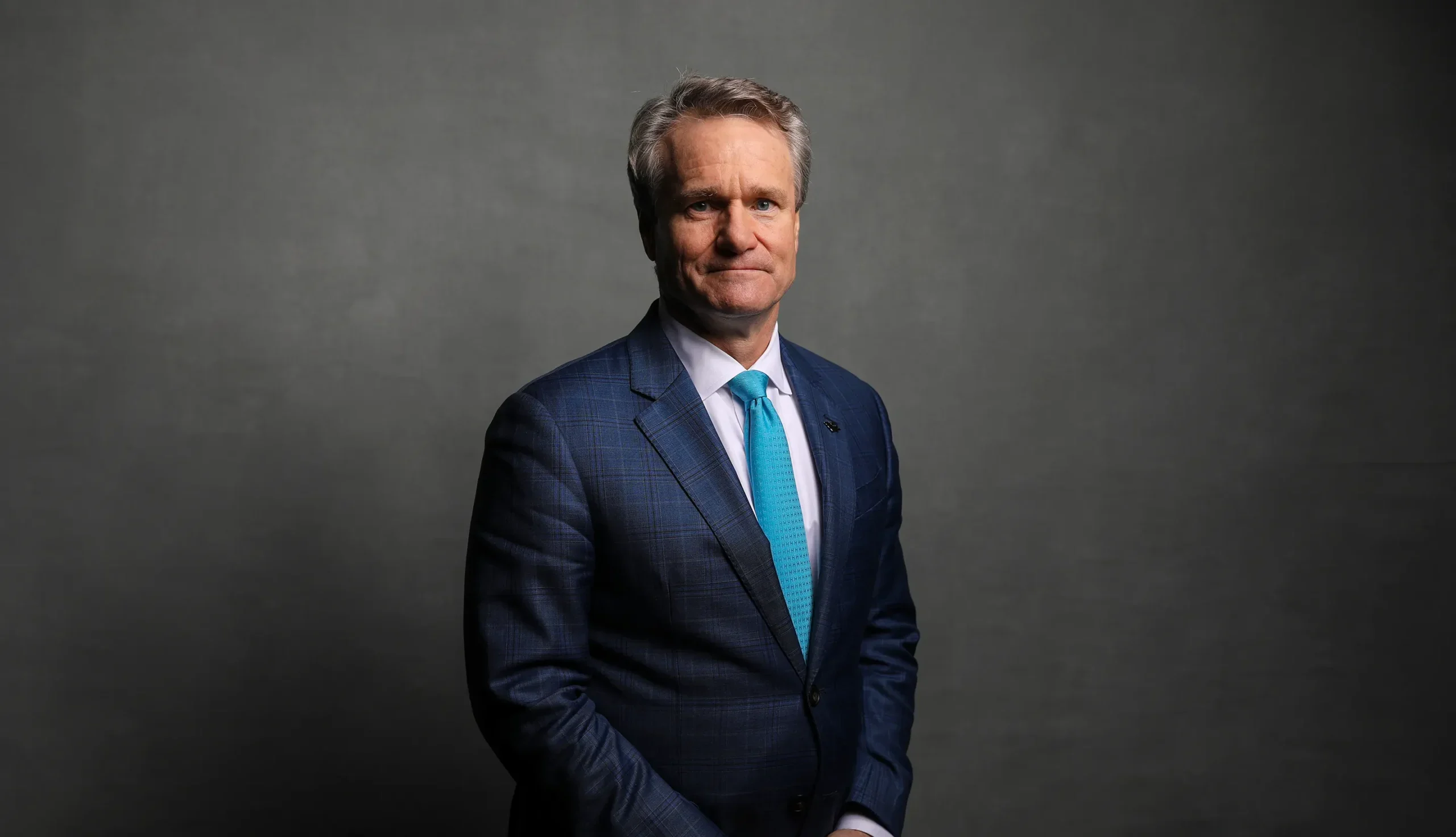
A few banking executives have overseen a transformation as significant as that achieved by Brian Moynihan. As Chairman and Chief Executive Officer of Bank of America, he has guided one of the world’s largest financial institutions through an era marked by economic recovery, regulatory reform, technological disruption, rising interest rates, and global uncertainty. His leadership has reshaped Bank of America into a stronger, more efficient, and digitally advanced institution while reinforcing its position as a cornerstone of the American financial system. Although often less publicly outspoken than some of his peers on Wall Street, Moynihan has earned a reputation for disciplined management, operational excellence, and long term strategic vision.
When Brian Moynihan assumed the role of Chief Executive in 2010, Bank of America faced one of the most challenging periods in its history. The global financial crisis had severely damaged confidence across the banking industry, while the bank itself was burdened with legal disputes, complex acquisitions, regulatory scrutiny, and significant financial losses linked to the collapse of the United States housing market. Restoring credibility required far more than improving quarterly earnings. It demanded a comprehensive transformation focused on strengthening capital, simplifying operations, rebuilding customer trust, and creating a more resilient business model.
Moynihan’s leadership approach differed from the aggressive expansion strategies that had characterised parts of the banking industry before the financial crisis. Rather than pursuing rapid growth through large acquisitions or excessive risk taking, he concentrated on operational discipline, cost efficiency, prudent lending, and sustainable profitability. His philosophy centred on creating a stronger institution capable of performing consistently across changing economic conditions rather than maximising short term financial gains.
One of his earliest priorities was repairing the bank’s balance sheet. Capital reserves were strengthened, risk management frameworks were enhanced, and billions of dollars were allocated towards resolving outstanding legal liabilities inherited from the financial crisis. These efforts gradually restored investor confidence and enabled Bank of America to emerge as one of the strongest capitalised banks in the United States. The institution became better positioned to withstand future economic shocks while maintaining its ability to support households, businesses, and financial markets.
Bank of America occupies a uniquely important role within the American economy. Serving tens of millions of consumers alongside businesses ranging from small enterprises to multinational corporations, the bank provides retail banking, commercial lending, wealth management, investment banking, and global markets services on an enormous scale.
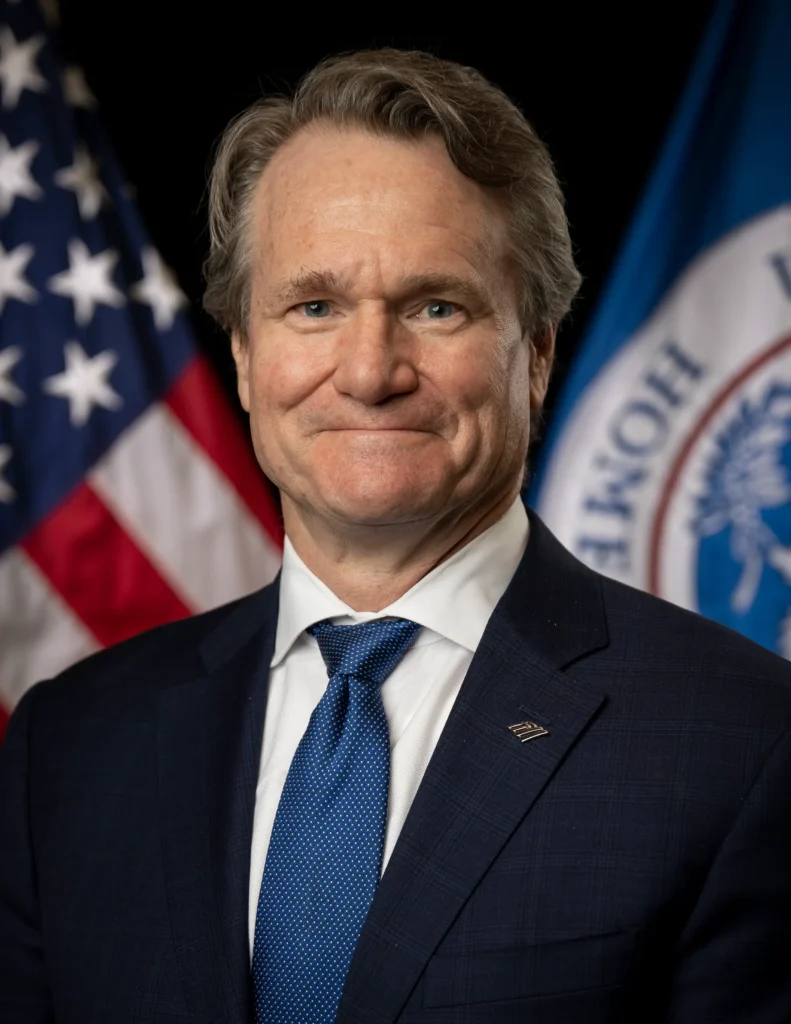
Under Moynihan’s leadership, maintaining stability across this diverse organisation has required balancing growth with prudent financial management, ensuring that every division contributes to long term institutional strength.
Technology has become one of the defining pillars of Moynihan’s strategy. Recognising that customer expectations were changing rapidly, Bank of America invested heavily in digital banking infrastructure, cybersecurity, artificial intelligence, and advanced analytics. Mobile banking has become the preferred method through which millions of customers manage their finances, make payments, monitor investments, and apply for financial products. Rather than viewing digital services as an alternative to traditional banking, Moynihan positioned technology as an essential component of the customer experience.
One of the bank’s most notable innovations has been the continued development of Erica, its artificial intelligence powered virtual financial assistant. Designed to help customers manage spending, monitor accounts, answer financial questions, and receive personalised guidance, Erica represents the broader transformation taking place across modern banking. Artificial intelligence is increasingly enhancing fraud detection, credit analysis, customer service, and operational efficiency, allowing the bank to improve service quality while reducing costs.

Investment in technology has also strengthened Bank of America’s internal operations. Advanced data analytics support lending decisions, risk monitoring, regulatory compliance, and financial forecasting. Automation has streamlined routine processes, enabling employees to focus on more complex customer needs and advisory services. These technological investments have helped improve productivity while reinforcing the institution’s competitive position within an increasingly digital financial landscape.
Risk management remains one of the central themes of Moynihan’s leadership. The lessons of the global financial crisis continue to shape the bank’s approach to lending, capital allocation, and liquidity management. Maintaining strong capital ratios, disciplined underwriting standards, and comprehensive stress testing has enabled Bank of America to navigate periods of economic volatility with greater confidence. Investors have increasingly recognised the institution’s stability as one of its greatest competitive strengths.
Moynihan has also emphasised responsible lending as an important component of long term growth. Supporting consumers, small businesses, and corporate clients requires balancing commercial opportunity with careful assessment of financial risk. During periods of economic uncertainty, including the Covid pandemic and subsequent inflationary pressures, Bank of America continued providing financing while maintaining disciplined credit standards. This balanced approach has strengthened both customer relationships and institutional resilience.
Environmental sustainability and responsible business practices have become increasingly prominent during Moynihan’s tenure. Bank of America has committed substantial resources towards financing renewable energy, sustainable infrastructure, and environmentally focused investment projects. The institution has also expanded support for affordable housing, community development, and financial inclusion initiatives. Moynihan has consistently argued that long term business success depends upon supporting broader economic and social development rather than focusing exclusively on shareholder returns.
Corporate responsibility has extended beyond environmental initiatives. The bank has invested in workforce development, educational partnerships, employee wellbeing, and programmes designed to expand economic opportunity across underserved communities. These initiatives reflect a broader philosophy that financial institutions possess responsibilities extending beyond traditional banking functions, particularly given their central role within national economic development.
The global nature of Bank of America’s operations presents additional strategic opportunities and challenges. Through its investment banking and global markets divisions, the institution serves clients across numerous countries, facilitating international trade, mergers and acquisitions, capital raising, foreign exchange transactions, and institutional investment. Managing these global operations requires careful navigation of geopolitical uncertainty, regulatory differences, and changing economic conditions. Moynihan has consistently emphasised maintaining flexibility while preserving the financial strength necessary to respond to evolving market dynamics.
His influence extends beyond Bank of America itself. Moynihan has become a respected voice within international business discussions concerning economic growth, workforce development, infrastructure investment, climate finance, and global competitiveness. Through his participation in various business organisations and policy forums, he has advocated collaboration between governments, businesses, and financial institutions to address long term structural challenges facing the global economy.
Despite its impressive recovery, Bank of America continues operating within an increasingly complex financial environment. Inflation, changing interest rate cycles, technological disruption, cybersecurity threats, geopolitical tensions, and evolving regulatory expectations all require continuous adaptation. Competition from financial technology companies has accelerated innovation throughout the banking sector, compelling established institutions to modernise rapidly while maintaining customer trust and regulatory compliance.
Moynihan’s leadership style has often been characterised by consistency rather than dramatic gestures. Rather than seeking headlines through bold acquisitions or ambitious public statements, he has focused on disciplined execution, operational improvement, and measured decision making. This approach has enabled Bank of America to deliver sustained financial performance while strengthening its reputation as one of the safest and most reliable banking institutions in the world.
One of the defining achievements of his tenure has been demonstrating that profitability and prudence need not be opposing objectives. Strong financial results have been accompanied by improved capital strength, enhanced technology, better customer satisfaction, and more effective risk management. This balance has become increasingly valuable in a financial industry where resilience is often viewed as equally important as growth.
As banking enters a new era shaped by artificial intelligence, digital payments, cloud computing, demographic change, and shifting global economic relationships, Bank of America remains well positioned to adapt under the strategic foundations established by Brian Moynihan. His emphasis on innovation, financial discipline, customer service, and responsible leadership has created an institution capable of responding to both opportunity and uncertainty with confidence.
Brian Moynihan’s legacy is likely to be defined not by dramatic expansion or headline making acquisitions, but by the successful reinvention of one of America’s most important financial institutions. Through disciplined management, technological investment, prudent risk control, and a commitment to sustainable long term growth, he has transformed Bank of America into a stronger, more resilient organisation prepared to meet the evolving demands of twenty first century banking. In an industry where confidence remains the most valuable asset, Moynihan has demonstrated that enduring success is built through consistency, stability, and an unwavering focus on long term value creation.