Andrew Ng
A Quiet Proprietor of the Algorithmic Age
By Peter Davis
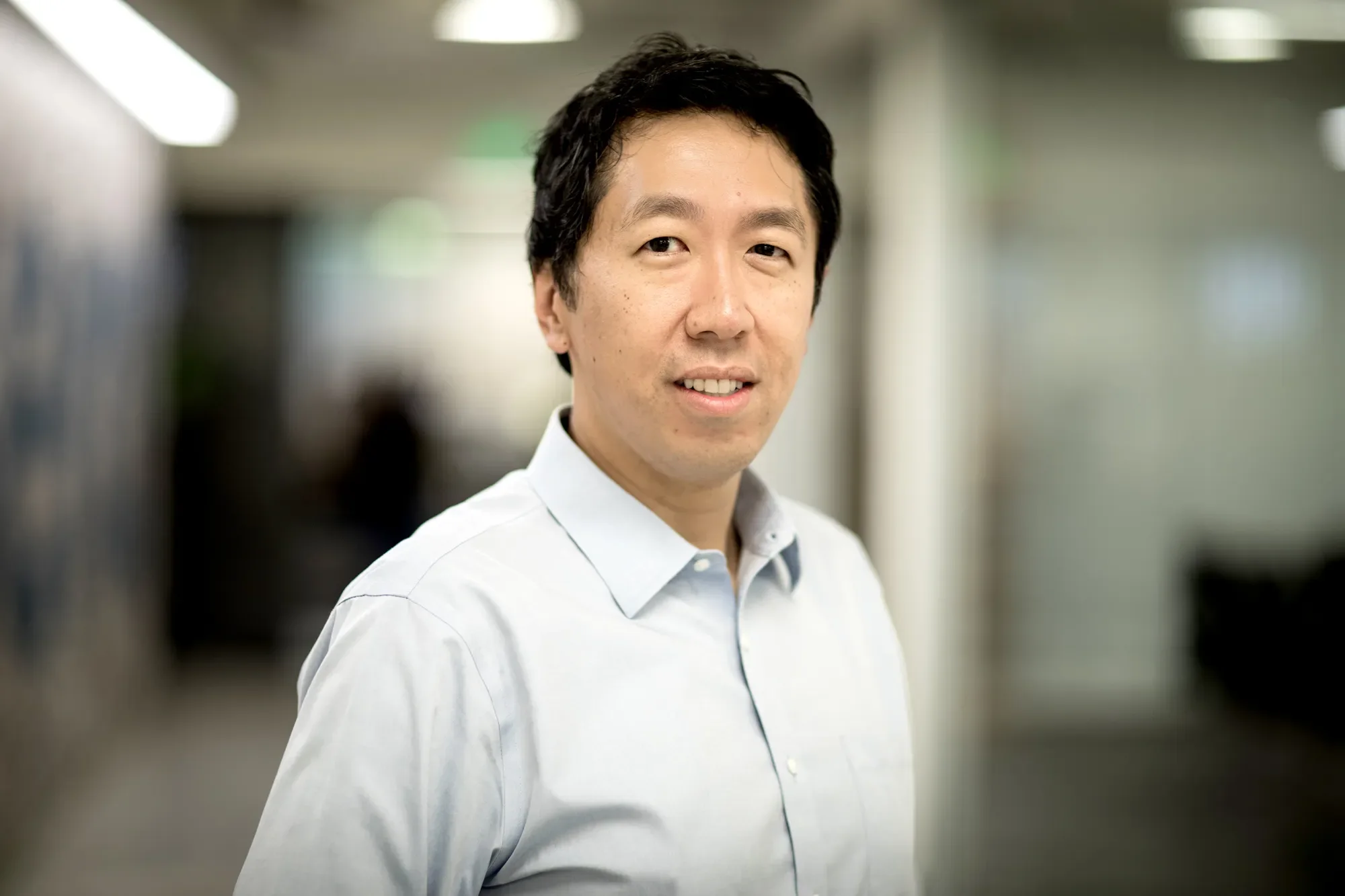
It is a peculiar chap who can straddle the ivory tower of the academy and the unforgiving coalface of global industry with such seeming effortlessness. Andrew Ng is one such individual who does not merely participate in the seismic shifts of our digital civilisation but who is, in fact, the quiet, meticulous architect drawing up the blueprints in the first instance. Here is a mind that seems less concerned with the fleeting rumours of the present and more preoccupied with the bedrock upon which the next hundred years of human experience shall be founded. Ng is a figure whose temperament appears to combine the professor’s serene detachment with the entrepreneur’s gritty determination, a rather brilliant and unusual cocktail that makes him a pivotal curator of our forthcoming reality. His primary medium is not stone or canvas, but the deep, underlying patterns of logic and computational intuition, the very language of synthetic intellect that is rapidly becoming the dominant force shaping commerce, healthcare, and human interaction.
The earliest, and perhaps most vital, contributions from this chap were forged in the crucible of pure mathematical rigour, far from the clamour of commercial application. He was one of a small handful of thinkers who truly grasped the profound implications hidden within the complex systems of interconnected perceptrons. While others viewed this field as a fascinating but ultimately niche intellectual pursuit, he possessed the foresight to see that this particular approach to data analysis and predictive modelling was the golden key that would unlock an industrial revolution of unparalleled scale. It was a time when this pursuit demanded an almost lonely dedication, a willingness to follow the complicated trail of statistical inference even when mainstream computing had not yet caught up with the conceptual leap.
His work helped establish the fundamental architecture, the precise mathematical tools, and the training programmes necessary to elevate these conceptual structures from intriguing possibilities into practical, high-performing systems. This early, foundational output served as the very foundation, the theoretical stone upon which the entire modern edifice of algorithmic inference now stands. Without that initial patient labour, the subsequent explosion of applied artificial intelligence simply would not have been possible.
Yet, a singular intellectual contribution, no matter how profound, is not what truly defines this man’s unique place in the modern pantheon. The truly distinguishing hallmark of his career is the almost obsessive focus on the dissemination and democratisation of this arcane knowledge. Andrew Ng recognised, earlier than most, that allowing this powerful new ability to remain locked within the confines of a few elite university lecture halls or the secret laboratories of colossal tech behemoths would be a profound societal mistake. This intelligence creation programme, he reasoned, was too important to be kept within the exclusive purview of the global North American and European universities. The challenge was not just inventing the future, but teaching the world to build it. Thus, his pivot towards creating the massive open school, a digital university for all, was a move of inspired strategic generosity.
It was an audacious gamble to take an intensely complicated subject matter, one requiring an excellent grasp of advanced maths and statistics, and structure it into accessible, bite-sized courses that could be consumed by an enormous global audience. The scale of this educational enterprise remains breathtaking, a testament to his belief that intellect and curiosity are not geographically constrained. By offering high-quality instruction in the principles of algorithmic design and deployment free of charge or at minimal cost, he effectively sparked a global upskilling campaign. It was a vital injection of human capital into a nascent industrial sector that desperately needed engineers, programmers, and managers who could speak the new lingua franca of data. He transformed the nature of professorial impact, extending the reach of the lecture hall far beyond the cloistered campus to the furthest reaches of the planet, giving millions a chance to participate in the most significant economic opportunity of their generation. This educational effort is, perhaps, Ng’s most enduring gift to the new century, an act of intellectual philanthropy carried out with the methodical efficiency of an industrialist.
Following the establishment of that colossal learning platform, his influence naturally extended into the very heart of the corporate world, demonstrating a rare capability to translate pure theory into immense commercial value. His tenure at the seminal internal research unit at the search monolith, a period of intensive, pioneering development, served as a crucial proof of concept for the entire industry. He was instrumental in demonstrating that sophisticated computational intuition could be deployed to solve previously intractable problems at a monumental scale, transforming the underlying operation of consumer services and internal data processing. This was less about academic papers and more about operationalising the profound, moving the ideas from the chalkboard to the server farm. He helped lay the crucial groundwork for how colossal technology companies would organise their research efforts for the coming decade.
His subsequent efforts have consistently reinforced this dual devotion to both deep thought and practical application. He has championed the concept of ‘data centricity’ in the development of synthetic intellect, a remarkably simple yet profound idea. Whilst many researchers focus exclusively on perfecting the algorithms, he has cannily pointed out that the greater, often overlooked, hurdle lies in the meticulous curation and preparation of the raw data itself. It is the pragmatic, often messy, work of ensuring the information flowing into the learning systems is clean, relevant, and well labelled that yields the greatest dividends in terms of performance. This shift in focus is typical of his approach: a relentless drive towards the usefulness and reliability of the technology, rather than merely its theoretical elegance. He is a pragmatic idealist, always seeking the most direct route from brilliant concept to effective implementation.
Andrew Ng is, in essence, a systems thinker who has dedicated his career to building complete ecosystems: the intellectual foundation, the educational pipeline to train the workers, and the industrial application firms to put them to work. This holistic approach ensures that his impact is not transient but structural. His work on deep learning is now not merely an academic footnote; it is woven into the operational fabric of dozens of industries and thousands of successful enterprises globally. He has provided not just the recipe for synthetic intellect, but the cookery school, the kitchen, and the blueprint for the entire supply chain.
Ultimately, the man’s legacy may be less about the specific algorithms he helped pioneer and far more about the sheer number of lives he touched and empowered through open access to high-quality education. He is the quiet proprietor who has distributed the intellectual deeds to the algorithmic age, ensuring that access to the twenty-first century’s most vital skill set is not determined by an accident of birth or financial privilege but by simple ambition and a willingness to learn. It is a brilliant, understated achievement that continues to unfold, one course enrolment and one deployed system at a time.