Gori Yahaya
Building AI Confidence in the Age of Human and Machine Collaboration
By Jane Stevens

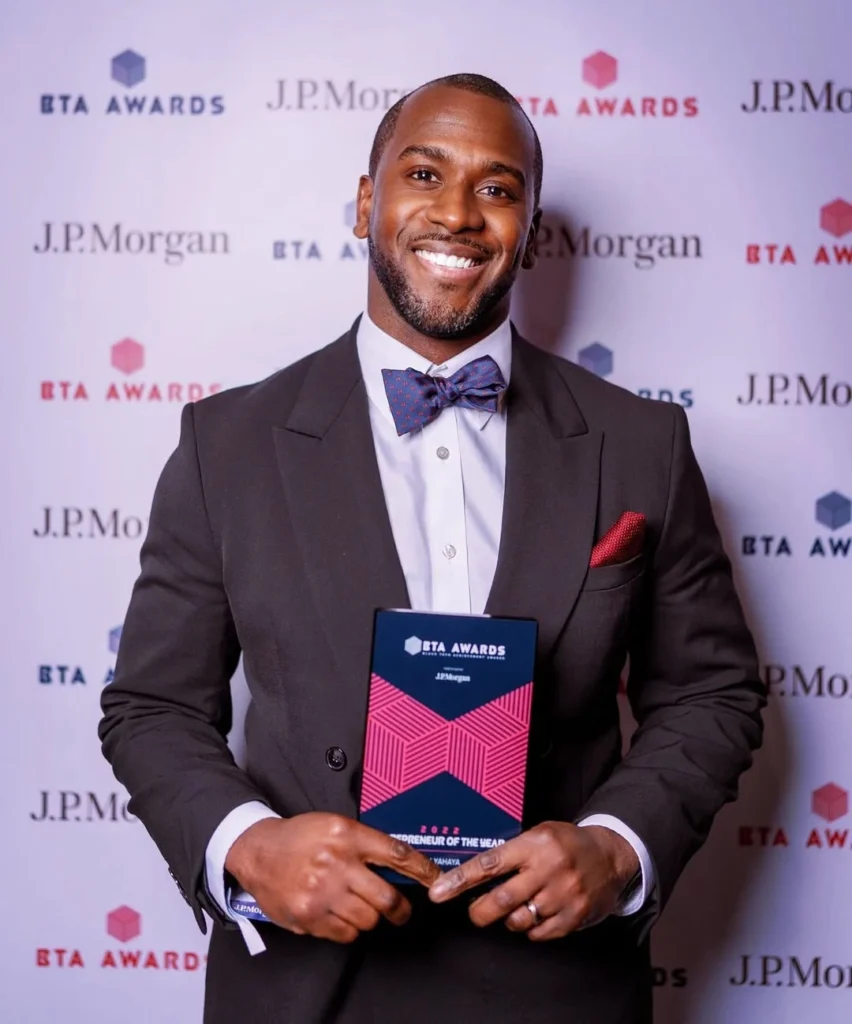
In a business climate defined by rapid automation and accelerating artificial intelligence capabilities, anxiety has become an undercurrent of organisational life. Leaders worry about competitiveness, employees worry about relevance and entire industries grapple with the implications of machine driven transformation. Against this backdrop, Gori Yahaya has emerged as a compelling voice of reassurance and strategic clarity. As founder of UpSkill Universe, he is trending globally for championing what he calls AI Confidence, a philosophy designed to help organisations retrain their workforce for the era of agent to human collaboration.
Yahaya’s influence stems from his refusal to frame artificial intelligence as either a utopian miracle or an existential threat. Instead, he positions it as an inevitability that demands preparation. AI Confidence, in his articulation, is not blind optimism. It is the cultivated capacity of leaders and employees to understand, deploy and collaborate with intelligent systems without fear. This reframing has resonated with multinational corporations confronting the disruptive potential of autonomous agents and advanced machine learning tools.
The phrase agent to human collaboration encapsulates a significant conceptual shift. Earlier waves of automation often focused on replacing repetitive tasks. Today’s AI agents, however, can generate content, analyse data, simulate decisions and interact conversationally. They are no longer peripheral utilities but active participants in workflows. Yahaya argues that the central challenge is not displacement but integration. Organisations must redesign processes so that human judgement and machine efficiency reinforce one another.
Through UpSkill Universe, he has constructed programmes that address both technical literacy and psychological readiness. Training initiatives extend beyond teaching employees how to operate new software. They explore ethical considerations, data stewardship and the cognitive biases that may arise when relying on algorithmic outputs.
By combining skill acquisition with critical thinking, Yahaya seeks to create a workforce that is neither intimidated by AI nor uncritically dependent upon it. The corporate appetite for such guidance has intensified as generative models and autonomous systems become embedded across sectors.

Finance, healthcare, logistics and marketing all confront similar questions. How should decision authority be distributed between agents and people. What new competencies will define leadership. How can organisations preserve creativity and empathy while leveraging computational scale. Yahaya’s framework addresses these concerns with structured clarity.
A defining element of his approach is language. AI discourse often oscillates between technical jargon and alarmist rhetoric. Yahaya deliberately adopts accessible terminology, translating complex architectures into practical implications. He speaks of partnership rather than replacement, augmentation rather than obsolescence. This linguistic precision matters because it shapes organisational culture. Words influence how employees perceive change, and perception influences adoption.
His advocacy for AI Confidence also intersects with economic realities. Workforce retraining is no longer a peripheral initiative but a strategic necessity. As roles evolve, static job descriptions become obsolete. Yahaya encourages businesses to map capabilities rather than titles, identifying transferable skills that can be enhanced through targeted learning. Analytical reasoning, emotional intelligence and ethical judgement emerge as enduring human strengths that complement algorithmic speed.
Beyond internal operations, Yahaya’s philosophy has implications for corporate reputation. Stakeholders increasingly scrutinise how companies deploy AI, particularly regarding fairness, transparency and societal impact. By investing in comprehensive retraining and ethical frameworks, organisations signal responsibility. AI Confidence thus extends outward, influencing how customers, regulators and partners perceive a brand’s technological maturity.
The popularity of his message reflects a broader cultural turning point. Earlier technological revolutions often prioritised efficiency gains above all else. The current moment demands a more nuanced calculus. Productivity remains important, yet so do resilience and trust. Yahaya articulates a balanced vision in which competitive advantage arises from thoughtful integration rather than reckless acceleration.
His background as an entrepreneur informs his practical orientation. He understands the pressures facing executives tasked with delivering results amid uncertainty. Accordingly, his programmes emphasise measurable outcomes. Training is linked to innovation metrics, project turnaround times and employee engagement indices. AI Confidence is presented not as abstract reassurance but as a driver of tangible performance improvements.
Yahaya also highlights the generational dimension of AI adoption. Younger employees may exhibit fluency with digital tools yet lack strategic context, while senior leaders may possess industry wisdom but feel less comfortable with emerging platforms. Effective retraining, he argues, must bridge this divide. Cross generational mentorship and collaborative experimentation foster a culture in which learning flows in multiple directions.
Ethics occupies a central position within his discourse. Autonomous agents can amplify biases embedded in data or design. Without vigilant oversight, organisations risk reputational damage and legal exposure. Yahaya insists that AI literacy must include ethical literacy. Employees should understand not only how to prompt a system but how to question its outputs and recognise its limitations. Confidence, in this sense, is inseparable from critical awareness. The global scope of his influence underscores the universality of these challenges. Whether in established financial centres or emerging technology hubs, businesses confront similar tensions between innovation and stability.

UpSkill Universe tailors its programmes to regional contexts while maintaining a consistent core philosophy. AI Confidence becomes a shared language across borders, enabling multinational enterprises to align strategies.
Yahaya’s emphasis on collaboration rather than competition between humans and machines offers a psychological recalibration. Fear often stems from narratives of zero sum displacement. By illustrating scenarios in which AI agents handle data intensive tasks while humans focus on interpretation and relationship building, he provides concrete examples of mutual reinforcement. This vision reduces resistance and encourages experimentation.
The concept of the agent to human collaboration era suggests an ongoing evolution rather than a fixed endpoint. As AI capabilities expand, so too will the parameters of partnership. Yahaya acknowledges this dynamism, advocating continuous learning over one off training sessions. Organisations must institutionalise adaptability, embedding curiosity into corporate DNA.
Critically, his message avoids complacency. Confidence is not complacent assurance but informed readiness. It requires investment in infrastructure, governance and culture. Companies that neglect retraining may find themselves technologically equipped yet strategically paralysed. Yahaya frames this risk candidly, urging leaders to treat human capital development as integral to digital strategy.
In assessing Gori Yahaya’s rising prominence, it becomes clear that his impact extends beyond technical instruction. He offers a narrative capable of transforming organisational mindset. At a moment when headlines oscillate between exuberance and dread about artificial intelligence, his steady articulation of AI Confidence provides a stabilising influence. By equipping global organisations to retrain their workforce for meaningful collaboration with intelligent agents, he contributes to shaping a future in which technological progress and human potential advance in concert rather than in conflict.