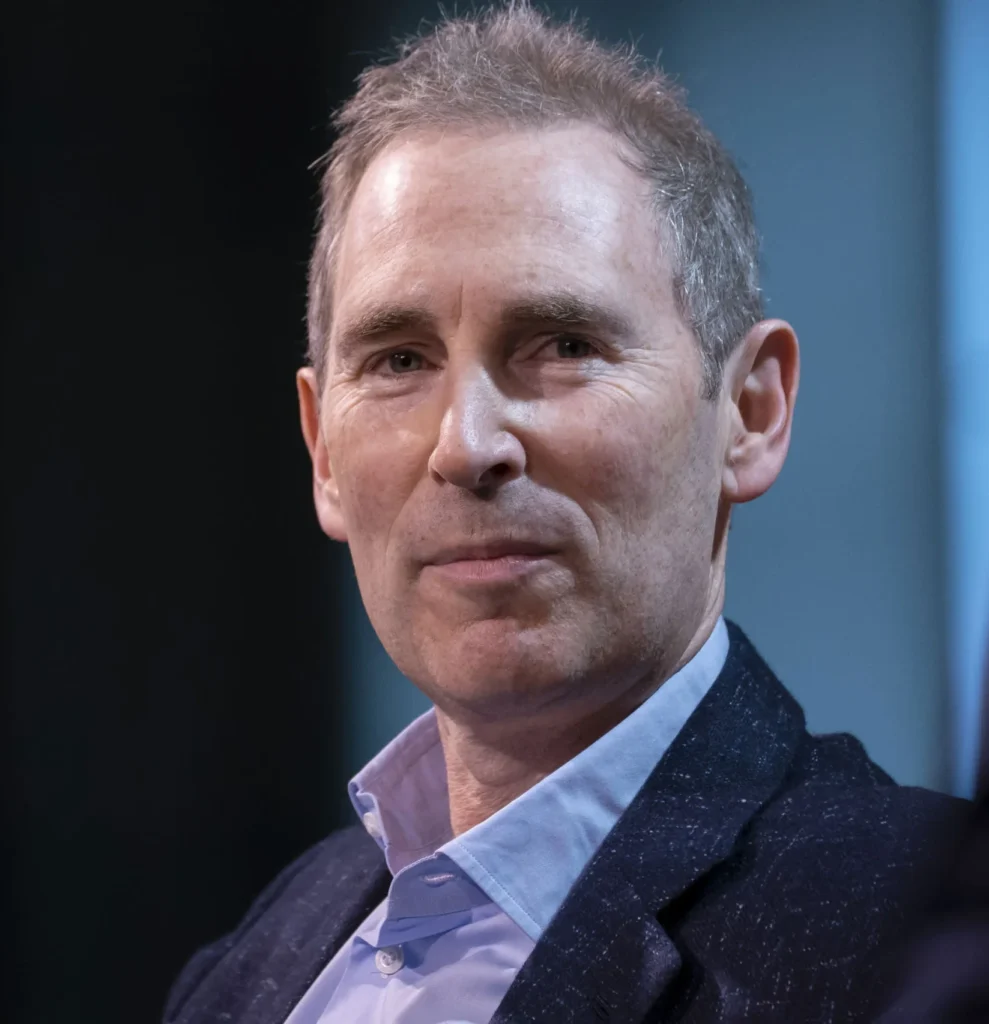
Andy Jassy
The Architect of the Infinite Warehouse
How a sports-obsessed strategist replaced the pioneer’s fire with a builder’s precision to scale the world’s most relentless machine.
By Peter Davis
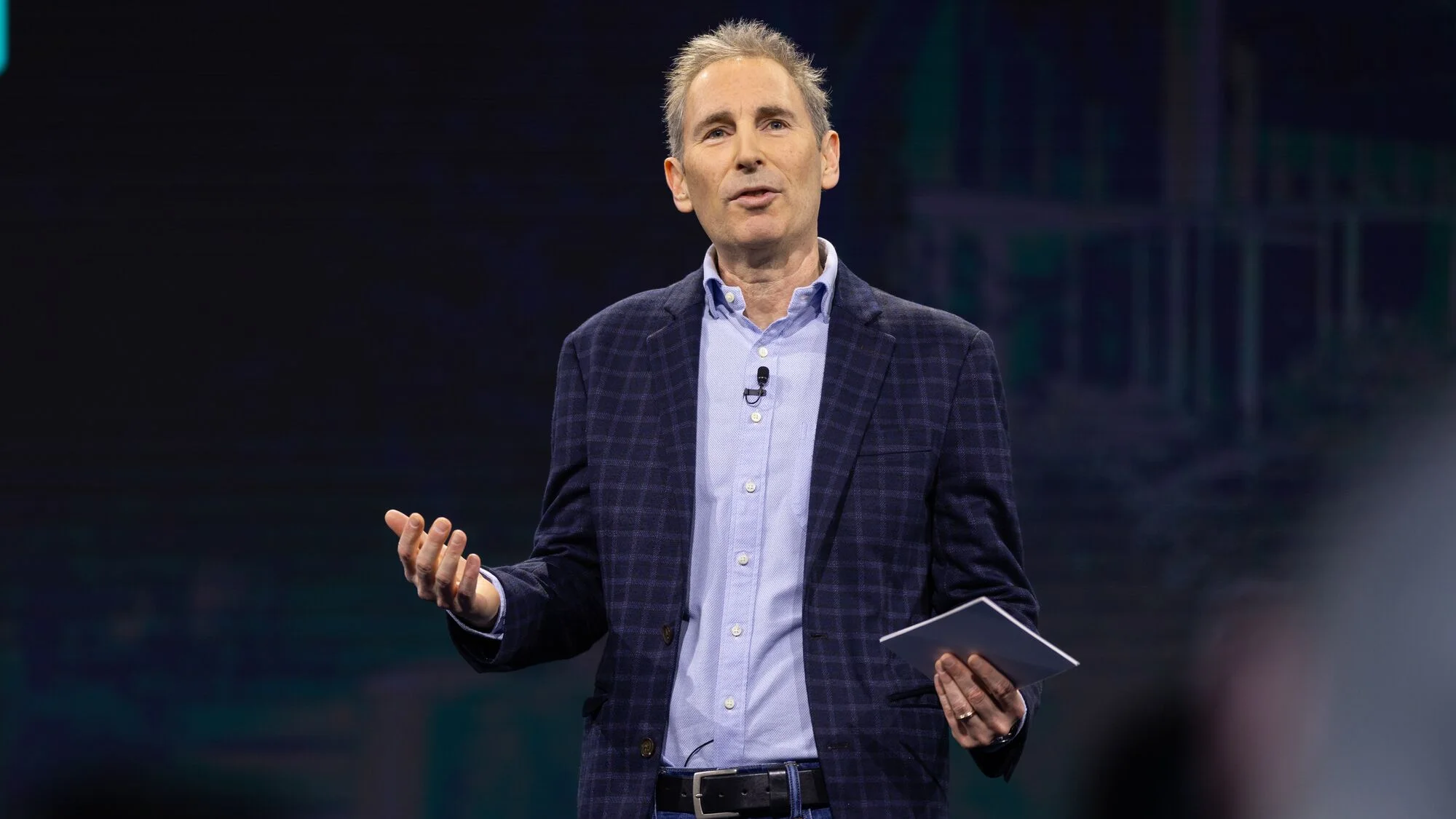
There is a quiet, rhythmic intensity to Andy Jassy that suggests a man who spends his time measuring the gaps between the possible and the profitable. If his predecessor, Jeff Bezos, was the charismatic explorer who drew the map with bold, ink-heavy strokes, Jassy is the master mason who came behind him to ensure the fortress would never crumble. To watch him lead is to see a different kind of alchemy at work. He does not rely on the high-octane theatricality of the early tech boom; instead, he operates with the granular focus of a test match strategist, someone who understands that in a game of infinite scale, the winner is usually the one who masters the boring details. He has managed to take the most sprawling, chaotic marketplace in human history and turn it into something that feels less like a company and more like a utility of the soul.
Long before he was steering the retail giant through the shifting currents of 2026, Jassy was a student of the “unfiltered” moment. Growing up in New York, he was the kind of child who didn’t just play sports but dissected the mechanics of the win. He carried this obsession into his early career, famously spending three summers at Fox TV helping start a morning show, chasing the “rush” of live production where there is no room for a second draft. This background in the immediate, high-stakes environment of broadcasting gave him a unique perspective when he eventually landed at Amazon in 1997. While others were mesmerized by the novelty of the internet, Jassy was looking at the scaffolding behind it.
He saw the “undifferentiated heavy lifting” that was slowing down builders and decided to solve it. This was the seed of Amazon Web Services, a project that many within the company initially dismissed as “nutty,” but which Jassy nurtured with the patience of a gardener and the ruthlessness of a competitor. His leadership is defined by a concept he calls “WhyQ,” a relentless, almost anatomical curiosity about the status quo. He is the person who enters a room and asks why a door is locked, not to find the key, but to understand why the wall exists in the first place.
In the boardrooms of 2026, this has translated into a push for what he terms “the world’s largest startup.” He is obsessed with rooting out the “bureaucratic sludge” that naturally accumulates in a company of millions. He views every manager as a potential friction point and every process as a hypothesis that must be constantly retested. He doesn’t want missionaries; he wants builders, people who are “divinely discontent” and who view a finished product not as a victory, but as a starting line for the next version.

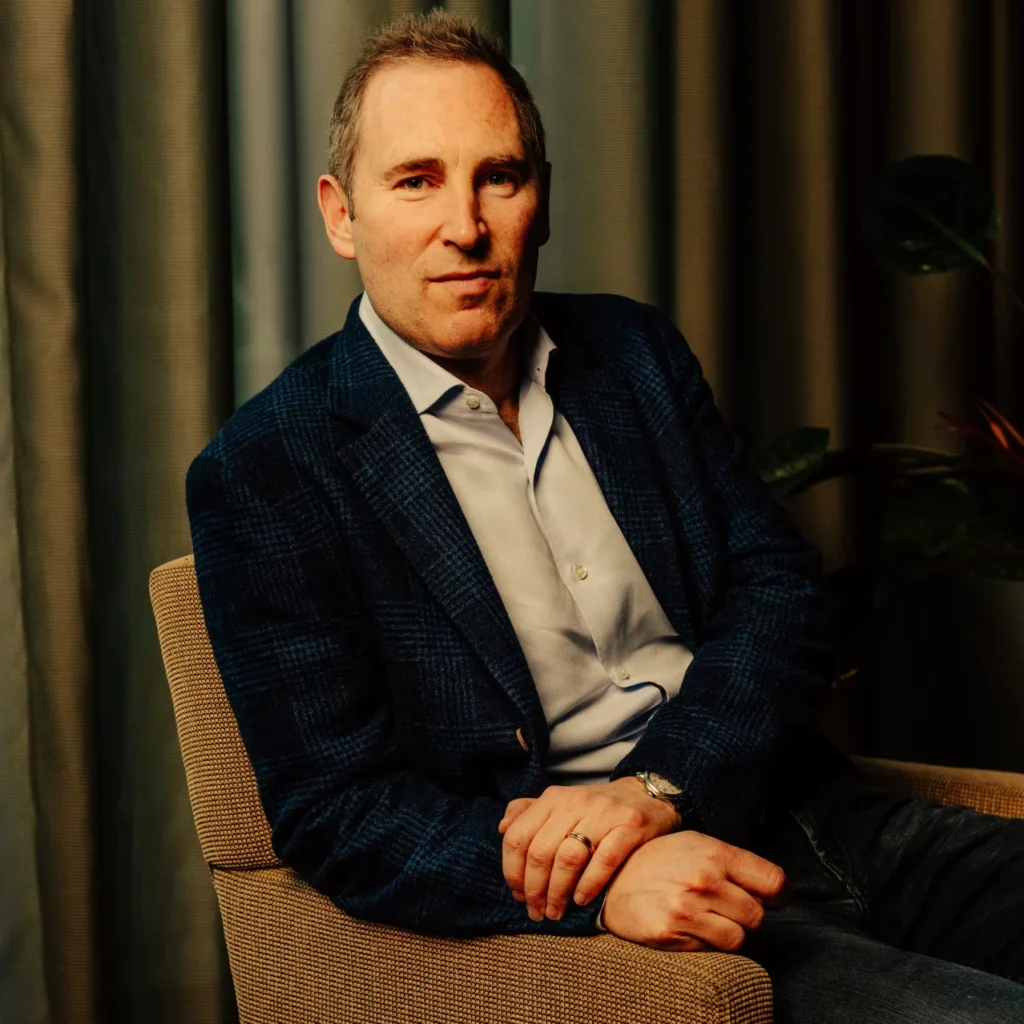
There is a visceral, tactile quality to Jassy’s personal life that grounds his digital empire. He is a man of the “helmet head,” a term he uses for the intense focus of a sports fan. In the basement of his Seattle home, he built a full-fledged sports bar, a cathedral to the Seattle Kraken and the New York Giants of his youth. This isn’t just a hobby; it’s a sanctuary of raw human emotion in a life governed by data and metrics. He understands that while algorithms can predict what a customer wants to buy, they cannot replicate the tribal energy of a stadium or the shared tension of a close game. This appreciation for the “analog heart” is perhaps why he has been so vocal about returning to the office.
To Jassy, innovation is a contact sport; it requires the messy, unpredictable collision of human beings in a physical space, something a screen can never quite simulate. As he navigates the complex ethical permits and the “model overhang” of the current AI revolution, Jassy remains a pragmatist. He is not interested in the philosophical vaporware of artificial general intelligence; he is interested in how a machine can shave four seconds off a delivery time or help a small business owner in a remote village manage their inventory.
He views generative AI as a “cognitive power tool,” something that should be as ubiquitous and invisible as electricity. He has recently spoken about the “scrappiness” required to stay relevant in a world where the windows of opportunity are closing faster than ever. He operates with a sense of “tactical impatience,” a belief that while the long-term vision is fixed, the steps taken today must be rapid and decisive.
Yet, for all his focus on speed and efficiency, there is a layer of resilience in Jassy that was forged in the early, uncertain days of the cloud. He often tells his teams that his only regrets are the things he didn’t see through, the moments when the water got rough and he considered stepping out of the boat. This “stay in the boat” philosophy has become the unofficial mantra of his tenure. He has faced the jagged edges of global supply chain collapses and the intense scrutiny of labor practices with a steady, if sometimes controversial, hand. He does not shy away from the “uncomfortable truths” of a global operation.
He is vocally self-critical, often pointing out that Amazon is “far from perfect,” a rare admission in a sector where CEOs are often treated as infallible deities. Looking ahead through the lens of 2026, Jassy is preoccupied with the idea of “durable innovation.” He is building a version of Amazon that can survive not just the next quarter, but the next century. He is stripping away the “vanity projects” and the “bloated headcount” to return to the core ethos of the scrappy underdog. He wants a company that is “right a lot,” but humble enough to change its mind when the data shifts.
He is the architect who knows that the most important part of any building is the foundation that no one ever sees. He is content to be the one in the basement, checking the welds and the wiring, while the rest of the world marvels at the lights on the top floor. Ultimately, Andy Jassy’s legacy will be one of scale without soul-loss. He is trying to prove that a company can be a behemoth and a startup at the same time. He is the bridge between the wild, frontier days of the early web and the structured, essential utility of the modern era.