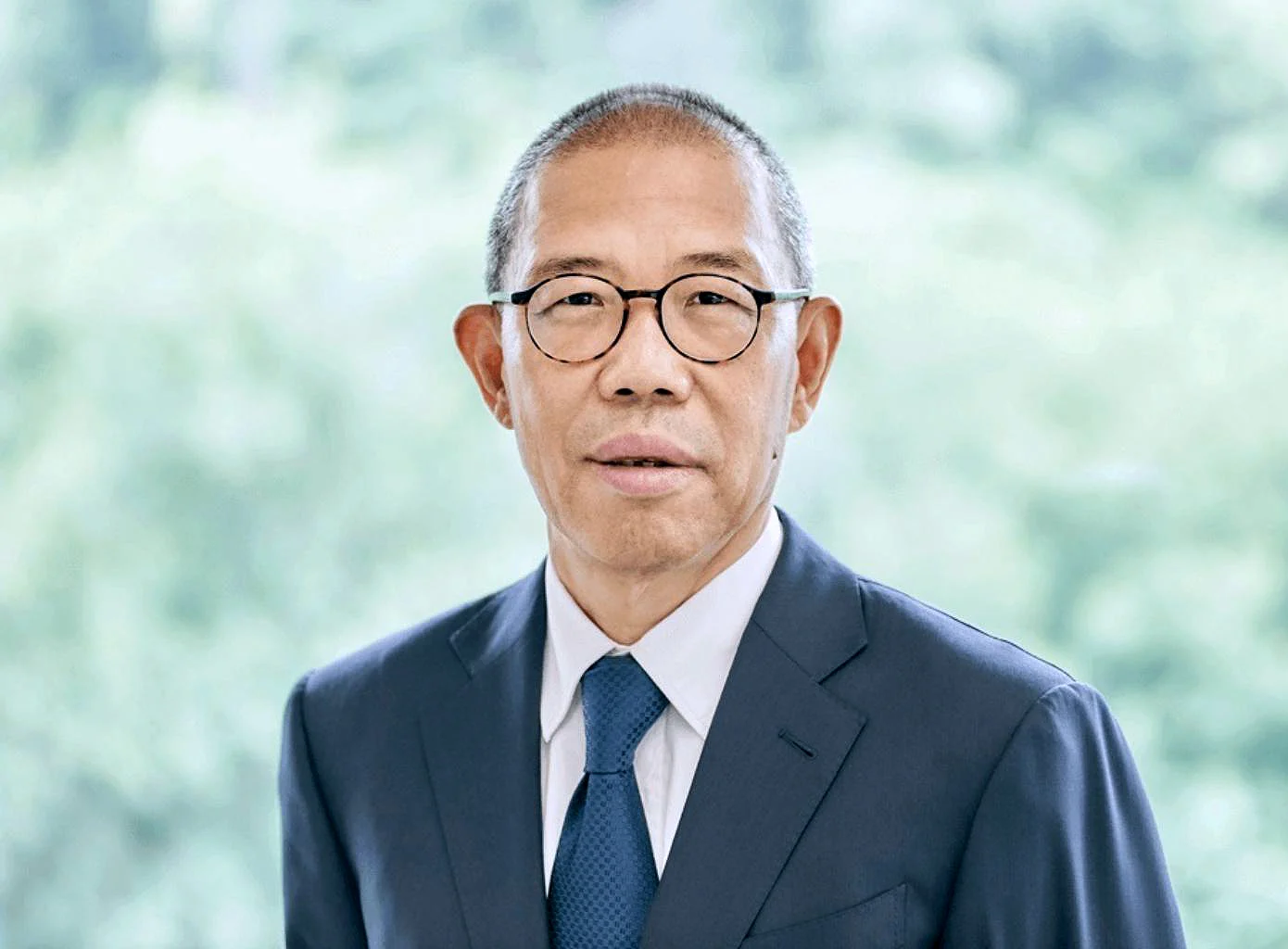
Marc Benioff
The High Priest of the Digital Ohana
How a Hawaiian-hearted visionary fused the spirit of a nineteenth century cigarette heir with the architecture of a futuristic labor revolution
By Jane Stevens
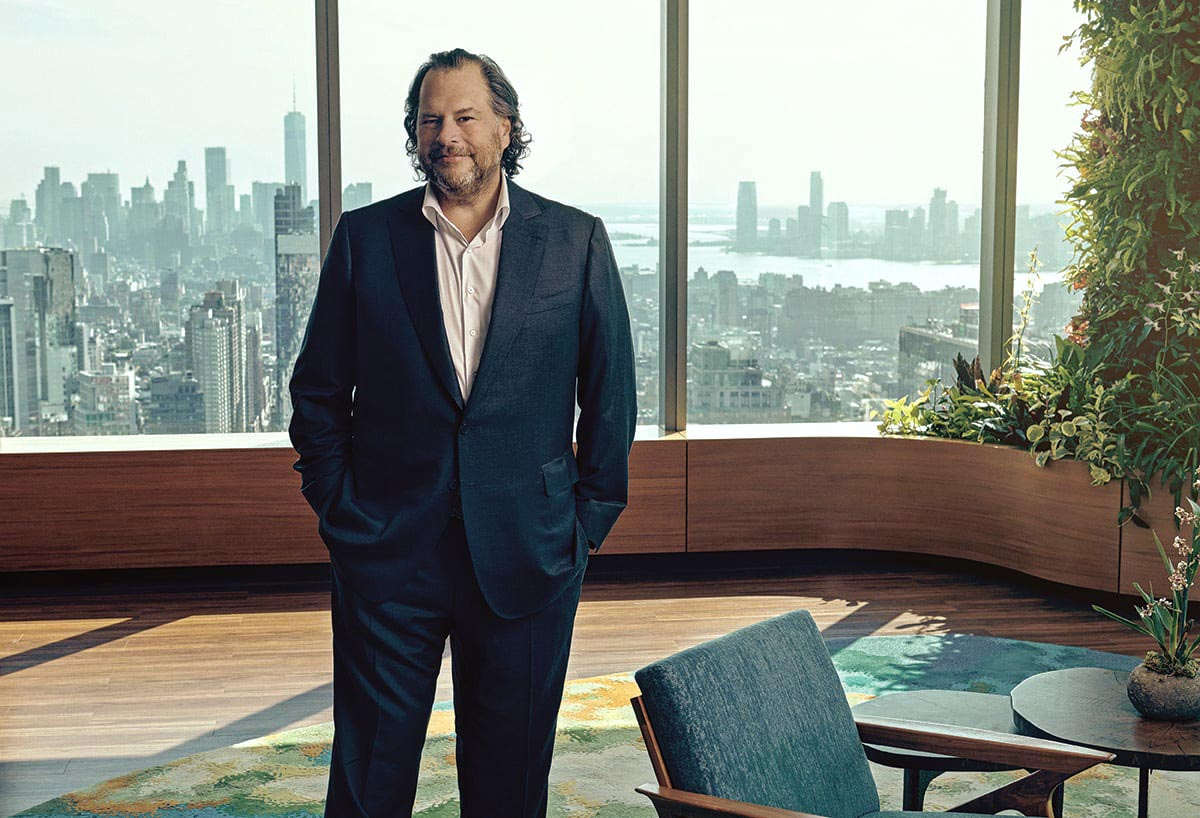
There is a panoramic, almost cinematic quality to the way Marc Benioff views the world, a perspective likely inherited from the jagged, sun-drenched cliffs of the Hawaii he calls his spiritual home. To sit in the shadow of the Salesforce Tower in San Francisco is to witness the physical manifestation of a single man’s refusal to accept that business must be a cold, mechanical exercise. Benioff does not just lead a software company; he presides over a secular religion of doing good while doing well. He is a fourth-generation San Franciscan who carries the weight of his city’s history in his bones, the grandson of a trial attorney who built the region’s transit system and the descendant of department store owners who understood that commerce is, at its heart, a social contract. He is the tech titan who replaced the silicon circuit board with a floral lei, insisting that a corporation should function like an Ohana, the Hawaiian concept of a family that is bound together by choice rather than just blood.
His journey into the cloud began not in a sterile laboratory, but in the humid, incense-heavy air of an Indian sabbatical in the late nineties. After becoming Oracle’s youngest vice president at twenty-six, Benioff found himself intellectually wealthy but spiritually parched. It was during this period of wandering, talking to gurus and swimming with dolphins, that he realized the Great Lie of corporate life: the idea that one must be two people, a ruthless professional by day and a compassionate human by night. He returned with the radical notion of the 1-1-1 model, a pledge to bake philanthropy into the very marrow of his startup.
For Benioff, profit was never meant to be the destination; it was merely the fuel for a larger vehicle of societal transformation. He didn’t just want to sell software; he wanted to end it, tearing down the on-premise fortresses of the past to create a democratic, internet-based ecosystem where every customer was an equal citizen.
As we move through the opening chapters of 2026, Benioff has pivoted from the evangelist of the cloud to the philosopher of the Agentic Enterprise. He has famously declared himself the last CEO who will only manage humans, a startling admission for a man so deeply invested in the human spirit. Yet, in his vision, this isn’t a retreat into the cold arms of automation.
He views the rise of AI agents, what he calls digital labor, as a way to strip away the bureaucratic sludge that has calcified the modern workforce. To Benioff, a human being was never meant to spend forty hours a week cleaning data or responding to repetitive leads. By deploying thousands of autonomous agents to handle the unfiltered noise, he believes he is actually liberating the human mind for higher-order creativity. He is building a world where the worker is no longer a cog in a machine, but the conductor of a digital symphony.
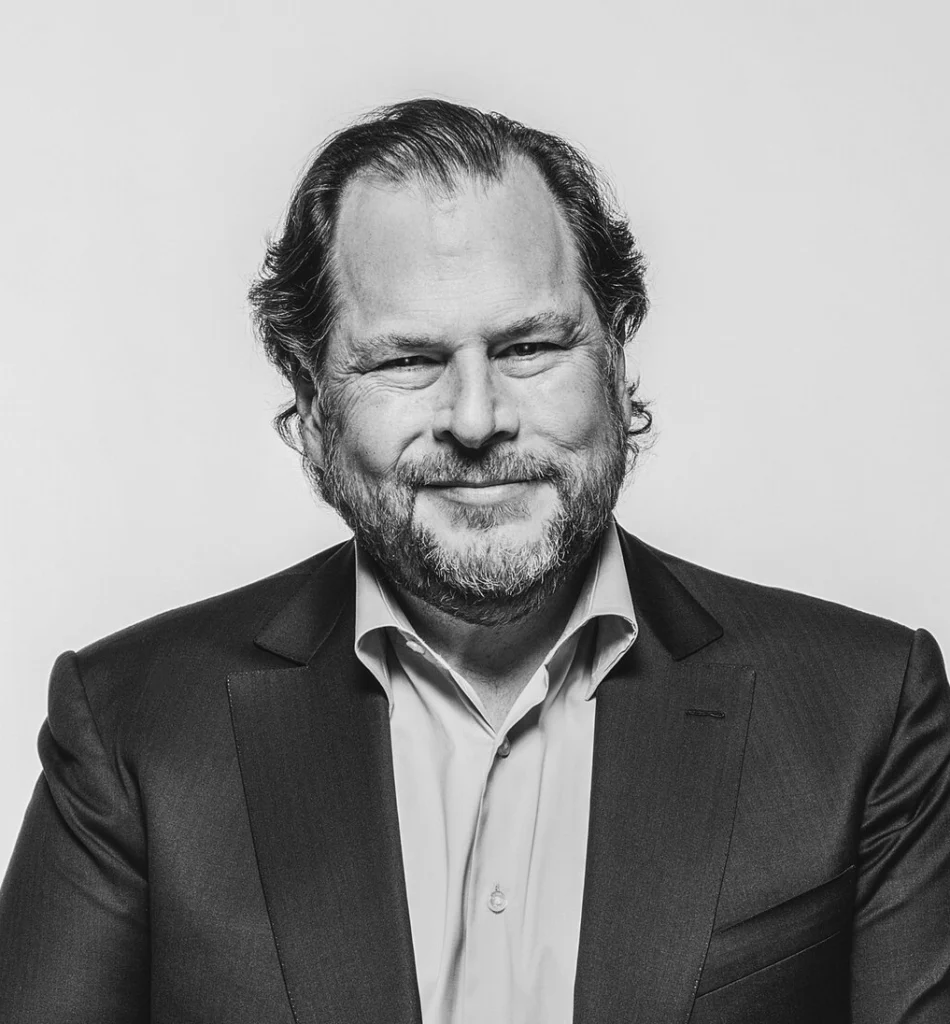
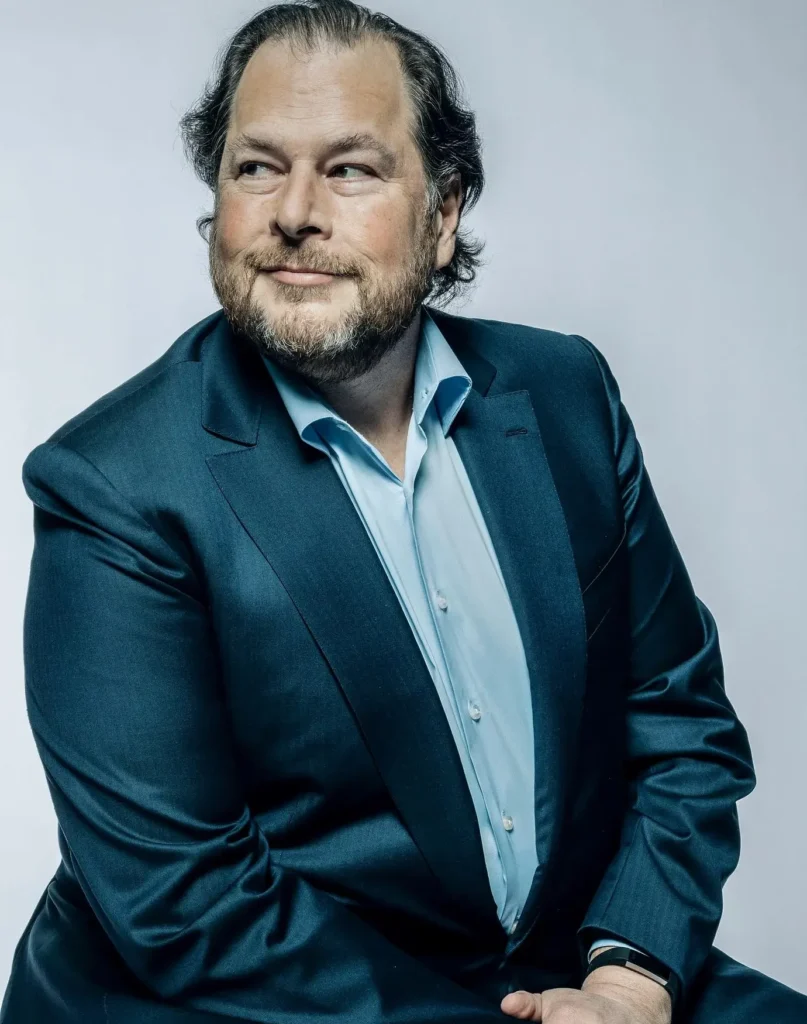
There is an unwavering execution to his style that belies his often soft-spoken, meditative persona. He is a master of the tentpole event, using the massive gravity of Dreamforce to bend the industry’s trajectory toward his latest obsession. Whether he is switching his personal usage from ChatGPT to Google’s Gemini for its multimodal reasoning or aggressively restructuring his workforce to meet the robotic age, he operates with a sense of tactical impatience. He is not waiting for a consensus on the ethics of AI; he is building the guardrails in real-time.
He has even begun to push for a Hiroshima moment level of awareness regarding AI safety, arguing that the industry must find its moral compass before the technology outpaces our ability to guide it. This is the integrated leader in action: a man who can cut thousands of jobs to clear a lead backlog one day and champion a tax on corporations to solve homelessness the next. Despite the jagged edges of recent corporate restructuring and the occasional bad idea he has publicly apologized for, Benioff remains the anchor of his city and his industry.
He is a man of multidimensional focus, juggling the ownership of Time Magazine with the stewardship of a forty-billion-dollar software empire. He finds his clarity in the beginner’s mind, a Zen concept he has championed for decades. He believes that the moment a leader thinks they have arrived is the moment they begin to fail. This is why he still speaks with the scrappiness of the fifteen-year-old who founded Liberty Software to sell Atari games. He is still that kid across the street from Radio Shack, mesmerized by the potential of the machine but anchored by the values of the department store.
Looking toward the horizon of late 2026, Benioff’s Salesforce is no longer just a CRM company; it is a laboratory for the future of work. He is obsessed with the compound growth rate of equity in both the financial and social sense. He wants a legacy that is measured in trees planted and schools supported as much as in stock price. He remains the industry’s most vocal advocate for stakeholder capitalism, refusing to believe that a company’s only responsibility is to its shareholders.