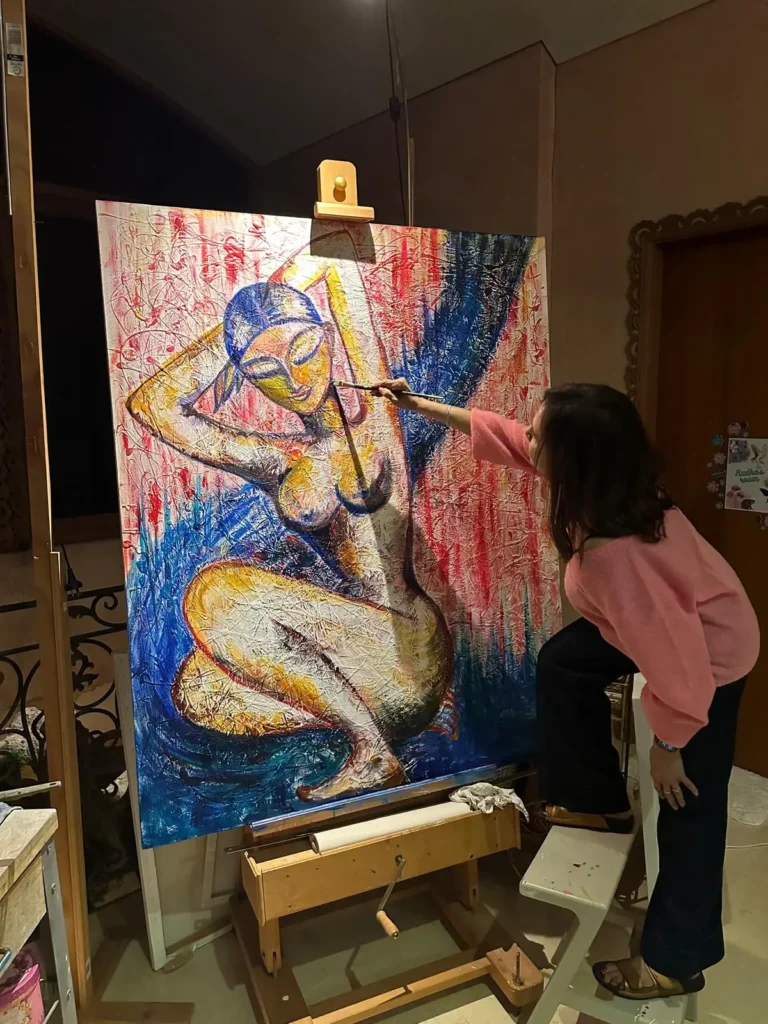
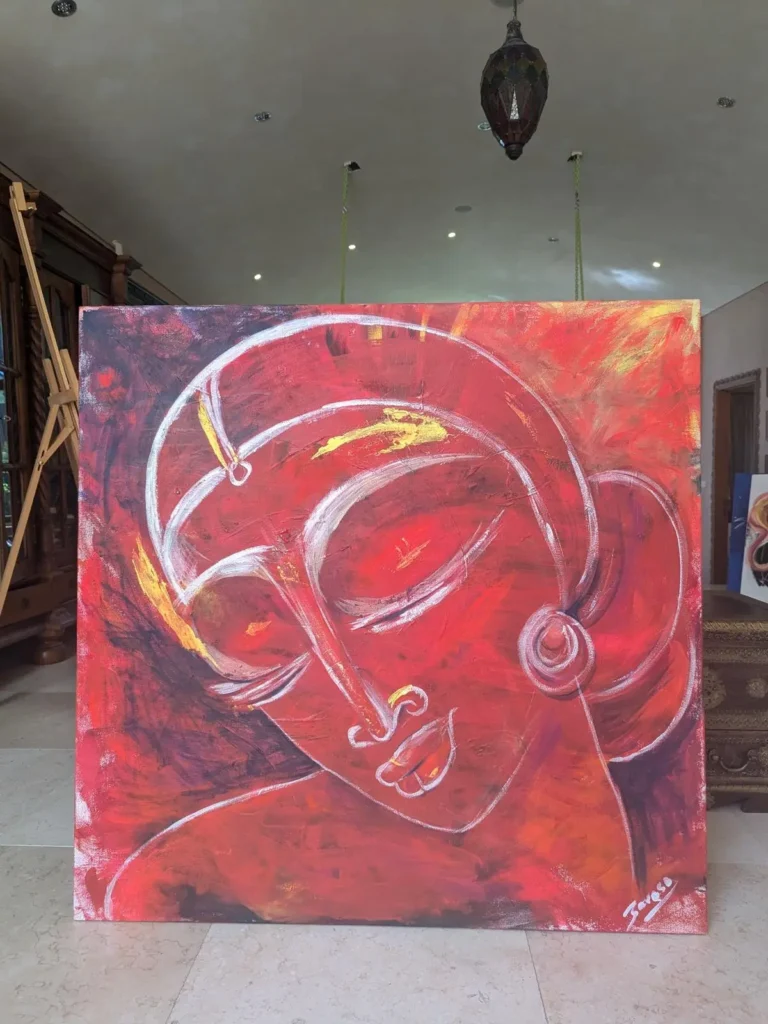
Where Movement Becomes Color, The Living Art Of
Dr. Sarasa Krishnan
By Raveena Parmar
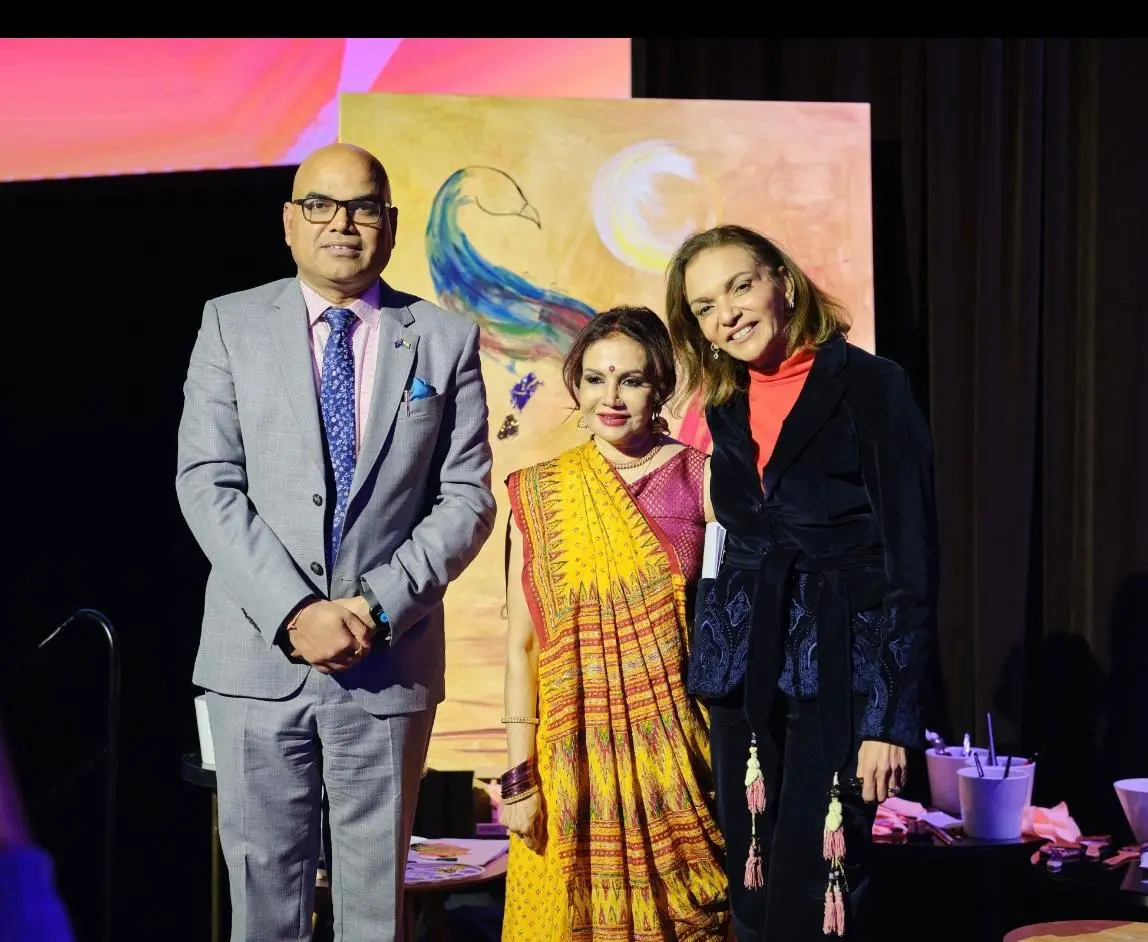
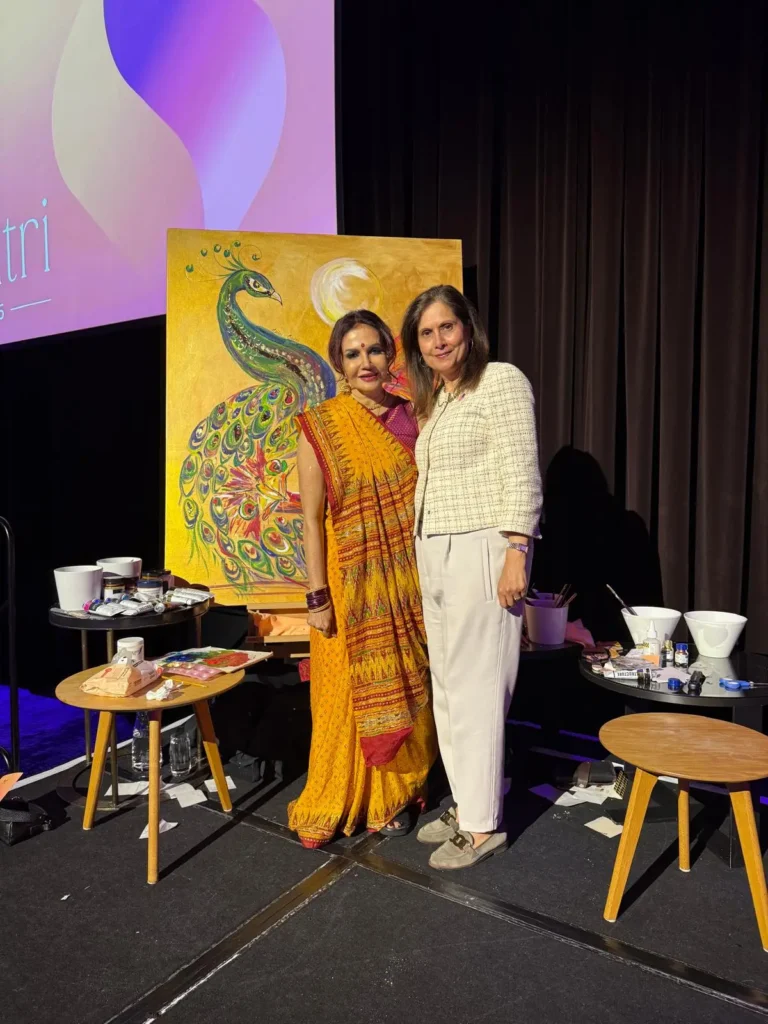
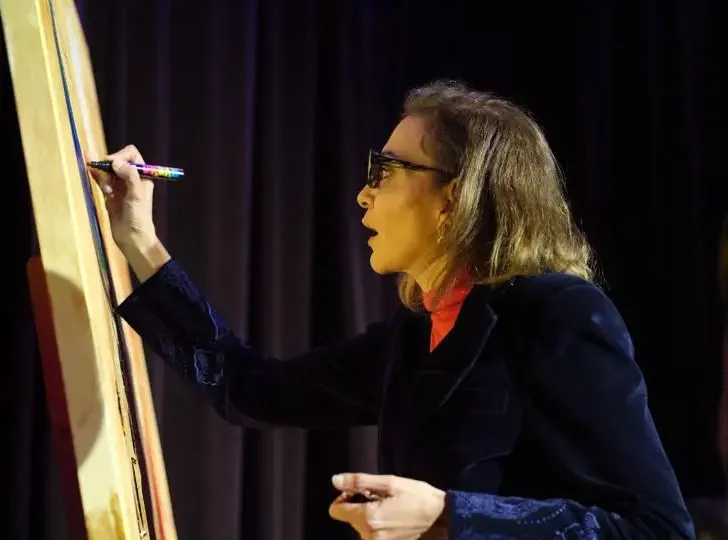
When Dr. Sarasa Krishnan stepped onto the stage at a diplomatic gala hosted by the Australian Foreign Minister, she was not there to speak, she was there to create. The event celebrated India-Australia relations, and Sarasa had been invited to perform a live painting as a symbol of cultural collaboration and friendship. Surrounded by diplomats, artists, and officials, she began transforming a blank canvas into a visual narrative using gold and silver leaf, pigments, and water. Each stroke was deliberate, every gesture precise, reflecting the discipline and presence she has cultivated over more than two decades as a multidisciplinary artist. The painting, titled Maitri, meaning friendship, depicted two birds under a shared moon, an expression of harmony and unity. Once completed, Sarasa invited the audience to place their thumbprints on the canvas, turning the artwork into a collective expression of connection. “That moment transformed the work from a solitary act into a shared gesture,” she recalls. It was a clear demonstration of her approach to art: intentional, interactive, and deeply human.
Early Life and Foundations in Art
Sarasa’s journey into the arts began in her childhood home in a South Asian community where music, movement, and expression were part of daily life. Her mother, an amateur musician and painter, maintained a modest collection of artworks that Sarasa would secretly unroll and study. Her father, an ardent listener of classical music, instilled in her an appreciation for rhythm and structure.
“My earliest enchantment came from watching my elder sister’s dance lessons,” she recalls. “I would sit transfixed, absorbing every gesture and nuance.” Alongside this exposure to dance, she began drawing at a young age, replicating images from newspapers and magazines for hours on end. “It didn’t feel like learning; it felt like uncovering something that had always been within me,” she explains. This early immersion in visual and performing arts created the foundation for a life devoted to multidisciplinary practice.
Becoming a Multidisciplinary Artist
To Sarasa, being a multidisciplinary artist is not simply a career choice, it is a way of living. “It means living without boundaries between art forms,” she says. Movement, colour, sound, and thought flow into one another seamlessly, each medium informing the other. Dance informs her painting, painting deepens her understanding of rhythm, and writing helps articulate the inner journey that connects them. Professionally, this integration allows her to create experiences rather than isolated works.
“It’s about recognising that art is not confined to a single medium but is a continuous dialogue between body, mind, and spirit,” she says. The choice of medium is guided by the concept or emotion she wishes to convey. Dynamic and layered ideas often become dance; contemplative, reflective ideas become paintings. Sometimes, both merge, as gestures transform into brushstrokes or paintings are performed in motion. This fluidity has defined her unique practice, allowing her to communicate the unseen dimensions of human experience.
Artistic Philosophy and Rasa Theory
Central to Sarasa’s work is her engagement with Rasa theory, an ancient Indian framework for understanding human emotion in the arts. “Rasa is timeless,” she says. “It speaks to the essence of human emotion and shared consciousness. My goal is not to illustrate tradition but to evoke feeling. The Rasas exist in the pulse of gesture, colour, and sound.”Whether performing dance, painting, or writing, she seeks to create moments of emotional resonance that transcend words. “It’s about connecting with something larger than ourselves,” she explains. “That moment of expansion, of presence, is what I aim for in all my work.” This philosophy extends across her collaborations, exhibitions, and teaching, emphasizing art as a medium for both personal and collective transformation.
Cross-Cultural Collaborations
Sarasa’s career has taken her across continents, from Europe to Southeast Asia, engaging deeply with artists and communities around the world. She has worked closely with Aboriginal and Indigenous communities, Flamenco dancers, world musicians, and interfaith artists.
Her approach to collaboration is grounded in respect and active listening. “It’s never about merging forms superficially,” she explains. “It’s about entering a shared space where each tradition retains its integrity while discovering resonances with the other.” By observing rhythms, stories, and silences, she identifies the universal pulse that connects artists across cultures. Collaboration, for her, becomes a “sacred conversation between cultures,” an opportunity to highlight both differences and shared humanity.
Selected Exhibitions and Commissions
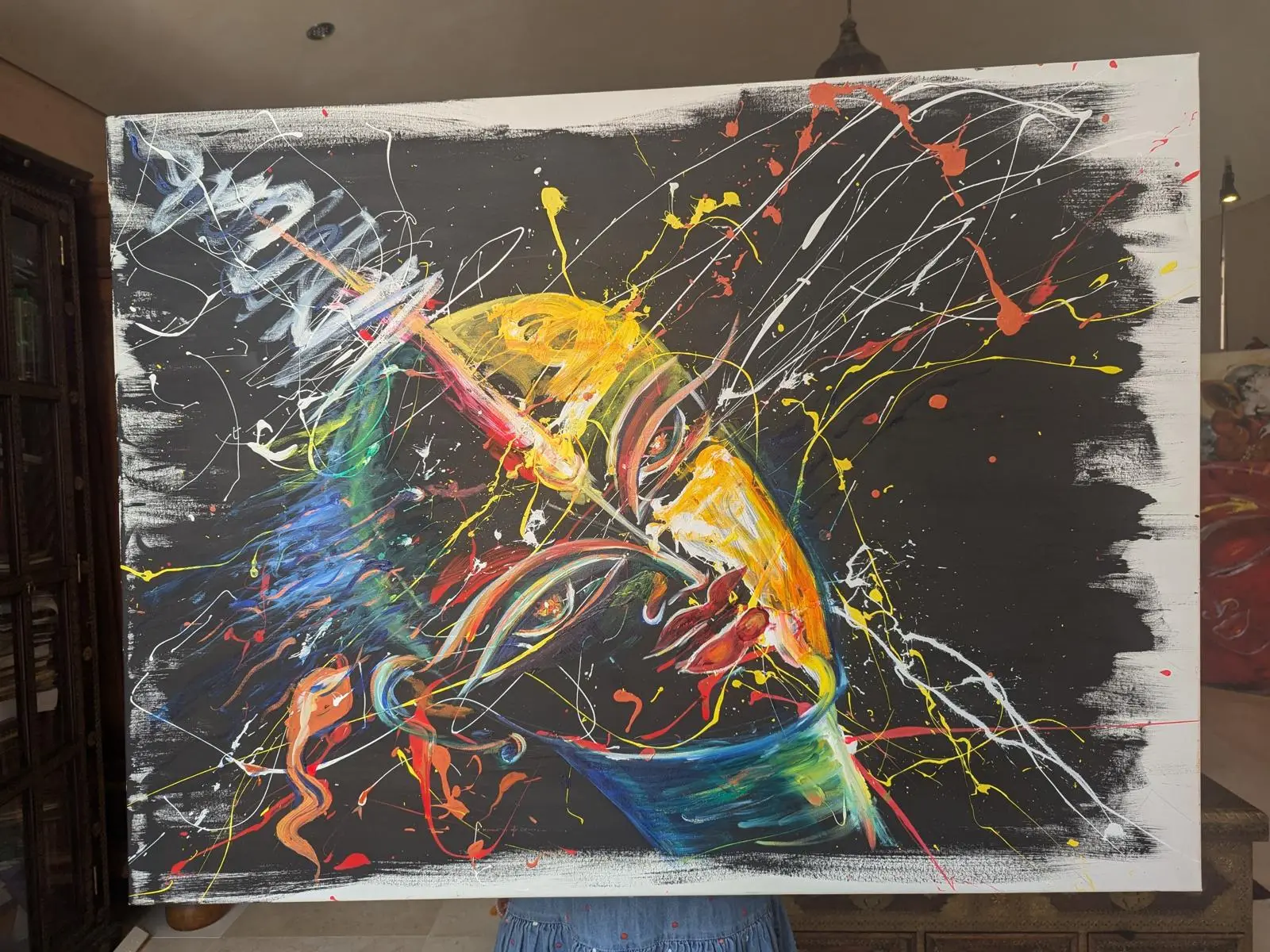
Sarasa’s work has been recognized internationally, with exhibitions and performances spanning the United States, Europe, and Australia. Notable venues include Lincoln Center in New York, Warwick University in the UK, and cultural centers in Florence, Paris, Kuala Lumpur, and Perth. She has also created permanent installations at Saraswati Mahavidyalaya Performing Arts Centre, the Consulate General of the Indian High Commission in Perth, and the Art Sanctuary Foundation Gardens in Australia. Her performances often integrate visual art and dance, such as FuegoAgni, a Kathak-Flamenco fusion performed in Florence with Flamenco dancer Claudio Javarone. The performance was a dialogue between movement and pigment, rhythm and colour, embodying her philosophy of art as an intermedia practice. Sarasa’s commissions extend to corporate and private collections, including Citibank Singapore, and she is represented by Blue Thumb Gallery online. Her works are part of permanent collections internationally, reflecting both the quality and universality of her practice.
Writing and Scholarship
In addition to her visual and performance work, Sarasa is an accomplished writer and scholar. She holds a Ph.D. in Rasa Theory and Consciousness Studies and has published both academic and creative works. Her book Bharata’s Karanas- An Interpretation (2014) explores the relationship between movement, consciousness, and the sacred geometry of the body, showing how dance serves as a pathway to awareness.
She has also written for younger audiences, most recently publishing Journey to Rasa Land (2024), a children’s book that introduces emotional expression and aesthetic awareness through the lens of Rasa theory. “Both works, though very different, reflect my belief that art is a continuum of consciousness,” she says. “Movement, colour, and words merge to reveal deeper dimensions of being.”
The SMV Gala: Art in Action
The gala hosted by the Australian Foreign Minister, in which Sarasa created a live painting for SMV, exemplifies her ability to combine performance, visual art, and cultural diplomacy. The invitation came unexpectedly while she was preparing to teach one evening. “I was surprised and deeply honoured,” she recalls. Unlike her studio work, which unfolds slowly and contemplatively, the live painting demanded immediate focus.
Surrounded by speeches, performances, and conversation, she remained centred. Every brushstroke became part of the rhythm of the evening, reflecting her philosophy that art is both presence and process. The final piece, featuring symbolic elements of the moon and birds, represented friendship, trust, and shared humanity. The audience’s participation in adding their thumbprints transformed it into a collective expression, highlighting art as a bridge between people.
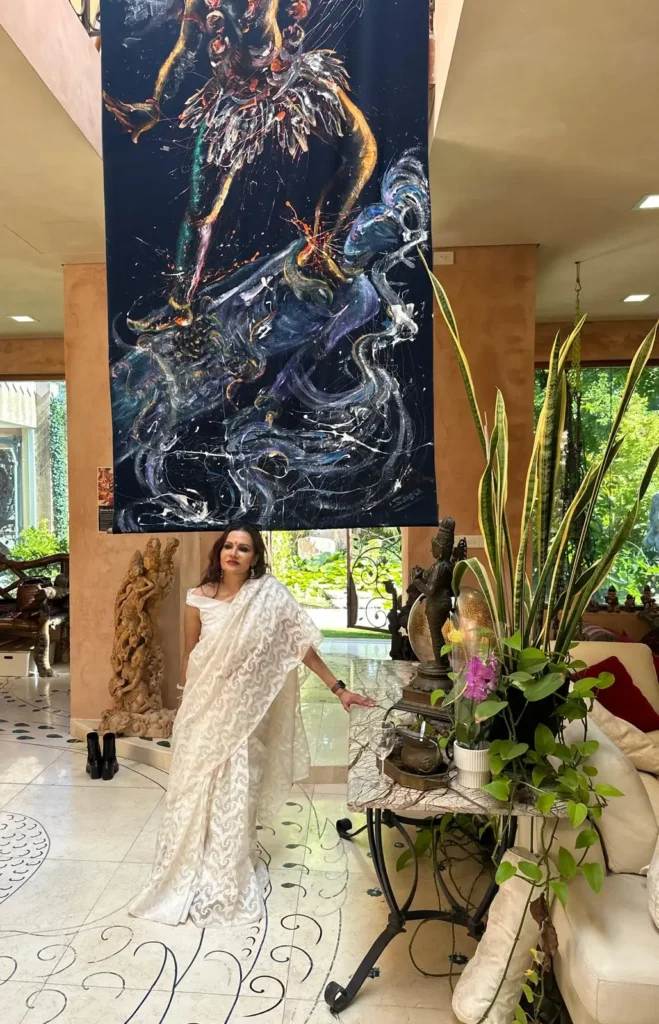
Home as a Living Studio
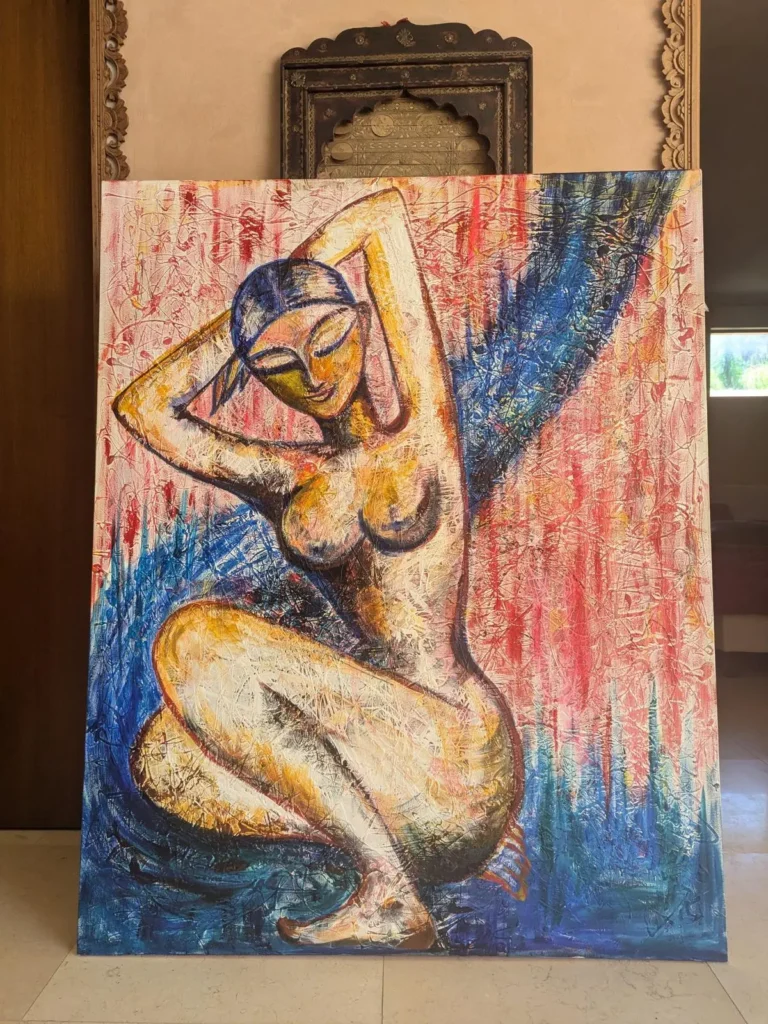
Sarasa’s commitment to art extends into her daily life. Her home, designed according to Vastu Shastra, is a living installation that reflects her principles of balance, energy, and consciousness. Water features and lotus motifs symbolise blossomed awareness, while paintings line the walls and gardens are sculptural.“
Art is not something separate from daily life,” she explains. “It’s a sanctuary where creation and contemplation merge, where the outer space mirrors the inner journey.”For Sarasa, every aspect of her environment, from light and texture to rhythm and flow, becomes an extension of her artistic practice.
Sustaining Creativity
After more than twenty years of professional practice, Sarasa describes creativity as something to be allowed rather than chased. She draws inspiration from observation, reflection, and quiet presence. “Every experience (joy, loss, travel, teaching, even silence) feeds into the creative well,” she says. Her practice is a form of sadhana, a continuous spiritual discipline in which rediscovery is constant. “I am never repeating what I know; I am discovering it anew each time.”
Legacy and Vision
Sarasa hopes her work encourages both artists and audiences to recognise the interconnectedness of all forms of expression. Through cross-cultural collaboration, public engagement, and teaching, she emphasises that art is a medium of connection, reflection, and understanding. “Art is a dialogue,” she explains, “not only between the artist and the audience, but between cultures, communities, and generations.”
Looking ahead, Sarasa continues to explore new forms of expression, both in her visual work and performance. She is committed to fostering intercultural dialogue through SMV and other initiatives while continuing her research and publications in Rasa theory. Her career is a testament to the power of integrating movement, colour, sound, and thought into a unified practice. Dr Sarasa Krishnan’s work is more than art, it is a living exploration of human consciousness, culture, and emotional connection.