Matthieu Blazy
A Humble Custodian of Material Truth
By Jane Stevens
There are those within the sphere of high fashion who cultivate spectacle and those, rather more interesting chaps, who cultivate the profound quiet of material excellence. Matthieu Blazy belongs squarely to the latter category, a designer whose presence feels like a refreshing act of considered stillness amidst the surrounding, sometimes frantic, noise of the industry. He is not a showman in the accepted, tempestuous sense, but an artisan elevated to the role of architect; a curator more focused on the genuine experience of the garment than the fleeting photograph of its presentation. His approach suggests a belief that true luxury resides not in the ostentatious display of a prominent name or symbol, but in the near miraculous manipulation of fabric and thread, a dedication to the tactile surprise found beneath the surface.
One cannot properly assess this designer’s contribution without first acknowledging the nomadic, yet intensely disciplined, apprenticeship that shaped his unique perspective. He moved through the foremost ateliers of the modern age, not as a flash in the pan star but as a dedicated student of the craft, quietly absorbing the foundational wisdom of the great conceptual minds. From the austere, almost spiritual rigour of the Belgian minimalists to the intellectual detachment of the Parisian pioneers, Blazy was steeped in the diverse liturgies of contemporary garment construction. He spent years in the deep background, that rarefied and anonymous space where the most consequential work is often performed, learning the essential language of tailoring, proportion, and deconstruction. This extended period of working behind the closed doors of various exalted houses provided him with a unique, panoramic view of the internal workings of modern style: how the most difficult, complicated ideas are patiently transmuted into wearable reality.
His time at the venerable Italian house, famous for its subtle, intricate leatherwork, served as a crucial proving ground for this developed sensibility. It was here that Matthieu Blazy truly stepped into the light, accepting the charge of safeguarding a legacy built upon discretion and extraordinary artisanal talent. He did not arrive with the intention of tearing down the established order, but rather of magnifying its core truth: that the ultimate statement is often silence.
His collections became studies in the ‘adventure of the everyday,’ taking the most common, workaday garments and subjecting them to a material alchemy that was nothing short of astonishing. Imagine a pair of simple denim trousers, familiar and humble, yet constructed entirely from impossibly fine leather, treated and printed to mimic the exact warp and weft of faded cotton. Or the flannel shirt, seemingly soft and casual, which, upon closer inspection, reveals itself to be a technical masterpiece, sculpted from layers of supple hide.
This signature employment of trompe l’œil, the visual trickery that turns the ordinary into the extraordinary, became his quiet calling card. It was a sophisticated game of visual expectation and tactile reality, played between the wearer and the garment itself. The approach was never gimmicky; it was a profound tribute to the skill of the human hand and the material’s capacity for transformation.
Blazy treated leather not merely as a noble substance for accessories, but as a boundless canvas, reshaping it into knitwear, printed silk, and woven utility items. This dedication was not just about technical bravado; it was a philosophical statement, asserting that the highest form of luxury lies in the quality of the fabrication, not the visibility of the branding. He ensured that the item’s worth was understood intimately by the person wearing it, a genuine embodiment of the concept of ‘quiet luxury’ long before the phrase became a popular cultural buzzword.
This foundational commitment to the material’s integrity and the craftspeople who translate his visions has remained central as he embarks on his next chapter at the helm of an iconic Parisian maison. The appointment itself speaks volumes: it signifies an institutional preference for the serious, respectful artisan over the celebrity provocateur.
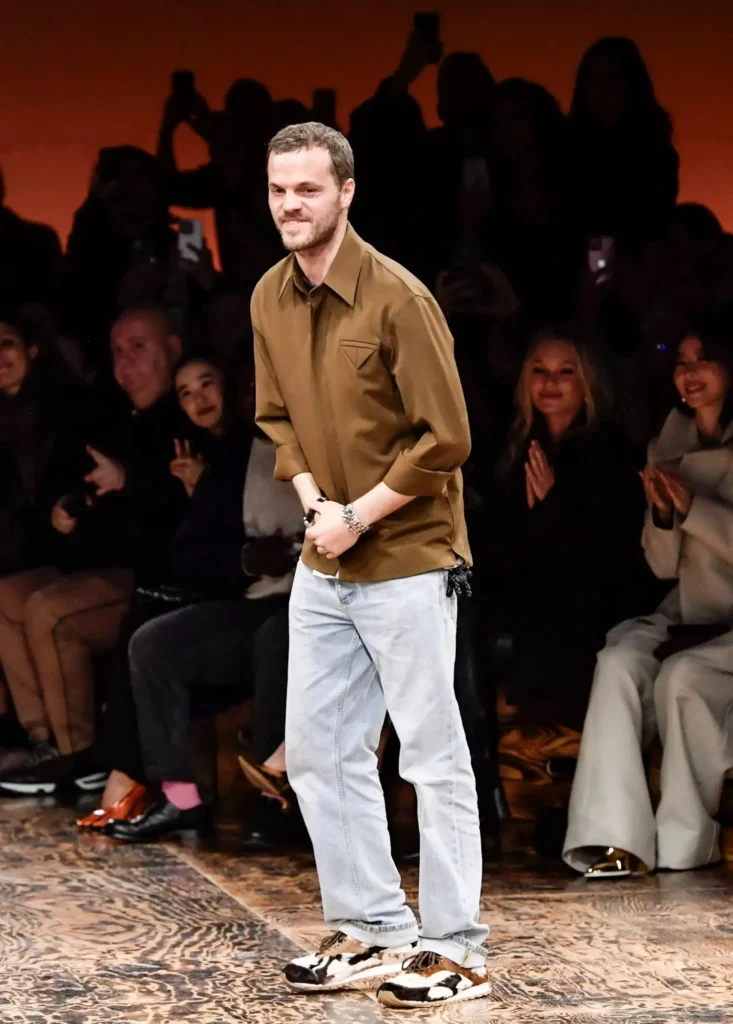
In taking on the mantle of a house defined by its unwavering codes, tweed, tailoring, and the enduring silhouette, Matthieu Blazy is tasked not with revolution but with meticulous evolution. His previous work suggests he will approach this legacy with a sense of historical curation, honouring the structural DNA while infusing the collections with his signature rigour and unexpected material honesty. One fully expects him to take the canonical jacket and skirt, the defining pieces of that famed French identity, and reframe them for the contemporary woman by leaning into precision, an updated austerity, and a refreshed focus on the garment’s structure.
His first presentations in this new role, whether set against the grand, sweeping backdrops of European tradition or within the surprising, democratic context of an urban transit system, have already confirmed his distinct, narrative-driven methodology. The shows become less about mere display and more about storytelling, placing exquisitely crafted objects within a real-world, human setting. This idea of luxury that breathes, that moves with the rhythm of the city and the unscripted life of the wearer, is a crucial thread running through his aesthetic. It is a celebration of the unique character, the person who chooses clothing that is both profoundly considered and utterly practical.
Ultimately, Matthieu Blazy represents a refreshing insistence on substance. He is a designer for whom the object itself, its weight, its texture, the journey of its making, holds the ultimate authority. His influence is in slowing down the consumption cycle, encouraging an appreciation for garments built for a lifetime rather than a single season. He is the quiet custodian of material truth, demonstrating with every meticulously constructed piece that the adventure of modern style begins not with the logo, but with the astonishing capacity of the cloth.